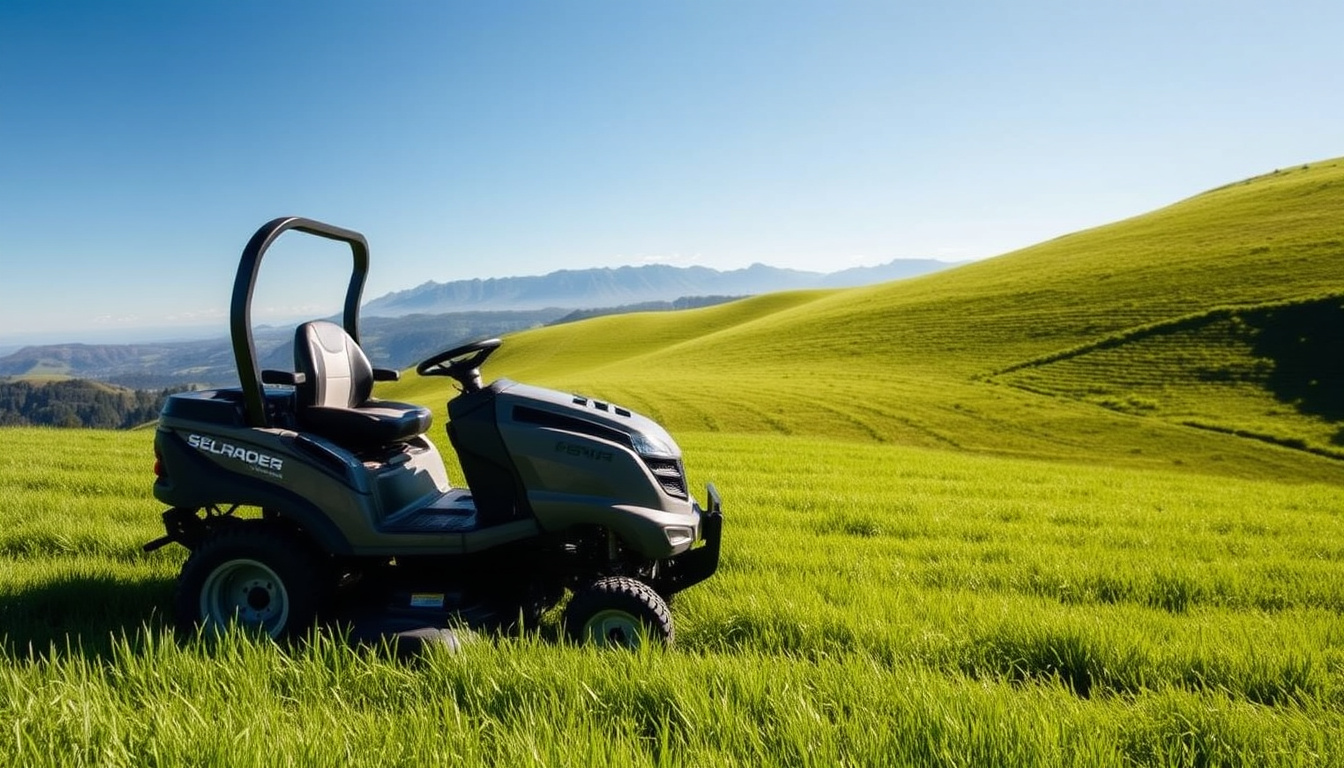
Choosing the right ride-on mower for a New Zealand property requires matching machine capabilities to specific section sizes, terrain challenges, and budget constraints. The New Zealand market offers a diverse range of options from international brands like Husqvarna and John Deere alongside locally available Masport models, each catering to different property types and mowing requirements. This guide examines the leading ride-on mower options currently available, providing practical comparisons to help property owners make informed purchasing decisions based on their individual circumstances.
Recent reviews and market analysis indicate significant variation in performance across different terrain types commonly found in New Zealand. From flat suburban sections to hilly rural properties, the suitability of each mower type depends heavily on factors including cutting width, transmission system, and traction capabilities. Understanding these specifications in relation to specific property characteristics ensures buyers select equipment that delivers reliable service over the long term.
What is the Best Ride On Mower in NZ?
The answer depends largely on property characteristics, though several models consistently emerge as top performers across different categories. Recent New Zealand reviews highlight options that balance performance, reliability, and value for typical section sizes found throughout the country.
Based on aggregated reviews and specifications, these models represent the strongest options currently available in the New Zealand market for typical residential and small rural properties.
| Category | Recommended Model | Cutting Width | Best Suited For |
|---|---|---|---|
| Overall Top Pick | John Deere ZTrak Z335E | 42 inches | Level sections with obstacles |
| Value Leader | Masport ZVT | 48 inches | Larger sections, budget buyers |
| Hillside Specialist | Husqvarna 500-series | Variable | Slopes and uneven terrain |
| Small Section | Masport S155 | 36 inches | Sections under 1 acre |
Key Takeaways for NZ Property Owners
- Tire selection significantly impacts performance on New Zealand’s varied terrain, particularly during wet conditions when standard turf tires provide inadequate traction and may cause the mower to slide or become stuck
- Zero-turn mowers offer superior maneuverability and cutting efficiency on flat properties with garden beds and trees, though they require careful operation on slopes due to their high-speed turning capability
- Husqvarna 500-series models feature 4-wheel drive and low centre of gravity, making them the preferred choice for properties with significant slopes and challenging topography
- For sections around one acre, a cutting width of 36 to 48 inches provides the optimal balance between maneuverability and mowing efficiency
- John Deere’s price-value ratio for zero-turn mowers ranks highly among New Zealand buyers seeking reliable performance without premium pricing
- Warranty coverage varies substantially between brands, with John Deere offering up to 4 years or 300 hours on higher-end models compared to 3 years for comparable Husqvarna products
- Hydrostatic transmission systems, found across premium models from all major brands, provide smoother operation and easier handling compared to traditional gear-driven alternatives
| Brand | Price Range (NZD) | Typical Engine | Warranty |
|---|---|---|---|
| Husqvarna | $5,550 – $16,675 | Up to 26.3 hp | 3 years |
| John Deere | Varies by model | 20-25 hp | 2-4 years |
| Masport | Entry to mid | 24 hp | Standard |
| Altoz | Premium | Commercial | Commercial |
What is the Best Value Ride On Mower NZ?
Value in ride-on mowers encompasses more than initial purchase price, extending to long-term operating costs, maintenance requirements, and resale potential. Several models stand out for delivering strong performance relative to their cost, particularly for property owners seeking practical solutions without premium pricing.
Budget-Friendly Options Under $5,000
Strict budget constraints limit options in the New Zealand market, as most premium ride-on mowers exceed the $5,000 threshold. However, entry-level models from established brands provide viable alternatives for smaller properties where advanced features are less critical.
When budget is the primary constraint, focusing on appropriate cutting width for your section size and ensuring local dealer support can prevent costly issues down the line. Checking the availability of spare parts and service support before purchasing any model is essential.
Masport’s range represents the most accessible entry point for New Zealand buyers, with models designed specifically for smaller sections where premium features would go underutilised. The Masport S155 tractor, featuring a 36-inch cutting width and 300L grass catcher, provides practical functionality for properties up to one acre without the complexity of larger machines.
Mid-Range Value Leaders
The mid-price segment offers the strongest value proposition for most New Zealand property owners, combining capable performance with reasonable acquisition costs. These models typically include hydrostatic transmission, adequate cutting widths, and sufficient engine power for typical residential and small rural applications.
Husqvarna 100-series tractors present a compelling value alternative to John Deere’s equivalent range, offering comparable specifications at similar price points. Features such as hydrostatic transmission with side-by-side pedals enhance operator comfort during extended mowing sessions, while engine outputs reaching 26.3 hp handle challenging grass conditions effectively. Husqvarna’s New Zealand distribution ensures ready access to parts and service support across the country.
Maximising Value Through Correct Sizing
Purchasing an inappropriately sized mower frequently results in either over-spending on unused capacity or frustration from inadequate performance. Matching cutting width to section size represents the most significant factor in achieving satisfactory value from a ride-on mower purchase.
For sections between one and three acres, a 42 to 48-inch cutting width provides the optimal balance between coverage efficiency and maneuverability. Properties exceeding three acres generally benefit from commercial-grade machines with cutting widths exceeding 50 inches, despite their higher acquisition cost.
Which Ride On Mower Brands Are Best for NZ?
The New Zealand market benefits from access to major international brands alongside locally distributed products, each bringing distinct strengths to different property requirements. Evaluating brand reliability requires considering both reported performance and the availability of local support infrastructure.
John Deere
John Deere maintains a strong presence in the New Zealand market, with the ZTrak zero-turn series particularly well-regarded for value and performance on relatively level lawns. The range spans cutting decks from 42 to 60 inches, accommodating properties of varying sizes while maintaining consistent quality standards.
Warranty coverage on John Deere products includes options ranging from 2 years or 120 hours on entry models through to 4 years or 300 hours bumper-to-bumper on higher-end variants, providing buyers with confidence in long-term reliability. The combination of established dealer networks and readily available parts makes John Deere a practical choice for property owners prioritising support accessibility.
Husqvarna
Husqvarna offers one of the broadest product ranges available in New Zealand, from entry-level tractors through to commercial-grade machines designed for demanding applications. The 500-series represents the upper tier of their residential offerings, featuring commercial-quality construction including 4-wheel drive capability and low centre of gravity for slope work.
Reported durability issues with engine belts on the S100 model warrant attention when evaluating used purchases, highlighting the importance of checking maintenance records and service history. New units benefit from full factory warranty coverage, though prospective buyers should confirm specific terms with authorised dealers before purchase.
Masport
Masport occupies a distinct position in the New Zealand market as a brand with deep roots in the country and products designed with local conditions in mind. The range spans from affordable entry-level tractors through to the more capable ZVT zero-turn models, providing options across multiple price points.
The ZVT zero-turn mower features a 48-inch cutting width, 24 HP engine, and 13 cutting height adjustments, offering practical capabilities for substantial lawn areas at a budget-conscious price point. Adjustable lap bars enhance operator comfort, while the 19-litre fuel tank supports extended mowing sessions without frequent refuelling stops.
Track-Drive Specialists
For properties with significant slopes or challenging terrain, track-drive mowers like the Altoz 766 provide superior performance compared to conventional wheel-mounted alternatives. The traction advantages of track systems become particularly apparent on wet grass and steeper gradients where traditional turf tires struggle for grip.
Standard ride-on mowers are not designed for steep slopes regardless of brand. Properties with significant gradients require specialised equipment such as track-drive mowers or dedicated slope machines. Operating standard mowers on steep terrain poses serious safety risks including loss of control and rollover hazards.
What to Consider When Buying a Ride On Mower in NZ?
Successful ride-on mower purchases depend on accurately assessing property requirements and matching them to available equipment capabilities. Several key factors determine whether a particular model will prove satisfactory over years of regular use.
Terrain and Traction Requirements
New Zealand properties frequently present terrain challenges that significantly impact mower performance. Standard turf tires, typically 18 inches tall, perform adequately on dry grass but provide poor traction in wet or muddy conditions, potentially causing the mower to slide and become stuck. For those looking to upgrade their lawn care, exploring the best sleeping bag New Zealand might offer a surprisingly comfortable solution for outdoor enthusiasts. best sleeping bag New Zealand
More aggressive tire configurations such as 20x10x8 models offer superior grip around wet areas but may damage lawn surfaces after rainfall due to their intensified ground engagement. Property owners in areas with clay soils or poor drainage should seriously consider upgrading to more capable tire configurations regardless of the mower brand selected.
Operator Comfort Features
Extended mowing sessions place significant demands on operator comfort, making suspension systems and ergonomic features increasingly important selection criteria. The Toro MyRide suspension system exemplifies advances in this area, providing fully adjustable firmness settings that accommodate different operator weights and preferences.
The floating suspension design reduces joint impact when traversing uneven ground, though maximum softness settings may result in bottoming out on particularly rough terrain. Finding the appropriate firmness balance requires experimentation based on individual conditions and operator preference.
Maintenance and Service Accessibility
Long-term ownership costs depend significantly on maintenance accessibility, making local dealer presence a critical factor in brand selection. Property owners in regional areas should verify authorised service centre locations before committing to any purchase, as distance to service facilities can transform minor issues into major inconveniences.
Checking spare parts availability for specific models provides valuable insight into long-term ownership experience. Brands with strong dealer networks in New Zealand, including John Deere and Husqvarna, offer advantages in parts accessibility compared to less established imports.
Timeline: Ride-On Mower Market Evolution 2020-2025
The ride-on mower market in New Zealand has undergone notable changes over recent years, with technology improvements, pricing shifts, and emerging categories reshaping buyer options. Understanding this evolution context helps property owners appreciate current offerings and anticipate future developments.
- 2020: Husqvarna expands zero-turn range with improved cutting deck designs and enhanced comfort features across residential product lines
- 2021: John Deere introduces updated ZTrak series with refined control interfaces and extended warranty options for New Zealand market
- 2022: Masport launches ZVT zero-turn models targeting budget-conscious buyers seeking zero-turn capabilities without premium pricing
- 2023: Industry-wide price increases reflecting supply chain pressures and commodity costs affect all major brands in New Zealand market
- 2024: Track-drive mower options gain attention following improved accessibility through specialist distributors; Toro introduces updated MyRide suspension
- 2025: Battery electric ride-on mowers begin appearing in New Zealand market, though adoption remains limited by range constraints and premium pricing
What We Know Versus What Remains Unclear
Transparency about the reliability of available information helps property owners set realistic expectations when researching ride-on mower purchases. Several factors influencing long-term ownership experience remain difficult to assess from publicly available sources.
| Established Information | Information Requiring Further Verification |
|---|---|
| Specifications, engine outputs, cutting widths, and features as listed by manufacturers | Long-term durability in New Zealand-specific conditions without comprehensive independent testing |
| Warranty terms and coverage durations provided by authorised dealers | Actual reliability rankings across brands based on representative sample sizes |
| Price ranges from authorised New Zealand retailers | Specific wet-grass durability comparisons under standardised New Zealand testing protocols |
| General traction differences between tire types on wet surfaces | Precise performance rankings for 2025 model year releases |
| Local dealer presence and service network coverage | Comprehensive cost-of-ownership comparisons including fuel, maintenance, and repair costs |
For the most current NZ-specific buying guidance and detailed reliability data, direct consultation with local dealers or Consumer NZ resources would provide additional insights beyond what is publicly documented.
Understanding the New Zealand Ride-On Mower Market
The New Zealand market for ride-on mowers reflects broader trends in outdoor power equipment while adapting to local conditions and buyer preferences. Understanding this context helps property owners navigate available options and identify the most suitable choices for their circumstances.
Major brands including Husqvarna, John Deere, and Masport maintain active distribution networks throughout New Zealand, with products available through both specialist dealers and major retail chains including Bunnings Warehouse. This accessibility ensures buyers can evaluate options in person, access demonstration units, and establish ongoing service relationships before completing purchases.
The shift toward zero-turn technology represents a significant market trend, with these machines increasingly preferred for properties with complex layouts, garden beds, and trees requiring navigation. While traditional tractor-style mowers remain relevant for certain applications, zero-turn designs offer compelling advantages in cutting efficiency and maneuverability on suitable terrain.
Local dealer relationships prove invaluable for New Zealand ride-on mower purchases, providing access to demonstration units, expert sizing advice, and ongoing maintenance support that catalogue-based purchasing cannot match.
Next Steps for Prospective Buyers
Armed with information about available options and key selection criteria, property owners can take practical steps toward identifying suitable ride-on mowers for their specific requirements. Systematic evaluation against actual property characteristics prevents costly mis purchases.
- Measure your section to determine appropriate cutting width requirements based on lawn area and accessibility constraints
- Assess terrain characteristics including slope angle and drainage quality to identify traction and stability requirements
- Visit local dealers to evaluate demonstration units and discuss specific property requirements with knowledgeable staff
- Request quotes that include delivery, initial setup, and first service costs for accurate total cost comparison
- Verify warranty terms, parts availability, and service centre locations for shortlisted models before committing to purchase
- Arrange test drives on comparable terrain to assess operator comfort and handling characteristics firsthand
For those researching property needs alongside mower requirements, comprehensive information about Warkworth property characteristics illustrates how section size and terrain factors influence rural and semi-rural lifestyle decisions that intersect with equipment purchases like ride-on mowers.
Frequently Asked Questions
What size ride-on mower do I need for a 1-acre section in New Zealand?
A cutting width of 36 to 42 inches typically provides optimal performance for sections around one acre in New Zealand. The Masport S155 with its 36-inch width represents a practical choice for properties at this size, offering maneuverability through tight spaces while maintaining efficient cutting coverage.
Are ride-on mowers worth the investment for New Zealand properties?
Ride-on mowers prove worthwhile for properties with lawn areas exceeding half an acre, where the time savings and reduced physical effort compared to walk-behind mowers justify the investment. Properties under this threshold may not fully utilise ride-on capabilities, making smaller equipment more appropriate.
What is the main difference between zero-turn mowers and tractor-style ride-ons?
Zero-turn mowers feature a pivoting rear axle design that enables tight turning circles and rapid direction changes, significantly improving efficiency on properties with obstacles. Tractor-style mowers offer greater stability on slopes but require wider turning circles. Zero-turn designs excel on flat terrain, while tractors prove safer for hillside work.
Which ride-on mower brand offers the best warranty in New Zealand?
John Deere provides the most comprehensive warranty coverage among major brands, offering up to 4 years or 300 hours bumper-to-bumper on higher-end ZTrak models. This coverage exceeds the 3-year warranties typically offered by Husqvarna and provides substantial protection for buyers seeking extended peace of mind.
Can I use a ride-on mower on steep slopes in New Zealand?
Standard ride-on mowers are not recommended for steep slopes regardless of brand. Properties with significant gradients require track-drive mowers such as the Altoz 766 or the Husqvarna 500-series with 4-wheel drive. Operating standard mowers on steep terrain presents serious safety risks including potential rollover accidents.
What should I look for when buying a used ride-on mower in New Zealand?
When evaluating used models, verify maintenance records, check engine belt condition on Husqvarna S100 models, inspect cutting deck for wear, test transmission operation, and confirm parts availability for the specific model. Establishing a service relationship with a local dealer provides valuable support regardless of whether purchasing new or used equipment.
How much should I budget for a quality ride-on mower in New Zealand?
Quality ride-on mowers in New Zealand typically range from approximately $5,000 for entry-level models through to over $16,000 for premium commercial-grade machines. Budget-conscious buyers should focus on appropriate sizing for their section rather than premium features that may go underutilised.
Are battery electric ride-on mowers a viable option yet in New Zealand?
Electric ride-on mowers have entered the market but remain limited by higher initial costs and runtime constraints compared to petrol alternatives. While technology continues advancing, most New Zealand buyers find current electric options insufficient for typical property sizes without premium pricing. Petrol-powered machines remain the practical choice for the majority of applications.