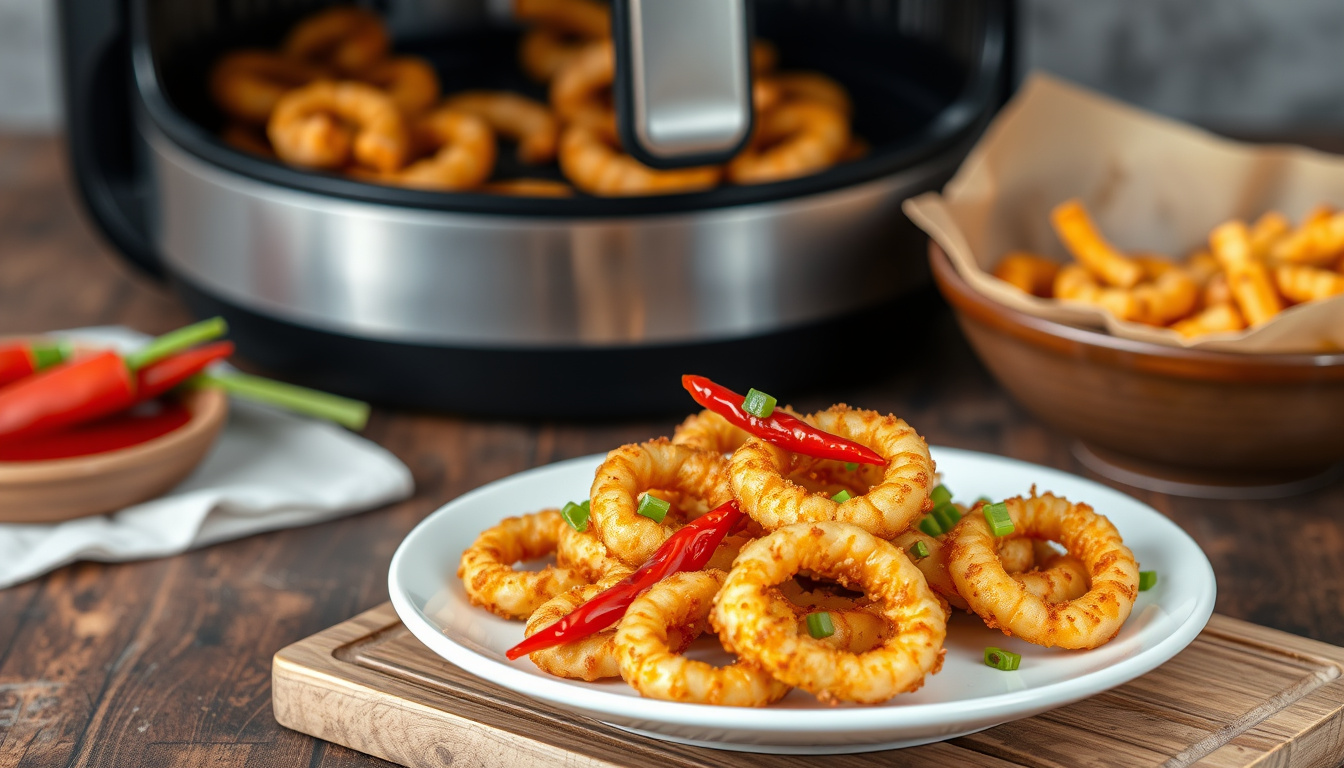
There’s something about the combination of crispy golden squid with a punchy salt and pepper seasoning that makes it one of those dishes you can’t stop eating, whether you’ve ordered it at a Chinese restaurant or tried a Vietnamese version – the appeal is universal. We’ll break down the science behind the crunch, compare regional styles, and share practical tips for cooking from frozen or using an air fryer.
Prep time: 15 minutes ·
Cook time: 10 minutes ·
Servings: 4 ·
Calories per serving: approximately 350 kcal
Quick snapshot
- A cornflour-and-plain-flour blend makes the crispiest batter (RecipeTin Eats (food blog))
- Deep frying at 375°F (190°C) for 2–3 minutes yields golden, non-greasy results (Fifteen Spatulas (recipe site))
- Scoring the squid in a crisscross pattern helps tenderise it (Eight Forest Lane (recipe blog))
- Whether pre-marinating squid in lemon juice or milk affects final crispiness – sources disagree
- Optimal resting time for coated squid before frying to maximise adhesion is not established
- Whether drying methods (paper towels vs air drying) affect coating adhesion is not well documented
- Fry each batch for 2–3 minutes at 375°F (Fifteen Spatulas; Sip and Feast (Italian food site))
- Air fry at 200°C (400°F) for 10–15 minutes (Chow with Lau (YouTube cooking channel))
- Try a Sichuan-peppercorn twist for authentic Chinese flavour (RecipeTin Eats)
- Serve with aioli or nuoc cham for a Vietnamese touch (Delightful Plate (Asian food blog))
Five key details about salt and pepper squid, one pattern: the coating choice and cooking method define the final crunch.
| Attribute | Value |
|---|---|
| Course | Appetizer / Main |
| Cuisine | Chinese, Vietnamese, Western |
| Key ingredient | Squid |
| Cooking method | Deep frying / Air frying |
| Best oil temperature | 375°F (190°C) – Fifteen Spatulas |
| Air fryer temperature | 200°C (400°F) – Chow with Lau |
| Common coating flours | Cornflour, rice flour, plain flour – RecipeTin Eats |
| Fat per serving (approx.) | 18 g |
How to make crispy salt and pepper squid?
Ingredients for crispy coating
- 500 g squid tubes and tentacles, cleaned
- 60 g cornflour (cornstarch) + 30 g plain flour – “light, super crunchy” coating per RecipeTin Eats (food blog)
- 1 tsp salt, 1 tsp white pepper, ½ tsp Sichuan pepper (optional)
- Oil for deep frying (peanut or vegetable)
- Lemon juice to tenderise – optional, used by Fifteen Spatulas (recipe site)
Preparation steps
- Score the squid in a crisscross pattern, then cut into bite-size pieces (Eight Forest Lane (recipe blog))
- Pat thoroughly dry with paper towels – moisture is the enemy of crispiness
- Mix dry coating ingredients in a bowl
- Toss squid in the flour mixture until evenly coated; shake off excess
- Refrigerate coated squid for 30 minutes – “helps the coating adhere and stay crunchy” (RecipeTin Eats)
Frying techniques for extra crispiness
- Heat oil to 375°F (190°C) – use a thermometer for accuracy
- Fry in small batches to avoid temperature drop, about 2–3 minutes per batch (Sip and Feast (Italian food site))
- Drain on a wire rack instead of paper towels to prevent steaming (the rack keeps the crust intact)
- Double frying (fry once at 350°F for 1 min, rest, then again at 375°F for 1 min) reportedly gives an extra-crispy shell, though not tested by all sources
Serving suggestions
- Scatter with sliced red chili, scallions, and fresh cilantro
- A squeeze of lime or lemon brightens the flavour
- “Crispy squid with peppery, fragrant herbs” – Felicity Cloake (The Guardian food columnist)
- Serve immediately; the coating stays crisp even when cold, according to RecipeTin Eats
Home cooks who take the time to chill the coated squid and fry in batches at the right oil temperature will get a crust that rivals restaurant versions. The trade-off: a little extra prep time for a noticeable jump in crunch.
The implication: the simple switch from plain flour to a cornflour blend, combined with proper heat management, is the single biggest factor separating soggy from spectacular.
Home cooks who chill the coated squid and fry in batches at the correct oil temperature can achieve restaurant-level crunch.
How to cook salt and pepper squid in an air fryer?
Air fryer preparation
- Preheat air fryer to 200°C (400°F) for 5 minutes (Chow with Lau (YouTube cooking channel))
- Spray the basket lightly with oil
- Arrange coated squid in a single layer – do not overcrowd
Coating adjustments for air fryers
- Use cornstarch alone (no egg) for a lighter coating that crisps without deep oil – Chow with Lau uses a cornstarch-salt-white pepper mix
- For a thicker crust, add a tablespoon of rice flour
- Toss squid in a bowl with a teaspoon of oil before coating to help the dry mix stick
Cooking time and temperature
- Air fry at 200°C (400°F) for 10–12 minutes, shaking the basket halfway through (RecipeTin Eats suggests 10 min; Chow with Lau goes up to 13–15 min for extra browning)
- Internal temperature should reach 63°C (145°F) for food safety
Tips for even browning
- Shake or flip the squid halfway through cooking
- Spray with a little more oil if the coating looks dry after 6 minutes
- Batch cook in small portions – air circulation is key
Air fryers produce a drier crust than deep frying. The crispness is good but not identical to the oil-bath version. If you prioritise a shatteringly crunchy shell, stick to deep frying.
Why this matters: the air fryer cuts fat by roughly 40% while still delivering a satisfying crunch, making it a strong option for everyday cooking.
Air fryers cut fat by 40% but yield a drier crust; deep frying remains best for maximum crunch.
Can you cook salt and pepper squid from frozen?
Thawing vs cooking directly
- Thawing gives better results: pat dry after thawing to remove excess moisture (Eight Forest Lane (recipe blog))
- Cooking from frozen without thawing can work but risks uneven coating and lower crispiness
Adjusting coating for frozen squid
- Use a thicker coating: double-dip in flour and then again in seasoned flour
- Add a pinch of baking powder to the flour mix for extra lift (common in The Mediterranean Dish (Mediterranean food site))
Cooking time differences
- If starting from frozen, add 2–3 minutes to the frying time
- For deep frying: fry at 350°F (175°C) first for 3 minutes, then finish at 375°F for 1–2 minutes to ensure the centre is cooked
- For air frying from frozen: cook at 200°C for 14–16 minutes, shaking twice
Safety tips
- Ensure squid reaches an internal temperature of 63°C (145°F)
- Do not refreeze thawed squid; cook immediately after coating
- Keep frozen squid below 4°C until ready to cook to prevent bacterial growth
The catch: cooking from frozen saves time but hurts texture. The trade-off is acceptable only if you double the coating and extend the cooking time.
Cooking from frozen saves time but requires double coating and extended cooking time to maintain texture.
What is Chinese-style salt and pepper squid?
Key ingredients (Sichuan peppercorns, chili)
- Chinese-style relies on Sichuan peppercorns for a numbing, aromatic heat
- Garlic, ginger, and scallions are stir-fried with the squid
- Light batter made from cornstarch and a pinch of salt – RecipeTin Eats notes the batter is “not greasy at all”
Stir-fry technique
- Squid is first deep-fried until golden, then quickly stir-fried in a wok with the aromatics and seasonings (Kitchen Corner (home cooking blog))
- Shaoxing wine is often added for depth
- The total wok time is under 1 minute to keep the squid tender
Comparison with other variations
- Chinese version emphasises numbing heat and crunchy exterior, while Vietnamese leans toward tangy marinades and herbs (Delightful Plate (Asian food blog))
- Western versions often serve with lemon aioli rather than chili
Common accompaniments
- Served with steamed rice or as a bar snack
- Accompanied by a dipping sauce of soy sauce and rice vinegar
The pattern: Chinese-style is about layering heat and crunch through the double-cook method, whereas Western recipes rely purely on frying and dipping.
Chinese-style uses double-cooking to layer heat and crunch, while Western versions rely on frying and dipping.
What is Vietnamese salt and pepper squid?
Vietnamese seasoning (fish sauce, lime)
- Fish sauce and lime juice are used in the marinade, giving a savory-tangy base (Delightful Plate (Asian food blog))
- Garlic and black pepper are the core spices
Herbs like mint and cilantro
- Fresh mint, cilantro, and sometimes Thai basil are tossed with the hot squid
- The herbs add a bright contrast to the rich fried coating
Serving with nuoc cham
- Nuoc cham (fish sauce, lime, sugar, chili, garlic) is the classic dipping sauce – Jen H Dao (Vietnamese recipe site) pairs it with mực chiên (fried squid)
- Some versions use a tempura-style batter made with rice flour for extra lightness
Different batter style
- Jen H Dao’s mực chiên uses a tempura mix (rice flour-based) for a delicate, lacy crust
- The batter can be thinner than the Chinese version, absorbing less oil
Why this matters: the Vietnamese approach prioritises freshness through herbs and dipping sauce, creating a dish that feels lighter even when fried.
Vietnamese salt and pepper squid feels lighter due to fresh herbs and a rice-flour batter, paired with nuoc cham.
“This salt and pepper squid recipe is simply delicious; crispy squid with peppery, fragrant herbs.”
“A real seafood treat – crisp, savoury, aromatic – ready in less than half an hour.”
“The fry batter is light, super crunchy and not greasy at all. In fact, it’s so crispy it stays crispy even when it’s stone cold.”
– RecipeTin Eats (food blog)
For the home cook in New Zealand or anywhere else looking to master salt and pepper squid, the choice between deep frying and air frying boils down to a trade-off: maximum crunch from the oil bath versus a cleaner, lower-fat result from the air fryer. Both paths can deliver a satisfying dish when you respect the fundamentals – dry squid, correct oil temperature, and a cornstarch-based coating. The decision is clear: invest a few extra minutes in chilling the coated squid and frying in proper batches, or accept the slightly softer outcome from frozen or air-fried versions.
For more air fryer inspiration, check out Jamie Oliver Air Fryer Recipes. Pair with Chicken Fried Rice NZ Recipe for a complete meal.
For those looking to explore the restaurant version of this classic dish, the Salt and Pepper Manchester guide offers a detailed look at a modern Chinese-inspired eatery.
Frequently asked questions
What is the best oil for deep frying salt and pepper squid?
Peanut oil or vegetable oil with a high smoke point (above 400°F / 200°C) works best. Avoid olive oil as it burns at frying temperatures.
How to store leftover salt and pepper squid?
Store in an airtight container in the fridge for up to 2 days. Reheat in an air fryer at 180°C for 3–4 minutes to restore crunch – not in a microwave.
Can I make salt and pepper squid without cornflour?
Yes, replace with rice flour or potato starch. Cornflour delivers the crispiest result, but rice flour gives a lighter, tempura-like crust.
What salt and pepper ratio is ideal?
A ratio of 2 parts white pepper to 1 part salt is standard. Adjust for heat preference.
How to make salt and pepper squid spicier?
Add dried chili flakes to the coating or stir-fry with fresh sliced chilies and Sichuan peppercorns.
Is salt and pepper squid keto-friendly?
The coating contains carbohydrates from starch flours. For a keto version, use almond flour or crushed pork rinds, but the texture will differ.
Comments
One response to “Crispy Salt and Pepper Squid: Air Fryer & Chinese Style”
[…] Crispy Salt and Pepper Squid: Air Fryer & Chinese Style […]