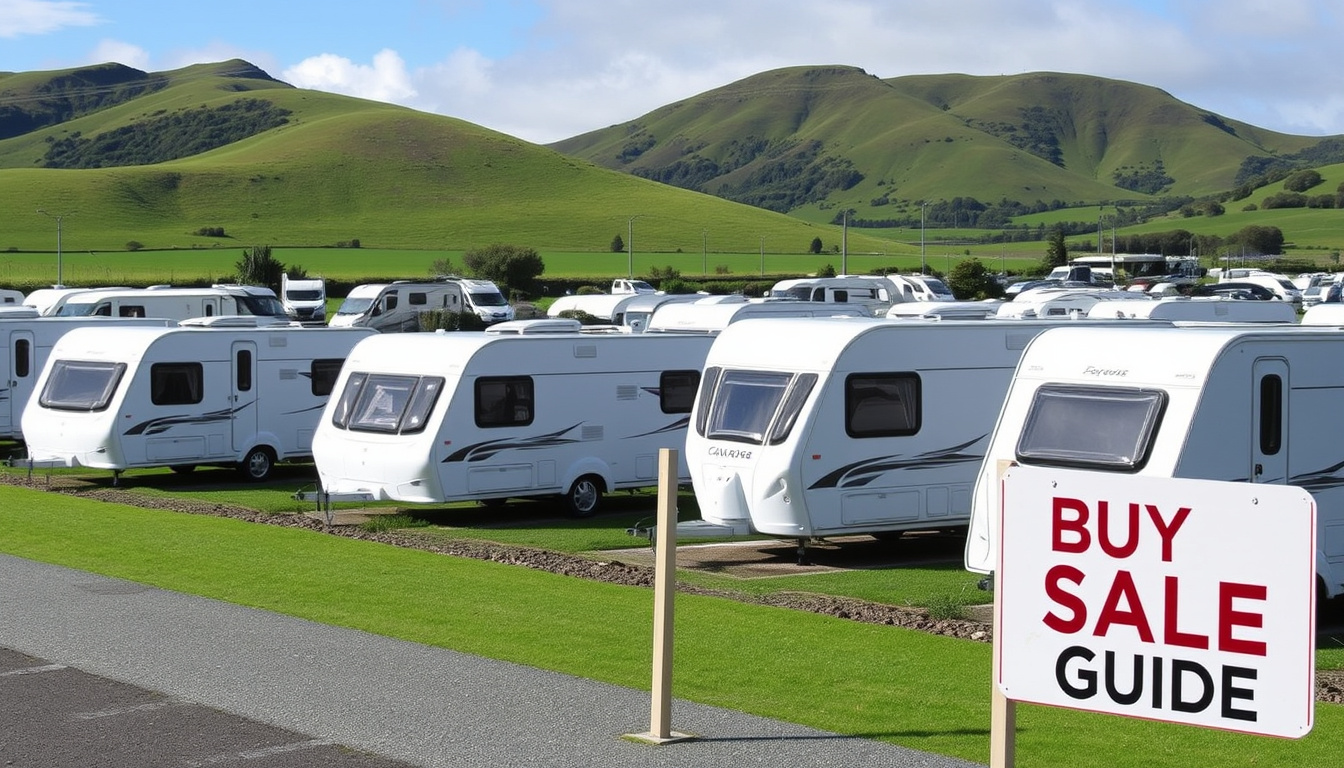
If you’ve spent a weekend trawling Trade Me and Gumtree for a caravan for sale NZ, you already know the market is a mix of private bargains and polished dealer lots — and that the real work isn’t finding a caravan but separating a fair price from a costly handshake. This guide shows you where the listings hide, what a budget under $10,000 actually buys, and why an NZTA-compliant warrant matters more than fresh upholstery.
Popular caravan brands in NZ: Swift, Jayco, Bailey ·
Price range for used caravans (examples): From under $10,000 to over $44,950 ·
Main dealer regions: Nelson, Waikato, Motueka ·
Common sources: Dealers, Gumtree, private listings
Quick snapshot
- Caravans need registration, licensing, and a warrant of fitness before hitting NZ roads (NZ Transport Agency Waka Kotahi)
- Private sales aren’t covered by the Consumer Guarantees Act (NZ Consumer Protection)
- Exact national inventory of off road caravan models
- What a true average second hand caravan actually sells for
- Warranty coverage differences across smaller NZ dealers
- Trailers first registered on or after 2012-04-01 must have stop lamps and indicators (NZ Transport Agency Waka Kotahi)
- Check the warrant and licensing status before you negotiate on any caravan for sale NZ
Four numbers, one pattern: the legal basics define the deal.
| Label | Value |
|---|---|
| Example dealer listing | Nelson Caravans: Swift caravan range available at 106 Tahunanui Drive, Nelson |
| Example private-style platform | Gumtree NZ: user-uploaded listings for caravans |
| Example price point | Motueka Valley Caravans: 2013 Bailey Pegasus – $32,950 |
| Importer focus | NZ Caravan Importers source quality second hand caravans from Waikato |
| Definition | A caravan is permanently equipped as a dwelling with at least one sleeping berth and one table (NZTA VDAM definitions) |
| Weight class | Most caravans are light trailers with GVM under 3,500 kg (NZTA light trailer guidance) |
| Registration | One-off process to add vehicle to the Motor Vehicle Register (NZTA vehicle licensing factsheet) |
| Licensing | Recurring payment permitting road use; label displayed near number plate (NZTA vehicle licensing factsheet) |
| Warrant | Required before a vehicle can receive a licence label or be used on the road (NZTA vehicle licensing factsheet) |
| Speed limit | Maximum 90 km/h when towing a trailer with a rigid connection (NZTA towing rules) |
Where can I find second hand caravans for sale in New Zealand?
Dealer listings
- Nelson Caravans carries the Swift range at 106 Tahunanui Drive, Nelson
- LeisureShed stocks multiple caravan models
- NZMCD hosts listings from various dealers
- Motueka Valley Caravans specialises in Bailey Pegasus models such as a 2013 model at $32,950
Dealer lots are the easiest place to start because they handle the paperwork. A registered motor-vehicle trader must provide a Consumer Information Notice and is bound by the Consumer Guarantees Act, which means you have legal protection if the caravan turns out to be a lemon. For first-time buyers, that safety net alone can justify a higher sticker price.
Private sale platforms like Gumtree
Gumtree NZ has a dedicated caravans category where private owners list their rigs directly. You’ll often see prices below dealer levels, but the trade-off is legal: private sellers don’t have to be registered motor-vehicle traders or comply with the Consumer Guarantees Act and Fair Trading Act the same way dealers do. That’s not a dealbreaker, but it changes how you inspect and negotiate.
Online marketplaces (Trade Me, Facebook)
Trade Me Motors and Facebook Marketplace are the other two pillars of the NZ second hand market. They operate on the same private-sale principle as Gumtree: you’re dealing with an owner, not a business. The advantage is volume and price visibility. The catch is that you are responsible for verifying the caravan’s condition, paperwork, and legal status before you hand over cash.
The implication: dealers sell protection, private sellers sell price. Choose which one you’re actually buying.
What are the best caravans for sale in New Zealand under $10,000?
Typical makes and models in this price range
In the sub-$10,000 bracket, you’re usually looking at older Jayco models, early Swift caravans, and a scattering of Australian imports that have been privately imported. These are not pristine units. They’re caravans that have lived a few seasons in NZ weather, and their price reflects age, wear, and sometimes deferred maintenance.
What to expect from a sub-$10k caravan
At this price point, the caravan itself is only one line in the budget. You still need to cover a warrant of fitness, pay registration and licensing through NZTA, and potentially replace tyres, brakes, or seals. Since most caravans are light trailers under 3,500 kg GVM, the legal requirements are manageable, but they are not free.
A $9,000 caravan with an expired warrant can quietly become a $12,000 caravan after compliance repairs. Factor NZTA warrant and licensing costs into your bid before you make an offer.
Where to search
Gumtree and private sellers are your best hunting grounds at this budget. Dealers rarely stock sub-$10,000 units because the margin is too thin, so you’ll have to do the legwork yourself: search listings daily, ask for the warrant and registration status up front, and be prepared to travel. The trade-off for a lower price is the loss of dealer warranty and consumer protections.
What this means: at $10,000 you’re not buying a caravan. You’re buying a project with a body on it. If you don’t have time to verify its legal status, a dealer’s used lot is the safer bet.
How do I find a caravan for sale on Gumtree New Zealand?
Using Gumtree’s search filters
Start in the dedicated caravans category and set filters for price range, location, and keyword. Search “caravan for sale NZ” as a phrase, but also try “caravan under 10000” and “off road caravan” to catch listings with different titles. The filter tools are straightforward, but the listings themselves can be messy, so check whether the ad mentions warrant of fitness, registration, and the year of manufacture.
Contacting sellers safely
Private listings may have less warranty than dealer sales, so communication matters. Ask direct questions: Does the caravan have a current warrant? Is the registration and licensing up to date? When was the last time it was towed? A seller who hesitates on those answers is telling you why the price is low. Meet in daylight, inspect with a torch, and never transfer the full payment without a signed bill of sale.
Inspecting the caravan
Bring a checklist. Check the tyres for age and cracking, look under the chassis for rust, and ask if the trailer brakes work. Since passengers are not allowed to travel inside a caravan while it is being towed on NZ roads, the condition of the tow hitch and safety chains is just as important as the interior. If you’re not confident, pay a mechanic to inspect it before you commit.
The trade-off: you save money on Gumtree, but you become the compliance officer. That’s a role dealers normally fill for you.
Are private caravans for sale in New Zealand cheaper than dealer ones?
Price differences and trade-offs
Yes, private listings are typically cheaper on the sticker price. The Consumer Protection guidance is blunt about why: private sellers don’t have to be registered motor-vehicle traders, provide a Consumer Information Notice, or follow the Consumer Guarantees Act and Fair Trading Act the same way dealers do. You’re trading legal recourse for a lower price.
Warranty and after-sales support
Dealer caravans come with certification and often a limited warranty. A private sale from the driveway comes with the previous owner’s word. That’s not always a problem, but if something fails a month later, a private seller has no legal obligation to fix it, whereas a dealer does. In a market where a 2013 Bailey Pegasus sells for $32,950 through a dealer, the difference between private and dealer pricing can be thousands, but so is the difference in protection.
Inspection and negotiation tips
Use the dealer price as your ceiling reference. If you find a private listing, ask why it’s cheaper. Then ask for the warrant of fitness record, the registration certificate, and any maintenance receipts. A private sale can still be a great deal if the caravan is legally compliant and the owner has done the work. Just know that you’re the one responsible for verifying it.
Private buyers face fewer protections, per NZ Consumer Protection, so the discount you negotiate should reflect the extra risk you’re absorbing.
Why this matters: in NZ, the law draws a clear line between buying from a business and buying from a neighbour. Cross it with open eyes and a checklist.
What off road caravans are available for sale in New Zealand?
Off road caravan brands and features
Off road caravans typically have higher ground clearance, rugged suspension, and reinforced chassis. They’re built to survive gravel roads, river crossings, and the kind of terrain that would rattle a standard Jayco apart. In NZ, this segment is smaller than the general market, but dealers like Nelson Caravans sometimes stock off road variants, and importers can bring in specialised Australian models built for tough conditions.
Key considerations for off road use
Off road capability adds weight, and weight affects your towing setup. Most caravans in NZ are light trailers with a gross vehicle mass below 3,500 kg, but an off road unit with water tanks, solar panels, and a battery bank can still strain a standard family car. Check your vehicle’s legal towing capacity before you fall in love with a model. Also remember: the 90 km/h open-road towing limit applies regardless of how rugged the caravan is.
Where to buy
Start with specialist dealers and importers. NZ Caravan Importers, based in Waikato, focuses on sourcing and supplying second hand caravans, and they can point you toward off road capable models that meet NZTA registration requirements. Australian imports are also worth exploring because the off road caravan market is more established across the Tasman, with brands like Track Trailer and Kimberley that don’t have the same dealer footprint in NZ.
What this means: off road caravans are available, but they’re a niche. Expect to widen your search radius or pay a premium for a unit that’s already been imported and certified for NZ roads.
Caravan specifications at a glance
Five specs, one pattern: everything that matters before you buy is a legal or mechanical number, not a colour choice.
| Spec / requirement | Detail |
|---|---|
| Typical weight | GVM below 3,500 kg (light trailer category) |
| Registration status | Required before use on public roads |
| Licensing | Recurring payment; not continuous for light trailers |
| Warrant of fitness | Required before receiving licence label or road use |
| One-off registration process | Adds vehicle to Motor Vehicle Register, issues plates |
| Licence label placement | Displayed near the number plate |
| Tow speed limit | Maximum 90 km/h on open road with rigid connection |
| Passengers in caravan | Not allowed while towing |
| Lighting requirement | Registration on/after 2012-04-01 requires stop lamps and indicators |
| Legal protection dealer | Consumer Guarantees Act applies |
| Legal protection private | Not covered by Consumer Guarantees Act |
| Seller obligations private | No registered trader status required, no CIN required |
The implication: a caravan for sale NZ is a regulated vehicle, not just a weekend toy. If the paperwork isn’t in order, the price in the ad is only the start of the cost.
Upsides and downsides
Upsides
- Wide market from dealers to private sellers to imports
- Genuine budget options under $10,000 if you’re patient
- Dealer purchases carry Consumer Guarantees Act protection
- Australia offers a deep pool of well-made off road models
Downsides
- Private sales offer limited legal protection
- Sub-$10,000 units often need compliance repairs
- Warrant, registration, and licensing add to the true price
- Off road models are niche and may require travel to buy
The trade-off is structural: you can save money on the driveway, or buy safety from a dealer tray. Few NZ buyers get both.
How to buy a caravan in New Zealand: a practical checklist
-
Step 1: Set your budget with compliance included
Before you even search “caravan for sale NZ”, write down the purchase price and a separate line for warrant of fitness, registration, and any immediate repairs. The legal baseline is clear: a caravan must be registered and licensed before use, and a warrant of fitness is required. That is non-negotiable.
-
Step 2: Choose your seller type
Decide whether you want dealer protection or private-sale pricing. A registered dealer is bound by the Consumer Guarantees Act; a private seller is not. There is no right answer, only a trade-off between legal safety and upfront cost.
-
Step 3: Inspect the caravan like a regulator
Check the warrant status, look for rust and water damage, test the brakes and tyres, and verify the VIN or chassis number. If the caravan was first registered on or after 2012-04-01, confirm it has the required stop lamps and direction indicators.
-
Step 4: Complete the paperwork
For a dealer, ensure you receive a Consumer Information Notice and a written warranty if promised. For a private sale, get a signed bill of sale, the registration certificate, and the current warrant of fitness. Registering the trailer in your name with NZTA closes the transaction properly.
-
Step 5: Plan your towing setup
If your caravan is under 3,500 kg GVM, it’s a light trailer, but your car still needs to be rated for the loaded weight. Remember the 90 km/h open-road limit and never carry passengers inside the caravan while towing.
Why this matters: every step is a chance to catch a problem before it becomes a repair bill.
Confirmed facts and open questions
Confirmed
- Nelson Caravans sells Swift caravans in Nelson (NZTA legal frame applies to all NZ caravans)
- LeisureShed offers a range of caravans and campervans
- NZMCD hosts both dealer and private listings
- NZ Caravan Importers are Waikato-based and import second hand caravans
- Motueka Valley Caravans stock Bailey Pegasus models
- Most caravans in NZ are light trailers under 3,500 kg GVM (NZ Transport Agency Waka Kotahi)
- Caravans need registration, licensing, and warrant of fitness (NZ Transport Agency Waka Kotahi)
- Private sales are not covered by the Consumer Guarantees Act (NZ Consumer Protection)
What’s unclear
- Exact number of off road caravan options in NZ
- Average price for a second hand caravan
- Warranty coverage for specific dealers
The pattern: the legal claims in this market are rock solid; the inventory claims are situational. Trust the NZTA rules, verify the dealer promises.
What owners and dealers say
The Swift caravan range is best suited for New Zealand conditions.
— Nelson Caravans, dealer commentary
We source and supply quality second hand caravans at competitive prices.
— NZ Caravan Importers, Waikato-based importer
Private buyers may still have remedies if the seller gave false information, lacked the right to sell, or a finance company repossesses the vehicle because money was owed.
— NZ Consumer Protection, government guidance
At the end of a long search, the best caravan is one that’s legally compliant, mechanically sound, and priced with the warrant already in the deal. For a first-time buyer in NZ, the choice comes down to this: buy from a dealer and pay a premium for legal protection, or buy privately and do the compliance work yourself. For a family planning its first big trip, the dealer route is the faster path to a stress-free holiday. For a seasoned owner who knows a chassis from a chandelier, a private sale under $10,000 can be the smarter financial play. The market has room for both. Just know which one you are before you hand over the cash.
pacificbrief.nz, nzta.govt.nz, nzta.govt.nz, nzta.govt.nz, nzta.govt.nz
Frequently asked questions
What is the most reliable caravan brand in New Zealand?
Swift, Jayco, and Bailey have strong dealer presence in NZ. Reliability depends more on maintenance history than brand name, so check the warrant and service records before buying.
Do I need a special license to tow a caravan in NZ?
For most caravans under 3,500 kg GVM, your standard car license covers towing, provided the combined weight stays within your vehicle’s rated capacity.
How much does it cost to register a caravan in NZ?
Registration is a one-off NZTA fee that adds the caravan to the Motor Vehicle Register. Licensing is the recurring payment that lets it use public roads. Check the NZTA factsheet for current fees.
Can I finance a used caravan purchase in New Zealand?
Yes, many banks and credit unions offer caravan loans, often secured against the caravan itself. Dealers can also arrange finance, but compare rates with your own bank first.
What insurance do I need for a caravan in NZ?
Third-party towing cover is strongly recommended, especially if your caravan is towed on open roads. Comprehensive caravan insurance is also available and covers theft, fire, and storm damage.
How long does a typical caravan last in NZ conditions?
With proper maintenance, a well-built caravan can last 20 to 30 years in NZ. The limiting factor is usually water damage from leaks rather than chassis wear.
Is it better to buy a new or used caravan in NZ?
A used caravan under $10,000 fits a tight budget but requires compliance checks. A new caravan carries warranties and modern safety features, but at a much higher starting price. The right answer depends on your budget and your tolerance for maintenance.
What size caravan can I tow with a standard car in NZ?
Most standard NZ cars can legally tow a caravan under 3,500 kg GVM, but the practical limit is set by your car’s rated towing capacity, which is listed in the owner’s manual. Weigh your caravan before you tow, and respect the 90 km/h open-road limit.
Related reading: Free Campervan Relocation NZ · Renew Drivers Licence NZ Online
Comments
One response to “Caravan for Sale NZ: New & Used Caravans Guide 2025”
[…] Caravan for Sale NZ: New & Used Caravans Guide 2025 […]