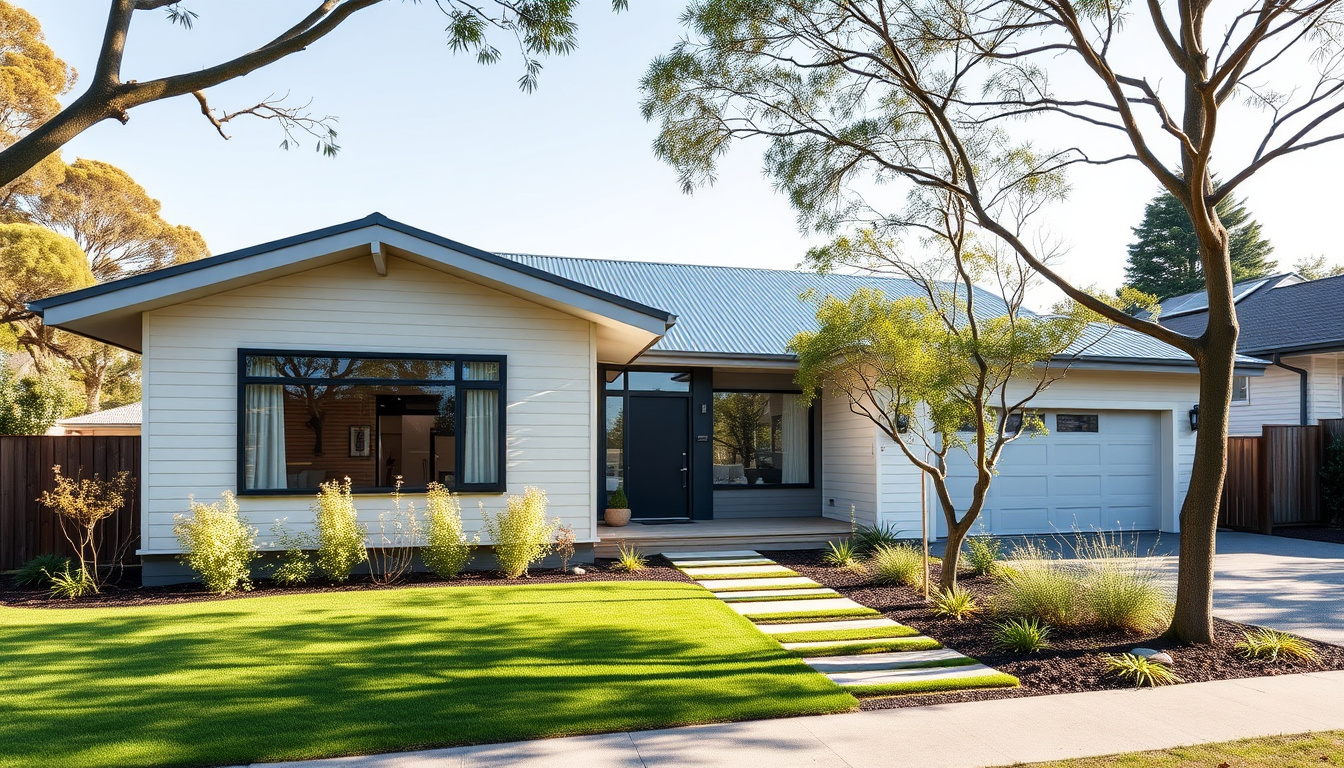
If you’ve spent any time scrolling through New Zealand house-and-land pages, G.J. Gardner’s orange signs are hard to miss. The company is one of the biggest names in the local volume-build market, according to BusinessDesk’s chart of New Zealand’s biggest house builders, and its website leans hard on a simple promise: an affordable, fixed-price build from a flat section.
Market position: top tier among NZ’s largest house builders (BusinessDesk) · Price basis: flat, serviced section only (G.J. Gardner pricing) · Initial deposit: $3,000–$5,000 (G.J. Gardner FAQ) · Late-completion cover: liquidated damages (G.J. Gardner FAQ)
Confirmed facts
Design pricing is based on a flat, serviced site on “good ground” and excludes landscaping, driveways, earthworks and land. G.J. Gardner Homes NZ (pricing)
Regional variations in materials, labour, products specified and local authority requirements can change the quoted price. G.J. Gardner Homes NZ (FAQ)
Standard progress payments start from a $3,000–$5,000 initial deposit and continue through to practical completion. G.J. Gardner Homes NZ (FAQ)
G.J. Gardner is one of the larger national builders in New Zealand by new-home market share, according to BusinessDesk.
Before comparing a G.J. Gardner tender with any other builder, these are the facts that should frame your cost model.
| Question | What the official material says | Reference |
|---|---|---|
| What price is quoted on? | A flat, serviced section on “good ground” | Official pricing page |
| What is excluded? | Land, earthworks, driveways, landscaping | Official pricing page |
| Can the price change? | Yes, with regional materials, labour and council requirements | Official FAQ |
| When do progress payments start? | After a $3,000–$5,000 initial deposit, then in stages until practical completion | Official FAQ |
| What happens if the build runs late? | Liquidated damages are part of the contract | Official FAQ |
Who are the top 10 builders in New Zealand?
There is no single government-issued “top 10 builders” list in New Zealand. Depending on whether you measure by revenue, consents, annual sales or customer votes, the order changes. What the market-share data shows is that G.J. Gardner belongs in the national tier of volume builders. BusinessDesk’s analysis of New Zealand’s biggest house builders puts the big national brands on a different level from regional custom builders.
- G.J. Gardner Homes — a nationwide franchise network and one of the largest new-home builders in the country.
- Signature Homes — a design-and-build network with national showhome coverage.
- Jennian Homes — one of the NZ-owned brands most often compared with G.J. Gardner.
- Classic Builders — a builder frequently mentioned in the same national “biggest builder” conversations.
What does a G.J. Gardner home actually cost?
The published G.J. Gardner price assumes a specific site condition: a completed, flat, serviced section on “good ground.” G.J. Gardner’s pricing page says the price excludes land and site-related costs such as earthworks, driveways and landscaping. In other words, the “design price” is the amount you pay the builder for the house itself before the realities of your property are added.
That distinction is not minor. Two buyers can look at the same plan and pay very different final amounts if one starts with a flat cleared section and the other starts with a sloping clay site. The official FAQ says the quoted price can also change because of regional differences in materials, labour and local authority requirements. G.J. Gardner FAQ
How much does it cost to build a 3 bedroom house in NZ?
G.J. Gardner does not publish a standard price for a three-bedroom home because the final figure depends on the section condition, regional material costs, and local council requirements. The company’s pricing page makes clear that the “design price” assumes a flat, serviced section on good ground and excludes land, earthworks, driveways and landscaping. G.J. Gardner pricing Industry estimates from Opes Partners put the average G.J. Gardner build at around $541,273 over the last 12 months across an average floor area of 165 square metres. Opes Partners analysis The catch: that average masks wide regional spreads, with Auckland topping $1.28 million and Canterbury averaging $872,800. Opes Partners regional data
A G.J. Gardner price is only a starting point. The final project cost depends on land, site conditions and council requirements, which is why two G.J. Gardner builds can look completely different in the final ledger.
Why do G.J. Gardner reviews tell a different story from the awards?
On Trustpilot, the reviewed customer score sits around 2.5 out of 5 — a very different picture from the marketing image of a 10-time award winner. But those two facts can both be true. Nationally, G.J. Gardner has scale, a polished pricing model and an impressive sales network. Locally, the experience is determined by a franchise owner, a site manager and a long trade chain.
“Design pricing is based on a flat, serviced site on ‘good ground’ and excludes land and site-related costs such as landscaping, driveways and earthworks.” G.J. Gardner pricing page
That official statement explains the most common gap between customer expectations and customer reviews: many buyers compare the advertised house price with the final completed cost, without drawing a clear line between house, land and site works.
Are there signs that G.J. Gardner is going into liquidation?
The rumour that “G.J. Gardner is going into liquidation” usually comes from confusing two words: liquidation and liquidated damages.
Liquidated damages are a standard part of a construction contract. They are not a sign that the builder is about to close — they protect the buyer if the building work runs late. G.J. Gardner’s FAQ describes liquidated damages as part of the company’s standard contract. That is different from a company going into liquidation, which is a legal process involving insolvency.
None of the official documents reviewed for this article indicate that the national G.J. Gardner network is in receivership or liquidation. What matters for a buyer is that each franchise or local entity is a separate business, so the financial history of the local builder should be checked before any deposit is paid.
Ask the local franchise for legal details of the contract entity, and take legal advice on the practical-completion and dispute-resolution clauses. That matters far more than the national brand’s marketing gloss.
How to compare G.J. Gardner with Signature, Jennian and Classic Builders
Every national builder uses its own pricing language. G.J. Gardner’s official material is clear that the base price assumes a flat, serviced section on good ground, but another builder may quote on a different site assumption — or none at all.
| What to compare | What G.J. Gardner’s own documents say | What to ask the next builder |
|---|---|---|
| Site readiness | Flat, serviced section on “good ground” | Does your price include slope, cut-and-fill or poor ground? |
| Regional price risk | Variations in materials, labour and council requirements can change the price | Can you cap your variation allowance? |
| Payment schedule | $3,000–$5,000 initial deposit, then staged progress payments | Exactly what milestone triggers each payment? |
| Late completion | Liquidated damages apply | What is your financial cover if the build runs late? |
The pattern: the most important line in a builder comparison is not the headline price. It is the set of assumptions beneath the price — site conditions, fixed-price exclusions and progress-payment timing.
First-home buyers: what to ask before signing
For first-home buyers, the land-and-site question matters as much as the builder brand. If you already own a flat, serviced section, G.J. Gardner’s pricing model can be an efficient path to a new build. If you do not yet own that section, the base quote does you no good until the true site costs are added.
- Ask about the section assumption. Does the quote assume a flat, completed section? Confirm what happens if earthworks are needed.
- Ask about scope exclusions. G.J. Gardner’s official pricing excludes landscaping and driveways. Have those costs been added separately?
- Ask about timing risk. What is the contract date for practical completion? What liquidated damages protect you if the build runs late?
There are no special “first-home builder promotions” in the official G.J. Gardner pricing documents reviewed here. Instead, the main first-home advantage is the payment structure: a $3,000–$5,000 initial deposit plus staged progress payments is a legitimate way to manage cash flow compared with some custom builders who require a much higher upfront deposit. G.J. Gardner FAQ
What this means for your build: the G.J. Gardner formula is not false, but it is also not simple. The published design price requires a flat, serviced section; the final contract price changes with regional material costs, site and council issues; and the local franchise matters more than the national award list. Approach the local showhome with your own list of excluded items, and treat the contract as the first place where the real “fixed price” is defined.
blog.realestateinvestar.com.au, checkmybuilder.co.nz, nbr.co.nz, reddit.com, gazette.govt.nz, prod.gjgardner.co.nz, gjgardner.co.nz
Frequently asked questions
Is G.J. Gardner going into liquidation?
No. The documents reviewed here refer to liquidated damages as a standard contract protection, not to the company going into liquidation. Always check the local franchise entity before paying a deposit.
What is excluded from a G.J. Gardner price?
The official pricing page says the design price excludes land and site-related costs such as earthworks, driveways and landscaping. That usually means a flat, serviced section on “good ground” is assumed.
Can a G.J. Gardner quote change before construction?
Yes. The official FAQ says regional variations in materials, labour, products specified and local authority requirements can change the quoted price.
What is a typical G.J. Gardner deposit?
G.J. Gardner’s official material describes an initial deposit of $3,000–$5,000, followed by staged progress payments through to practical completion.
Are there first-home builder discounts from G.J. Gardner?
No national first-home discount appears in the official G.J. Gardner pricing or FAQ material reviewed. Regional franchise offers should be checked directly.
Who are the owners of G.J. Gardner Homes?
G.J. Gardner Homes is a franchise network. Each local office in New Zealand is independently owned by its franchisee under the master franchise. The national brand operates under license from the Australian parent company.