What is the best free online drawing website?
The honest answer: the best free drawing website depends on how you learn, but the same options keep winning comparisons — Class Central’s editorial guide, Alison’s structured courses, and exercise-driven programs like Drawabox.
Drawabox: exercise-based fundamentals
- Model: free, exercise-based lessons, self-paced
- Best for: beginners who want daily drills instead of video marathons
- Catch: no instructor feedback — you are the critic
Drawabox is the clearest example of an exercise-first philosophy: the lessons are free, and the curriculum builds line control and spatial reasoning through repetition. Class Central’s best drawing courses guide is built around the same judgment — structured fundamentals matter more than production polish, especially in the early phase.
The implication: if you learn by doing and can tolerate honest self-critique, an exercise-based site beats a video marathon.
The Pencil Room Online and YouTube’s free library
- Model: free step-by-step video lessons
- Best for: visual learners who want to watch before they draw
- Catch: no syllabus, no feedback, no certificate
YouTube is where many beginners start, and beginner-focused channels such as The Pencil Room Online are part of a larger free library that never asks you to register. The trade-off is structure: a video series gives you lessons, but you have to plan the sequence yourself. For a first week of practice, that’s fine; for a month of steady progress, a course with a progression helps.
The trade-off: free video series lower the barrier, but they shift lesson planning onto you.
Alison’s free sketching courses
- Model: structured modules, free with registration
- Best for: learners who want a course shape without paying
- Instructor: portrait artist Ethan Moran walks through the fundamentals
Alison’s How to Draw 101 is a free course taught by portrait artist Ethan Moran, and its format is closer to a traditional classroom than most YouTube channels. That structure answers the question beginners ask most: “what do I practice today?”
Why this matters: a defined path keeps you moving even on days when motivation dips.
Class Central’s curated list
- Model: reviews and rankings of free and free-to-audit drawing courses
- Best for: finding university-level and specialist courses in one place
- Catch: each course’s certificate policy still varies
Class Central’s 2025 guide separates genuinely free and free-to-audit options from paid ones, and it reviews the curriculum details — structure, exercises, instructor quality — that matter when you’re learning alone.
Why this matters
A curated list saves you hours, but each course page still writes its own certificate rules — the guide filters, it doesn’t decide for you.
The takeaway: pick format first, platform second. A free course you’ll actually follow beats a famous course you’ll skip.
Bottom line: For most beginners, Class Central’s guide is the best free filter, but your personal best pick comes down to format: Alison for structured lessons, Drawabox for exercises, YouTube for quick videos.
Are there any free online drawing courses?
Yes — the options are real, and several of them include a certificate without asking for your card. The catch is what “free” covers at each platform.
Free course platforms available
- Udemy’s free drawing page lists free video courses, including Drawing for Beginners: How to Draw 25 Cartoons Step-by-Step (Udemy)
- Alison’s How to Draw 101 is free with registration
- Cursa’s drawing and painting catalog is free, by the platform’s own description
- Class Central aggregates free and free-to-audit courses from multiple providers
Udemy’s free drawing topic page is the most direct proof that free courses exist at scale: the free category is full of complete video courses, not just previews. Alison and Cursa host free courses on their own platforms, and Guru99’s 2025 round-up adds The Art & Science of Drawing to the list of beginner-friendly free options.
The pattern across all of them: free access is standard, but the depth of the free tier varies from “watch everything” to “watch the first module.”
Certificate options
- Udemy: free courses include a certificate of completion
- Cursa: free digital certificate issued through its app
- Coursera: preview and trial are free, but the certificate generally requires an upgrade or financial aid (Coursera)
- Class Central’s guide: many free and free-to-audit courses do not include a certificate
This is where free courses split. Udemy and Cursa advertise certificates on free access, which is rare. Coursera runs the opposite model: you can start drawing for free through preview or trial options, but the certificate generally requires payment or an approved financial aid application. Class Central’s guide shows how wide the middle ground is — plenty of courses are free to audit, and plenty skip the certificate entirely.
The upshot
If a certificate is your goal, filter for it before you enroll: Udemy’s free page states it clearly, while Coursera’s free tier stops short of the credential.
Skill-level suitability
- Absolute beginners: Udemy’s free cartoon course and YouTube basics
- Intermediate learners: university and institutional courses via Class Central
- Practice-heavy learners: exercise-based programs
Most free drawing courses are aimed at beginners, which is exactly right for someone starting from zero. For intermediate learners, the strongest free tier appears in university and institutional courses indexed by Class Central, though certificate access is often paid there.
The pattern: free access is common; free proof of completion is the exception. Decide which one you need before you enroll.
Bottom line: Free drawing courses are genuinely available, but treat any ad that promises a free certificate as fine print to verify: Udemy and Cursa deliver, Coursera’s certificates require payment or financial aid.
What is the difference between drawing and sketching?
Course listings use the two words loosely, but drawing and sketching are different stages of the same habit.
Drawing as detailed finished work
- Drawing: refined, proportioned, worked to a finish
- Time per piece: often hours, as shading and detail accumulate
- Goal: a complete image that holds up on its own
A drawing course is a promise of finished work: you learn line quality, value, and proportion until an image feels resolved. That’s why drawing lessons take longer per piece than sketching tutorials — the finish is the skill being trained, and free drawing courses are built around that commitment.
Sketching as quick study
- Sketching: fast, exploratory, often incomplete
- Purpose: capture gesture, composition, or a fleeting idea
- Habit: sketchbooks, thumbnails, and the planning stage
Sketching is where drawing starts. It is a low-stakes way to train hand-eye coordination, and it is the default format for warm-up drills on YouTube and free course platforms because it removes the pressure to produce something impressive. You sketch to think; you draw to finish.
Materials and approach differences
- Tools: a pencil and paper cover both
- Sketching approach: loose, disposable, quantity-driven
- Drawing approach: controlled, deliberate, quality-driven
The materials barely differ — an HB pencil and a sketchbook handle both. The approach does: sketching explores, drawing commits. Free beginner courses usually teach sketching as the warm-up and drawing as the deliverable, which is why the best ones include both in the same curriculum.
The practical read: if your goal is finished artwork, search for “drawing course”; if your goal is a daily habit, a sketching channel will keep you moving with less pressure.
What pencil do most artists use?
You don’t need a 20-piece pencil set to start, and free drawing courses assume you’re arriving with the basics.
HB pencil for general use
- HB: the middle grade — light enough for construction, dark enough to see
- Used for: first lines, outlines, and general sketching
- Familiar because: it matches the standard No. 2 pencil
The HB is the default in most drawing instruction because it behaves predictably: soft enough to leave a visible line, hard enough to stay clean. Start with it for layout, then let softer grades carry the shading.
2B and 4B for shading
- 2B: darker than HB, with enough resistance for control
- 4B: soft and rich, built for shadows
- Rule of thumb: higher B number equals softer, darker marks
Once a sketch moves from lines to values, the B-grade pencils take over. 2B covers most shading work in free beginner courses, and 4B adds the darkest darks when you need contrast against the paper.
Graphite pencil grades explained
- H grades: hard and light (H, 2H, 4H…)
- B grades: soft and dark (B, 2B, 4B…)
- HB: the midpoint and the safe starting place
The letter is the code: H pencils stay sharp and light, B pencils go soft and dark. Free drawing courses rarely demand the full range — an HB, a 2B, and an eraser are enough to follow any platform in this guide.
The trade-off: more pencils give you finer control, but a limited set forces better decisions — a genuine advantage while you’re building fundamentals.
What is the first thing a beginner should draw?
Start with shapes so simple they feel boring — that’s the fastest route to visible progress.
Simple shapes and lines
- Circles, squares, and straight lines
- Repeated at different sizes across the page
- Goal: control, not beauty
The title of Udemy’s free beginner course — Drawing for Beginners: How to Draw 25 Cartoons Step-by-Step — reveals the standard method: build recogniz able pictures from simple shapes, one step at a time. That’s the approach the free tier defaults to: master the shapes, and the subject matter stops being intimidating.
Still life objects
- Apples, cups, and books are classic first subjects
They stay still, so you can study them for hours
- They teach proportion and light without a model
Once lines feel controlled, move to objects on a table. Still life is the classic second step because it removes motion from the equation and forces you to measure what you see — a skill no free course can hand you through a screen.
Basic forms practice
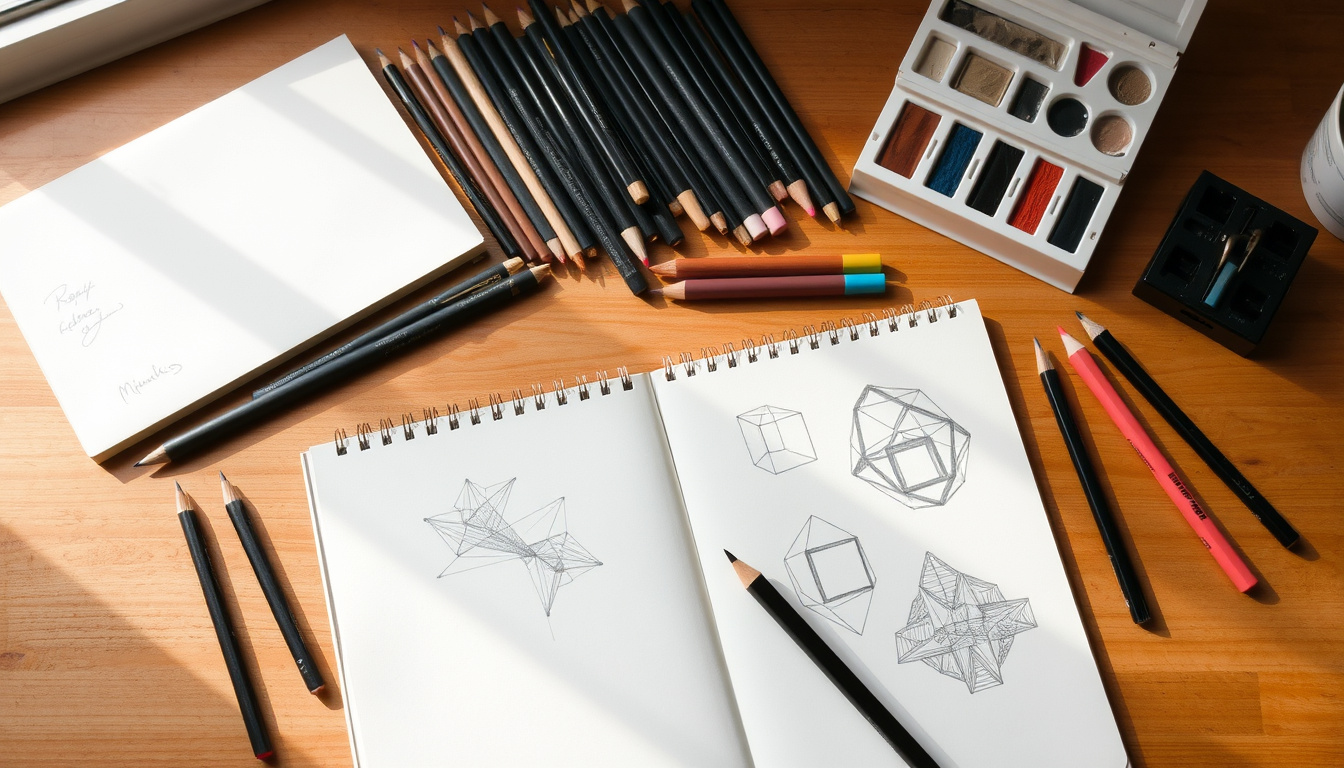
- Boxes, cylinders, and spheres are the building blocks of complex subjects
Exercise-based programs drill these forms early
- Perspective becomes easier once forms feel automatic
Every complex subject — a face, a car, a building — can be read as a combination of basic forms, which is why exercise-driven programs spend so long on geometric shapes. Repetition here is not busywork; it’s the mechanism that trains your eye to see structure before you commit a single line.
The takeaway: draw shapes until they feel automatic, then place those same shapes inside a still life. That sequence is the shortest path from zero to visible progress.
Pros and cons of free online drawing courses
Free courses remove the money barrier, but they move quality control and certificate fine print onto your plate.
Upsides
- Start today with zero budget — Alison, Udemy, and Cursa all have live free courses
- Certificate options exist on some free tiers, including Udemy’s free drawing page and Cursa’s app
- University and specialist courses are accessible for free or free-to-audit via Class Central’s guide
Downsides
- Quality is uneven, and free catalogs mix structured courses with thin tutorials
- Certificates come with conditions — Coursera requires an upgrade or financial aid, Cursa requires its app
- Instructor feedback is rare in free courses, so bad habits can set in without correction
The trade-off: free courses replace tuition with self-discipline — you get to choose the pace, but you also become the one who notices when you’re stuck.
How to choose your first free drawing course
Five steps, one goal: get you enrolled without overthinking.
- Decide what “free” must include. If a certificate matters, start with Udemy’s free drawing page, where free courses include a certificate of completion; if skills matter more than proof, any free-to-audit course from Class Central’s guide will do.
- Match format to how you learn. Video learners: Udemy’s free page or YouTube. Exercise learners: drill-based sites. Structure learners: Alison’s course format.
- Read the certificate fine print. Coursera’s catalog gives free previews but generally requires an upgrade or financial aid for the certificate; Cursa delivers its certificate through its app.
- Assemble the tiny equipment list. An HB pencil, a 2B pencil, an eraser, and any paper you own. That’s the entire admission fee.
- Commit to ten minutes a day. Short daily practice beats a two-hour weekly session, and it converts the course from content into muscle memory.
The practical route: one free course, one pencil, one daily sketch. Everything else is optional.
The catch
A free certificate is not a credential. It proves you finished a course, not that an employer cares — so check whether the certificate serves an actual goal before you build a routine around it.
This process keeps the focus on your own learning style rather than platform hype.
What we know and what’s still unclear
The free drawing course space is crowded, so it helps to separate established facts from reports that need verification.
- Alison’s How to Draw 101 is free and taught by portrait artist Ethan Moran (Alison)
- Udemy’s free drawing page includes a certificate of completion on free courses (Udemy)
- Coursera generally requires an upgrade or financial aid before you can earn a certificate for its drawing catalog (Coursera)
- Simply Draw’s free tier specifics — public materials we reviewed don’t clearly document what remains free after onboarding
- Class Central’s exact number of free drawing courses, because the catalog updates continuously
- Guru99’s free-with-certificate classifications, which rely on vendor descriptions rather than independent testing
- Whether any free certificate carries weight with employers or admissions offices — the platforms themselves make no such claim
- Cursa’s app-based progress tracking, which the platform describes but which no third-party review in our sources verifies
The honest summary: the free drawing space has more verified offers than most learners expect, but the unverified details are exactly where the fine print lives.
What providers and reviewers actually say
Two voices define the free-course argument: platforms promise access, and reviewers promise filtering. Both are worth hearing.
“100% free, from lessons to certificate.”
Cursa (free course app)
“Selected drawing courses are free or free-to-audit, and many listed courses do not include a certificate.”
Class Central (course review guide)
The moderator’s read: one camp sells the certificate, the other sells the filter. A smart beginner takes the filter first and treats the certificate as a bonus, not the goal.
The real cost of a free drawing course
Free drawing courses solve the money problem and hand you a bigger one: choosing a course that will actually teach you. The research points to a simple method — decide whether the certificate matters, then pick the platform that matches how you practice. For a beginner with more time than money, the choice is clear: start with Alison’s free course and Udemy’s free page this week, or default to YouTube only if you’re prepared to build your own curriculum.
Related reading: free online drawing and painting courses · best drawing courses
Frequently asked questions
How does sketching differ from finished drawing?
Sketching is a quick, loose study — capturing gesture and composition in minutes. Drawing refines those early lines into a finished piece with controlled value and detail. The two are stages of the same habit, and free beginner courses teach both.
Which pencil do most artists start with?
An HB is the common starting point because it matches a standard No. 2 pencil. For shading, softer grades like 2B and 4B produce darker marks and are the next additions to any beginner kit.
What should a beginner draw first?
Simple shapes — circles, squares, straight lines — repeated until the lines feel controlled. After that, a still life object such as an apple or a cup teaches proportion and light; exercise-based programs add boxes and spheres to build perspective skills.
What are the five rules of drawing?
Most beginner curricula drill five fundamentals: line quality, shape, proportion, value, and perspective. Free courses from Udemy’s free page and Alison’s How to Draw 101 cover these essentials in sequence, even if they don’t number them as “rules.”
Should I learn drawing or painting first?
Drawing first. It builds the line, value, and proportion skills that painting relies on, and it requires only a pencil and paper. The free online course selection is also much larger for drawing than for painting, which makes the learning curve easier to manage.
Is Simply Draw really free?
Public materials about Simply Draw’s free tier are inconsistent, and the specifics were not confirmed in our review. Check the app’s current listing before committing a routine to it.
Can I get a certificate from a free online drawing course?
Yes, with conditions. Udemy’s free drawing page includes certificates on free courses, and Cursa issues free certificates through its app. Coursera’s drawing catalog, by contrast, generally requires an upgrade or financial aid before the certificate is released.