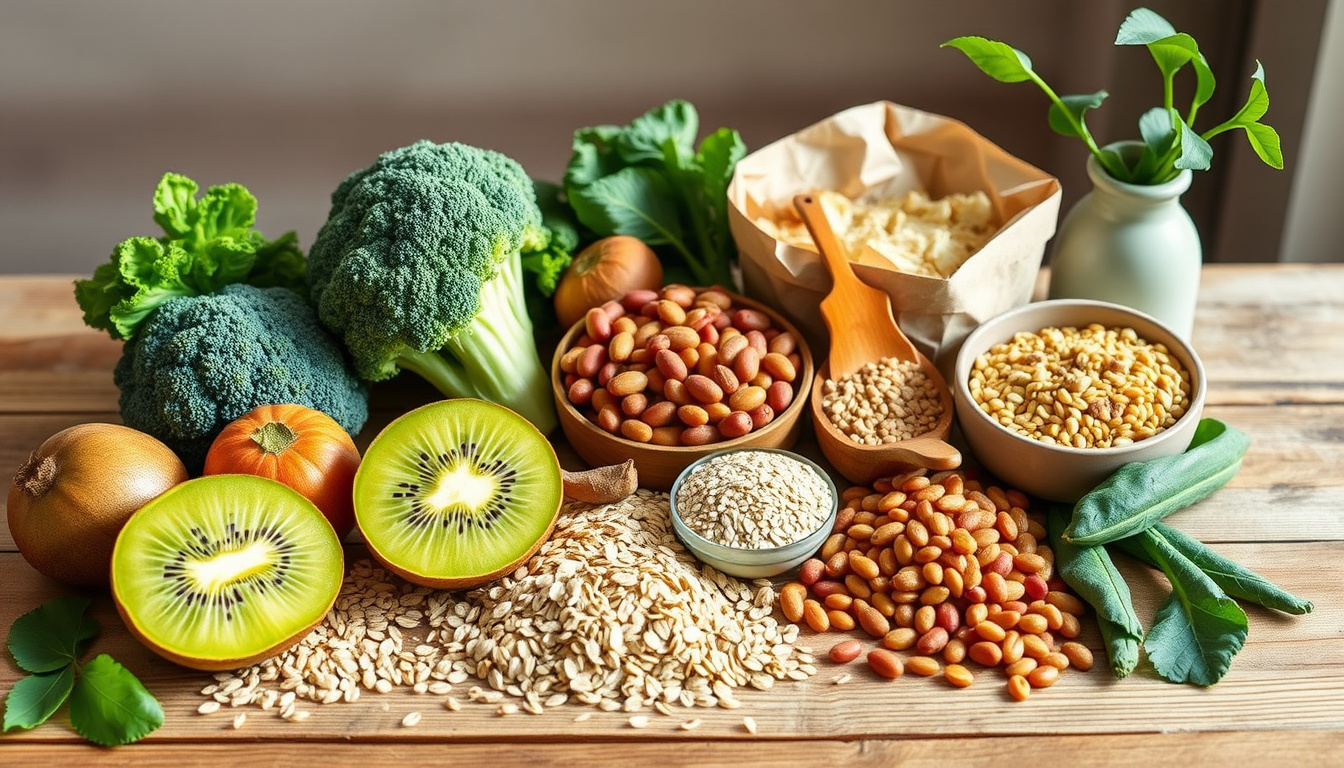
If you’ve ever felt bloated after a sudden fibre spike, you’re not alone — most New Zealanders eat less than half the fibre they need. A 2023 Healthify NZ guide and University of Otago research both point to the same gap: the average Kiwi gets just 19g of fibre daily, while health authorities recommend 25–30g. This guide cuts through the noise and maps those targets directly to foods you can actually find in New Zealand shops.
Recommended daily fibre NZ adults: 25-30g · Top sources: Oats, fruits, vegetables, legumes · Soluble fibre: Oats, barley, apples · Insoluble fibre: Nuts, seeds, wholegrains · High fibre snack: 30g nuts, hummus on wholegrain
Quick snapshot
- NZ adults need 25–30g fibre daily, but average intake is just 19g (Healthier Lives / University of Otago)
- Eating 35g fibre daily is linked to a 35% lower early-death risk compared to average NZ intake (Healthier Lives)
- Fibre should be increased gradually to avoid digestive discomfort (Healthify NZ)
- How fibre recommendations differ across age groups in NZ
- Exact cost-effectiveness rankings for high-fibre foods across regions
- Top 5 contributing food groups in NZ: fruits, vegetables, breads, grains and pasta, potato/kumara/taro (University of Otago)
- Wholegrains and naturally fibrous foods outperform refined grains for health outcomes (Te Whatu Ora)
- Pair high-fibre foods with adequate water intake to support digestive health
- Build fibre up slowly — a sudden jump can cause bloating or discomfort
These foods appear consistently across New Zealand health authority sources and nutrition databases, ranked by fibre density per standard serving.
| Food | Fibre per serving | Source |
|---|---|---|
| Frozen mixed vegetables (1 cup) | 8.6g | Healthify NZ (2023) |
| Baked beans (½ cup) | 8.2g | Healthify NZ (2023) |
| Stewed apricots (½ cup) | 7g | Healthify NZ (2023) |
| Muesli (½ cup) | 6.5g | Healthify NZ (2023) |
| Bran muffin (1) | ≈5g | Healthify NZ (2023) |
| Wholegrain bread (1 slice) | 2.6g | Healthify NZ (2023) |
| Porridge (1 cup) | 2.1g | Healthify NZ (2023) |
| Apple or banana (1) | 2g | Healthify NZ (2023) |
What are the best high fibre foods NZ?
New Zealand health authorities and nutrition specialists consistently point to the same categories: fruits, vegetables, cereals, and legumes. The top five fibre contributors for Kiwis are fruits, vegetables, breads, grains and pasta, and potato or kumara, according to University of Otago research. That means the best high fibre foods for New Zealanders are already sitting in those food groups.
Fruits and vegetables
Apples, pears, and berries give you around 2g of fibre per medium piece. One cup of frozen mixed vegetables delivers 8.6g of fibre (Healthify NZ, 2023), and half a cup of stewed apricots adds 7g. Green leafy vegetables, broccoli, carrots, and Brussels sprouts also rank highly on any NZ fibre chart.
Cereals and grains
Oats are the standout cereal for fibre in New Zealand — they contain oat beta-glucan, a soluble fibre that helps regulate blood sugar and cholesterol levels (GoodFor NZ). One cup of porridge provides 2.1g of fibre. Half a cup of muesli delivers 6.5g. Wholegrain bread must contain at least 5g fibre per 100g to qualify under Healthify NZ standards, and wholegrain breakfast cereals need at least 6g per 100g.
Nuts and seeds
Chia seeds are a powerhouse — they expand to at least six times their size when they absorb water, forming a gel-like mass that adds bulk to digestion (GoodFor NZ). Almonds combine fibre with healthy fats, vitamin E, manganese, and magnesium. A small handful — about 30g — of raw or roasted nuts without added fat makes a practical high-fibre snack option.
Plant-based foods drive NZ fibre intake. Fruits, vegetables, breads, grains and pasta, and potato/kumara together account for the bulk of what Kiwis eat — and what they should be eating more of.
How much fibre do we need to eat per day?
Most New Zealanders fall short. The average Kiwi consumes just 19g of fibre per day (Healthier Lives / University of Otago), while health authorities recommend 25–30g for adults. People with diabetes or those working to improve heart health should aim for 30–40g per day according to Healthify NZ guidance.
NZ adult recommendations
The 2020 Eating and Activity Guidelines from Te Whatu Ora reinforce that whole grains and naturally fibrous foods provide better health benefits than refined alternatives. Fibre supports proper bowel function and improves heart health (Heart Foundation NZ).
Increasing fibre safely
The key is a gradual increase. A sudden jump in fibre intake can cause bloating, gas, and stomach discomfort. Healthify NZ advises adding fibre slowly and pairing it with plenty of water so the fibre has fluid to absorb and move through your digestive system.
Adults should aim for 25–30g of fibre per day, but the average New Zealander consumes just 19g — a gap that carries real health consequences.
— Healthify NZ (2023)
Fibre helps the bowels work properly and improves heart health — making it one of the most accessible preventive measures available to New Zealanders.
Closing a 6–11g daily gap requires deliberate food choices. Adding two slices of wholegrain bread, one apple, and a handful of nuts to your day gets you most of the way there — without overhauling your diet.
What foods are most high in fibre?
Foods highest in fibre are predominantly plant-based — vegetables, fruit, grains, legumes, nuts, and seeds (Blackmores NZ). Two fibre types matter: soluble fibre, which dissolves in water and is found in oats, barley, legumes, fruit, and vegetables, and insoluble fibre, which adds bulk and is found in wholegrains, nuts, and many vegetables. Soluble fibre can help lower blood cholesterol levels when eaten as part of a diet low in saturated fat (Healthdirect Australia).
Top fruits NZ
Berries, apples, pears, and bananas are accessible, affordable, and straightforward to work into meals or snacks. One apple or banana provides 2g of fibre. Dried fruits like stewed apricots (7g per half-cup) offer concentrated fibre for smaller portions.
Top vegetables NZ
One cup of frozen mixed vegetables delivers 8.6g of fibre — among the highest per cup of any single food. Broccoli, carrots, Brussels sprouts, and green leafy vegetables are reliable everyday choices. Legumes — half a cup of baked beans provides 8.2g — also count heavily toward daily targets.
High fibre foods from the produce aisle are nutrient-dense but can be wasted if paired with low-fluid intake. Soluble fibre especially needs water to do its job — without it, you may feel more uncomfortable, not less.
What are the top 5 highest-fibre foods?
A practical top-five list built around NZ accessibility and fibre density includes oats, green leafy vegetables, chia seeds, nuts, and wholegrain bread — foods consistently named by Blackmores NZ and supported by Healthify NZ data.
Ranked list
- Oats (porridge or overnight oats) — 2.1g per cup; the soluble beta-glucan also supports blood sugar regulation
- Frozen mixed vegetables — 8.6g per cup
- Baked beans — 8.2g per half-cup
- Chia seeds — high gel-forming fibre; expand to at least 6× their original volume
- Wholegrain bread — 2.6g per slice; at least 5g per 100g by NZ standard
NZ accessible options
Quinoa, barley, and chickpeas are increasingly available in New Zealand supermarkets. Chickpeas are rich in fibre and protein, naturally gluten-free, and low in sodium (GoodFor NZ). Air-popped popcorn is a surprisingly fibre-dense snack per kilojoule. Split peas cook faster than whole beans and don’t require overnight soaking.
The implication: building fibre intake around these accessible options doesn’t require special orders or specialty shops — most are already in major supermarkets across New Zealand.
What snack has the most fibre?
For New Zealanders looking for a quick fibre boost, the best options are simple: a 30g handful of raw or roasted nuts, hummus on wholegrain crackers, or peanut butter on wholegrain toast (Healthify NZ). One bran muffin delivers roughly 5g of fibre — a convenient on-the-go option if you can find them without excessive added sugar.
High fibre cereals like Weetabix
Two Weetabix biscuits with milk provide roughly 4–5g of fibre depending on the brand variant. Wholegrain breakfast cereals must contain at least 6g fibre per 100g to meet the NZ standard for wholegrain labelling. Plain Weetabix clears this bar, but flavoured or sugared cereal varieties often don’t. If you rely on cereal for fibre, check the nutrition label — the wholegrain claim on the front isn’t always backed by sufficient fibre on the back.
Two Weetabix with milk gets you close to 5g of fibre, but it won’t get you to 25g alone. Treat it as a base, not a complete solution — build around it with fruits, vegetables, and nuts throughout the day.
Related reading: High Protein Lunch Ideas
Kiwis averaging just 19g daily can use a high-fiber foods chart to pinpoint top fruits, veg and legumes hitting Healthify NZ’s 25-30g targets.
Frequently asked questions
Is 2 Weetabix a day enough fibre?
Two Weetabix with milk provides roughly 4–5g of fibre. Against a 25–30g daily target, that’s less than 20% of your need. You would still require multiple additional fibre sources — fruits, vegetables, nuts, legumes, or wholegrain bread — to reach recommended levels.
Is a banana a day enough fibre?
A single banana or apple delivers about 2g of fibre. Eaten every day, that’s roughly 14g per week — still short of the 175–210g weekly target for an adult. One banana alone is not enough; pair it with other high-fibre foods throughout the day.
What is the disadvantage of Weetabix?
Weetabix is a reasonable fibre source, but flavoured varieties can contain added sugars that offset the nutritional benefit. Some commercial brands also add sodium. Always check the fibre-per-100g figure on the nutrition panel — aim for at least 6g/100g for a wholegrain cereal.
What are high fibre fruits nz?
The highest-fibre fruits available in New Zealand include berries, apples, pears, and bananas. Stewed apricots (7g per half-cup) offer a more concentrated fibre hit for smaller portions. Dried fruit counts too, but watch for added sugars in processed varieties.
What are high fibre vegetables nz?
Top choices include frozen mixed vegetables (8.6g per cup), broccoli, carrots, Brussels sprouts, and green leafy varieties. Legumes such as baked beans (8.2g per half-cup), chickpeas, and split peas also fall within this category and are widely sold in New Zealand supermarkets.
How much fibre per day nz?
Healthify NZ recommends 25–30g of fibre per day for healthy adults. People with diabetes or heart-health goals should aim for 30–40g. The current average intake in New Zealand is just 19g per day — below every target range.
What high fibre foods for weight loss?
High fibre foods support weight management by increasing satiety without adding excessive kilojoules. Oats, chia seeds, legumes, and wholegrain cereals are particularly effective. Fruits and vegetables with high water content — like apples, pears, and leafy greens — also help fill you up on fewer calories.
For New Zealanders, the path to meeting fibre targets is straightforward in principle but requires daily intention. Filling your plate with fruits, vegetables, wholegrains, and legumes — and pairing that with adequate water — puts the 25–30g target within reach. The gap between 19g and 30g closes fastest when you swap one refined-grain food per meal for a whole-food alternative.