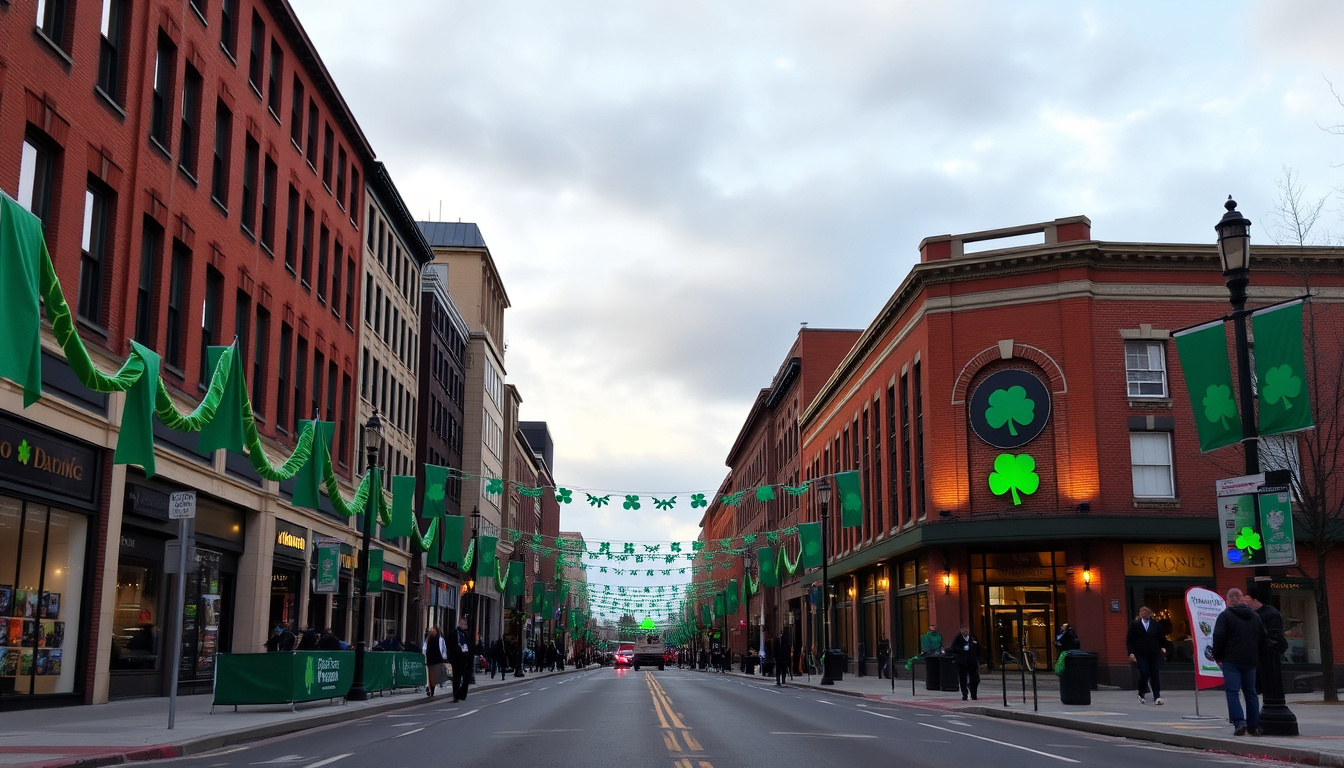
March 17th has a way of sneaking up on people — one minute it’s a grey winter Tuesday, the next you’re wondering what time the parade actually kicks off and whether you need a ticket. St Patrick’s Day 2026 lands on a Tuesday, which means the festival energy in Dublin stretches across a long weekend from March 14 to 17. This guide has the verified dates, the parade route, and the practical logistics you’ll want before heading out, with details drawn from official Garda and tourism sources.
Date of St Patrick’s Day 2026: Tuesday, March 17, 2026 ·
Dublin festival dates 2026: March 13–17, 2026 ·
Typical parade start: 12:00 PM local time ·
Bank holiday in Ireland: March 17, 2026
Quick snapshot
- St Patrick’s Day 2026 falls on Tuesday, March 17 (An Garda Síochána policing plan)
- Dublin’s festival runs March 14–17, 2026 (Visit Dublin tourism board)
- The parade begins at 12:00 PM on March 17 (An Garda Síochána policing plan)
- Exact road closure times along the full parade route
- Whether the Céilí Mór will have a specific ticketed venue or be free entry
- Which 8 American marching bands participate in the 2026 parade
- Festival citywide programme: March 14–16 (Fáilte Ireland tourism authority)
- National parade: March 17, 12:00 PM (An Garda Síochána policing plan)
- Book grandstand or hospitality tickets early — demand is high near the holiday
- Check An Garda Síochána updates for road closures closer to March 17
- Plan for public transport with Irish Rail’s holiday schedule
Here’s a quick reference for the essentials, pulled from official sources and summed up in one place — because the difference between a great day and a chaotic one is usually just a few logistics sorted in advance.
| Detail | 2026 Information |
|---|---|
| Date | Tuesday, March 17, 2026 |
| Festival period (citywide programme) | March 14–17, 2026 |
| Parade start time | 12:00 PM |
| Parade route | Parnell Square North to Cuffe Street / Kevin Street junction |
| Festival theme | Roots |
| Large-scale floats | 12 |
| Parade participants | Over 3,000 |
| Marching bands | 11 total (2 Irish, 1 Scottish, 8 American) |
What day is St. Patrick’s Day in 2026?
St Patrick’s Day 2026 falls on Tuesday, March 17, 2026. The date is fixed every year on the 17th, marking the traditional death date of Saint Patrick. An Garda Síochána’s official policing plan confirms the date and outlines logistics for Dublin city on that day.
Because the 17th lands on a Tuesday, the celebration stretches into a longer weekend. The Dublin festival’s citywide programme runs from Saturday, March 14 through Tuesday, March 17, giving visitors and locals a packed four-day window of events (Visit Dublin tourism board).
Is St. Patrick’s Day a bank holiday in 2026?
- Yes, March 17, 2026 is a public holiday in Ireland.
- Banks, many businesses, and some public services close for the day.
- Public transport runs on a reduced or holiday schedule, so plan ahead.
The implication: if you’re working a regular Monday-to-Friday job, the Tuesday holiday effectively gives you a four-day weekend if you take Monday off — a common local strategy for maximizing the festival.
When does the Dublin parade start and what’s the route?
- Start time: 12:00 PM sharp on Tuesday, March 17.
- Starting point: Parnell Square North.
- Endpoint: Cuffe Street / Kevin Street junction.
- Route confirmed by An Garda Síochána’s 2026 policing plan.
The parade route runs through the heart of Dublin’s city centre — from the north side at Parnell Square, down through O’Connell Street, and across the Liffey before finishing near St. Stephen’s Green. That’s roughly a two-kilometer walk, and the crowds line the streets from early morning. The catch: if you want a good spot near the start, aim to arrive by 9 AM — the Gardaí close roads progressively from the morning hours.
Why is St. Patrick’s Day celebrated on the 17th of March?
The date has nothing to do with the first day of spring or a marketing campaign — it’s the traditional anniversary of Saint Patrick’s death. Historical accounts, including those preserved by church traditions, place his death around March 17, c. 461 AD. That’s why the celebration is fixed on this day every year, and why it doesn’t shift to a weekend for convenience.
Saint Patrick was a fifth-century Roman-British Christian missionary and bishop who is credited with bringing Christianity to Ireland. The day began as a religious feast in the 17th century and evolved over the centuries into the global celebration of Irish culture we know today (Wikipedia historical entry).
What’s the story behind the date?
- St. Patrick’s death is traditionally dated to March 17, c. 461 AD.
- His feast day was added to the liturgical calendar in the early 17th century.
- The day was made a public holiday in Ireland in 1903.
- Irish immigrants, especially in the US, expanded the day from religious feast to public celebration.
What this means: the date isn’t arbitrary — it’s been tied to the saint’s life for over a thousand years. The modern festival has layered onto that ancient anchor, which is why the parade on March 17 always gets the full treatment.
How do people celebrate St Patrick’s Day 2026?
In Dublin, the celebration is a citywide takeover. The 2026 festival theme is “Roots,” focusing on heritage and connection (BBC News report). The programme includes a Céilí Mór (a large traditional Irish music and dance gathering), citywide events across museums, cultural spaces, and pubs, plus the headline parade on March 17 (Visit Dublin tourism board).
The parade itself is the centerpiece — 12 large-scale floats, over 3,000 participants, and 11 marching bands winding through the city centre. Fáilte Ireland’s official breakdown lists 2 Irish bands, 1 Scottish band, and 8 American bands, showing the international draw of the event (Fáilte Ireland tourism authority).
Traditional food and drink for the day
- Corned beef and cabbage — a staple in many Irish-American households
- Irish soda bread — a quick bread that doesn’t need yeast
- Irish stew — a hearty lamb or beef dish with potatoes and carrots
- Guinness and Irish whiskey — the pub staples of the day
Symbols: shamrocks, green, and what they mean
- The shamrock is the most recognized symbol — Saint Patrick reportedly used it to explain the Holy Trinity
- Green became the color of the day because it represents Ireland’s landscape and the wearing of the green tradition
- Leprechauns, though not originally central, became a fixture symbol in American celebrations
The shamrock is the only symbol directly tied to Saint Patrick’s teaching; leprechauns and pots of gold are later American additions, not Irish tradition. For a local experience in Dublin, focus on the music, the parade, and the pub sessions rather than hunting for a bow-tied leprechaun photo op.
What are the best St Patrick’s Day events in 2026?
Dublin is the epicentre, but the citywide programme delivers something beyond the parade. The free-to-watch parade along the route is the main draw, while premium options exist for those who want a seated or upgraded experience (Visit Dublin visitor guide).
Here’s what the ticketing landscape looks like for 2026, from the official Visit Dublin guide:
| Viewing option | Price range |
|---|---|
| Grandstand seating (general) | €125–€160 |
| Hospitality package — St Patrick’s Cathedral | €230 |
| Hospitality package — Westmoreland Street Grandstands | €280 |
The trade-off is clear: free roadside viewing keeps you flexible but requires early arrival and standing room; grandstand tickets cost more but guarantee a view and shelter. For first-timers, the hospitality packages add value if you want a bathroom, food, and a seat without the crowd crush.
Beyond the parade: what else is happening?
- Céilí Mór — a large traditional music and dance event, part of the official festival programme
- Citywide cultural programme — events across museums, galleries, and public spaces from March 14–16
- Family-friendly activities — the festival typically includes dedicated family zones and workshops
- Pub sessions — Dublin’s bars host live traditional music throughout the long weekend
Why this matters: the parade is the headline, but the festival’s real flavor comes from the citywide events. If you’re in Dublin from Friday to Tuesday, you’ve got a multi-day itinerary to fill — not just a single parade to catch.
What is the history of St. Patrick’s Day?
The holiday’s roots go back to the 17th century, when the Church recognized March 17 as a feast day for Saint Patrick. But the public celebration we recognize today — with parades, green, and mass participation — largely took shape in America. The first recorded St. Patrick’s Day parade in the American colonies was in 1737 in Boston, organized by Irish immigrants (Wikipedia historical entry).
Key milestones
| Year | Milestone |
|---|---|
| c. 461 AD | Saint Patrick dies on March 17 (traditional date) |
| 1600s | March 17 becomes a feast day in the Catholic Church |
| 1737 | First recorded St Patrick’s Day parade in Boston, Massachusetts |
| 1903 | March 17 declared a public holiday in Ireland |
The pattern: what began as a quiet religious observance became a vehicle for Irish identity abroad, and only later a massive festival in Ireland itself. Today, Dublin’s parade is the largest in the country, but the DNA of the celebration still carries that American immigrant energy that first organized a parade in Boston.
What are some interesting facts about Saint Patrick?
Saint Patrick’s life story has been layered with legend over 1,500 years, and separating history from myth is part of what makes the day fascinating (Wikipedia biography entry).
- He wasn’t Irish by birth — Patrick was born in Roman Britain, likely around 385 AD.
- Captured by pirates — at age 16, he was taken as a slave to Ireland, where he worked as a shepherd for six years before escaping.
- He returned as a missionary — after becoming a bishop, he went back to Ireland to spread Christianity.
- He used the shamrock — legend says he used the three-leafed plant to explain the Holy Trinity.
- He didn’t literally drive out snakes — this is likely a metaphor for driving out pagan beliefs; Ireland’s climate was never snake-friendly.
The “snakes” myth is the most common misconception. Ireland has no native snakes due to its geography and climate — not because of Patrick’s efforts. The metaphor was a later invention to dramatize his missionary work against pre-Christian traditions.
The takeaway: Saint Patrick was a real person with an extraordinary story of captivity and return — not just a cartoon figure in a green hat. Knowing the actual history makes the celebration richer, whether you’re in Dublin or watching from abroad.
ireland.com, irishcentral.com, visitdublin.com, ireland.com, thejournal.ie, dublin.ca.gov, independent.ie, independent.ie
Frequently asked questions
When is St. Patrick’s Day in 2026 and what day does it fall on?
St Patrick’s Day 2026 falls on Tuesday, March 17, 2026. It’s always on the 17th, regardless of the weekday, because the date marks the traditional death anniversary of Saint Patrick.
Is St. Patrick’s Day always on 3/17?
Yes. The date is fixed on March 17 every year. This is because it commemorates the traditional death date of Saint Patrick, which does not shift based on weekends or calendar conventions.
Why do we celebrate St. Patrick’s Day on the 17th of March?
March 17 is the traditional death date of Saint Patrick, who is believed to have died on March 17, c. 461 AD. The Church adopted this date as his feast day, and the public celebration grew from there.
Is St. Patrick’s Day a public holiday in Ireland in 2026?
Yes. March 17 is a public holiday in Ireland, and March 17, 2026 — being a Tuesday — means the festival weekend in Dublin runs from Saturday, March 14 through the holiday itself.
What time does the Dublin parade start on St. Patrick’s Day 2026?
The National St Patrick’s Day Parade in Dublin starts at 12:00 PM on Tuesday, March 17, 2026, according to An Garda Síochána’s official policing plan.
How long is the Dublin parade route in 2026?
The route runs from Parnell Square North to the Cuffe Street / Kevin Street junction — roughly 2 kilometers through the city centre. Expect to walk or stand within this corridor for the best viewing.
Do you need tickets to watch the Dublin parade?
No. The parade is free to watch along the route. Grandstand seats and hospitality packages are available for purchase through the official festival channels if you want a guaranteed view or upgraded experience.
What are the three symbols of St. Patrick’s Day?
The three most recognized symbols are the shamrock (associated with the Holy Trinity), the color green (representing Ireland), and the harp (the national symbol of Ireland). Together, they capture both the religious and cultural dimensions of the holiday.
St Patrick’s Day 2026 in Dublin runs from March 14 to 17, with the parade on March 17 at 12:00 PM. If you haven’t reserved grandstand or hospitality tickets yet, expect roadside standing and early mornings. For visitors staying the full weekend, the citywide programme turns a single parade into a four-day festival of music, dance, and culture. For locals, the bank holiday Tuesday means a workday off — and the choice is already clear: join the crowd in the city centre, or find a quieter pub inland before the chaos peaks.
Related reading