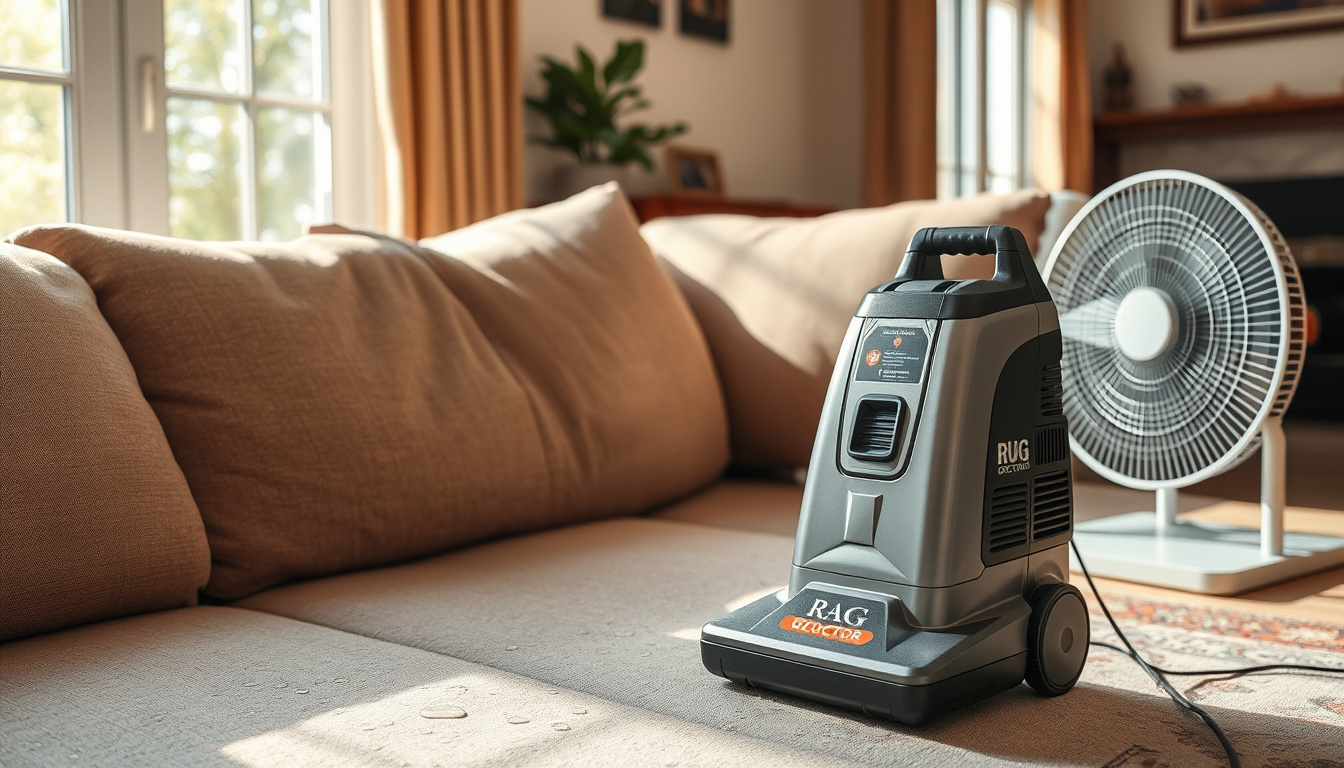
That sofa stain you’ve been ignoring for months — the one that seems to grow a shade darker every week — is exactly why Rug Doctor machines exist. But using a Rug Doctor upholstery cleaner on your couch isn’t quite as simple as plugging in and spraying. The difference between fresh, dry upholstery and a soggy, musty mess comes down to technique, dilution, and knowing when to stop.
Bottle size: 1 litre ·
Anti-foam included: Yes ·
Suitable for wool and pets: Yes ·
Water per bucket: 9 litres ·
Solution per bucket: 500 ml
Quick snapshot
- Rug Doctor Oxy Upholstery Cleaner is oxygen-boosted and contains anti-foam (Rug Doctor UK official guide)
- Safe for wool, synthetics, and pet-friendly fabrics per the manufacturer (Rug Doctor UK) (Rug Doctor UK official guide)
- Standard dilution: 500 ml solution to 9 litres warm water (Rug Doctor UK instructions) (Rug Doctor UK official guide)
- Effectiveness on natural silk or delicate vintage fabrics is not documented
- Long-term impact on fabric warranties from repeated deep cleaning remains unverified
- Exact drying time varies significantly by humidity and fabric thickness
- Allow 4–6 hours before sitting on cleaned upholstery (Rug Doctor U.S. cleaning tips)
- After cleaning, run extraction-only passes to minimize residual moisture (Rug Doctor UK drying advice)
- Improve ventilation to cut drying time (Rug Doctor UK drying advice)
Five key facts, one pattern: the difference between a job well done and a water-damaged couch comes down to technique discipline, not the machine itself.
| Attribute | Detail |
|---|---|
| Product | Rug Doctor Oxy Upholstery Cleaner |
| Volume | 1 litre |
| Application | Use with Rug Doctor machine or hand spray for spot cleaning |
| Suitable for | Wool, synthetics, pet-safe fabrics |
| Anti-foam | Included |
| Dilution ratio | 500 ml solution to 9 litres warm water |
| Wait time before use | 4–6 hours |
| Machine hire cost | From approximately £20 per day |
| Retail price (1 litre) | £10–15 |
Can I use Rug Doctor carpet cleaner on my couch?
Yes — with the right tool and prep work. Rug Doctor’s carpet cleaner is designed for upright carpets, but the same machine works on sofas and armchairs once you switch to the upholstery tool. The trick is knowing which fabrics can handle it.
What types of upholstery can Rug Doctor cleaner be used on?
- Rug Doctor solution is safe for most synthetic fabrics (polyester, nylon, acrylic) and wool, according to the manufacturer’s Rug Doctor UK official guide.
- The U.S. user manual advises testing the cleaner in an inconspicuous area before full use (Rug Doctor U.S. user manual).
- Never use on leather, silk, or antique fabrics — these require specialist care.
Is Rug Doctor safe for leather?
- No. Rug Doctor instructions explicitly do not recommend cleaning leather upholstery. Use a dedicated leather cleaner instead.
What upholstery tools are needed?
- You need the Rug Doctor motorized upholstery tool (sold separately or included with certain hire packages).
- The tool connects to the machine’s hose and runs on the machine’s power — no separate batteries required.
Homeowners who skip the fabric-spot test on a hidden corner risk discolouration that no amount of extraction can reverse. That 60-second check is your cheapest insurance.
The pattern: Rug Doctor handles common household upholstery well, but the manufacturer draws a firm line at leather and delicate textiles. Most users will be fine — but test first.
How to clean upholstery with Rug Doctor?
How to set up the Rug Doctor machine for upholstery?
- Remove the white recovery tank from the front of the machine (Rug Doctor UK).
- Fill a clean bucket with 9 litres of warm water, then add 500 ml of Rug Doctor Oxy Power Upholstery Cleaner (Rug Doctor UK).
- Pour the diluted solution from the bucket directly into the red base tank (Rug Doctor UK).
- Attach the upholstery tool and press the power button to the TOOL setting (Rug Doctor U.S. user manual).
“Clean in sections and do not over-saturate upholstery.” — Rug Doctor UK official guide
What is the correct solution mixture?
- Exactly 500 ml of Rug Doctor Oxy Power Upholstery Cleaner per 9 litres of warm water.
- Using more solution does not clean better — it increases residue and drying time.
Step-by-step cleaning process
- Vacuum the upholstery thoroughly first (Rug Doctor U.S. user manual).
- Squeeze and hold the cleaning-solution trigger to apply solution (Rug Doctor U.S. user manual).
- Pull the tool backward slowly over the stain while releasing the solution (Rug Doctor U.S. user manual).
- Release the trigger and go back over the same area without spraying to suction up dirt and moisture (Rug Doctor YouTube tutorial).
- Work in sections, avoiding over-saturation (Rug Doctor Australia brochure).
“Test the cleaner in an inconspicuous area before full use.” — Rug Doctor U.S. user manual
The extraction pass — no spray, just suction — is the step most first-time users skip. It pulls out the dirt-laden water instead of leaving it to dry into a sticky residue that attracts more soil.
Should my carpet be wet after using Rug Doctor?
Some dampness is normal, but your upholstery should not be soaking wet. If it looks or feels saturated, you’ve over-applied solution or made too many passes.
How long does it take for carpet to dry after Rug Doctor?
- Rug Doctor’s U.S. guide recommends waiting 4–6 hours before sitting on cleaned upholstery (Rug Doctor U.S. cleaning tips).
- Good ventilation improves drying time (Rug Doctor UK). Open windows and use fans if possible.
What does over-wetting look like?
- Water pools on the fabric surface or drips when you press down.
- The fabric feels heavy and darkens noticeably beyond the stain area.
- A paper towel pressed on the surface soaks through.
How to fix over-wet carpet?
- Switch to extraction-only passes — no spray button — to suck excess moisture (Rug Doctor UK over-wetting guide).
- If the upholstery had been previously cleaned with a spray foam or shampooer, use Rug Doctor’s Pro Anti-Foam chemical to prevent excessive suds (Rug Doctor UK product page).
Mold can develop in as little as 24–48 hours on fabric that stays damp. That four-hour drying window isn’t a suggestion — it’s a safety margin.
The implication: If your sofa is still wet after 6 hours, you need more extraction passes, better airflow, or both. Waiting won’t help — the water has to go somewhere.
How many times should you go over carpet with a Rug Doctor?
How many passes are recommended for optimal cleaning?
- Rug Doctor UK advises 4–6 slow passes for effective cleaning (Rug Doctor UK).
- Each pass should be slow — rushing reduces dirt pickup.
Should you go over the same spot multiple times?
- Yes, but with restraint. The first pass applies solution. Subsequent passes extract it.
- No more than two passes should be made with the Rug Doctor Pro machine between drying (Rug Doctor UK product page).
What happens if you do too many passes?
- Excessive passes can over-wet the carpet, leading to mould, mildew, or residue buildup.
- The fabric may take 12+ hours to dry, increasing the risk of secondary damage.
Why this matters: Each pass beyond the sweet spot adds diminishing cleaning returns and accelerating moisture risk. Stop when the extracted water runs clear — not when the tank is full.
How to avoid over-wetting carpets when cleaning with Rug Doctor?
What are common mistakes that cause over-wetting?
- Applying too much solution by holding the trigger too long.
- Making too many passes — Rug Doctor UK says one pass once is sufficient to avoid over-saturation (Rug Doctor UK).
- Not switching to extraction-only mode before the fabric is saturated.
- Using the wrong tool setting — the TOOL setting controls water flow differently than the CARPET setting.
How to check if carpet is too wet?
- Press a paper towel onto the fabric. If it soaks through or shows dark water marks, the fabric is too wet.
- If the fabric feels cold and heavy after cleaning, that’s a red flag.
What drying techniques help?
- Use vacuum-only passes — without pressing the spray button — to suck excess moisture (Rug Doctor UK).
- Open windows, turn on fans, and use a dehumidifier if available.
- Avoid sitting on or placing objects on the upholstery until fully dry.
The pattern: Technique discipline is the only thing standing between a clean couch and a damp disaster.
rugdoctor.co.uk, rugdoctor.com, rugdoctor.com, homedepot.com, manuals.plus, rugdoctor.co.nz, manuals.plus
Frequently asked questions
Can Rug Doctor upholstery cleaner be used on leather?
No. Rug Doctor does not recommend cleaning leather with its upholstery cleaner. Use a dedicated leather cleaner instead.
Is it safe for pet beds?
Yes, Rug Doctor states the solution is safe for pet-friendly fabrics. Ensure the bed is thoroughly dry before your pet uses it.
How often should you clean upholstery with Rug Doctor?
Rug Doctor recommends cleaning every 12–18 months for normal use, or more frequently for high-traffic furniture and homes with pets.
Does Rug Doctor upholstery cleaner leave residue?
If used correctly with proper extraction passes and correct dilution, residue should be minimal. Over-use of solution or skipping extraction passes can leave sticky residue.
Can I use it without a machine?
Yes, the solution can be used for spot cleaning with a spray bottle and cloth. However, deep cleaning benefits from the machine’s extraction power.
What is the shelf life of Rug Doctor solution?
The manufacturer does not publish a specific shelf life, but unopened bottles should be used within 2–3 years. Check for separation or odour before use.
Do I need to pre-treat stains before using Rug Doctor?
Yes. Pre-treating heavy stains with a stain remover or by applying solution directly improves results. Rug Doctor’s machine applies solution, but pre-soaking stubborn marks helps.
How to remove the cleaner smell after use?
Ensure thorough extraction passes. Residual cleaner scent usually fades as the fabric dries. Good ventilation and fans speed up the process.
For UK homeowners who hire a Rug Doctor machine from B&Q or Tesco, the choice is clear: follow the 4–6 slow-pass discipline with one dry extraction at the end, or risk a damp couch that takes a full day to dry. For leather and silk owners, the alternative is a cleaner that matches your fabric, not your rental budget.