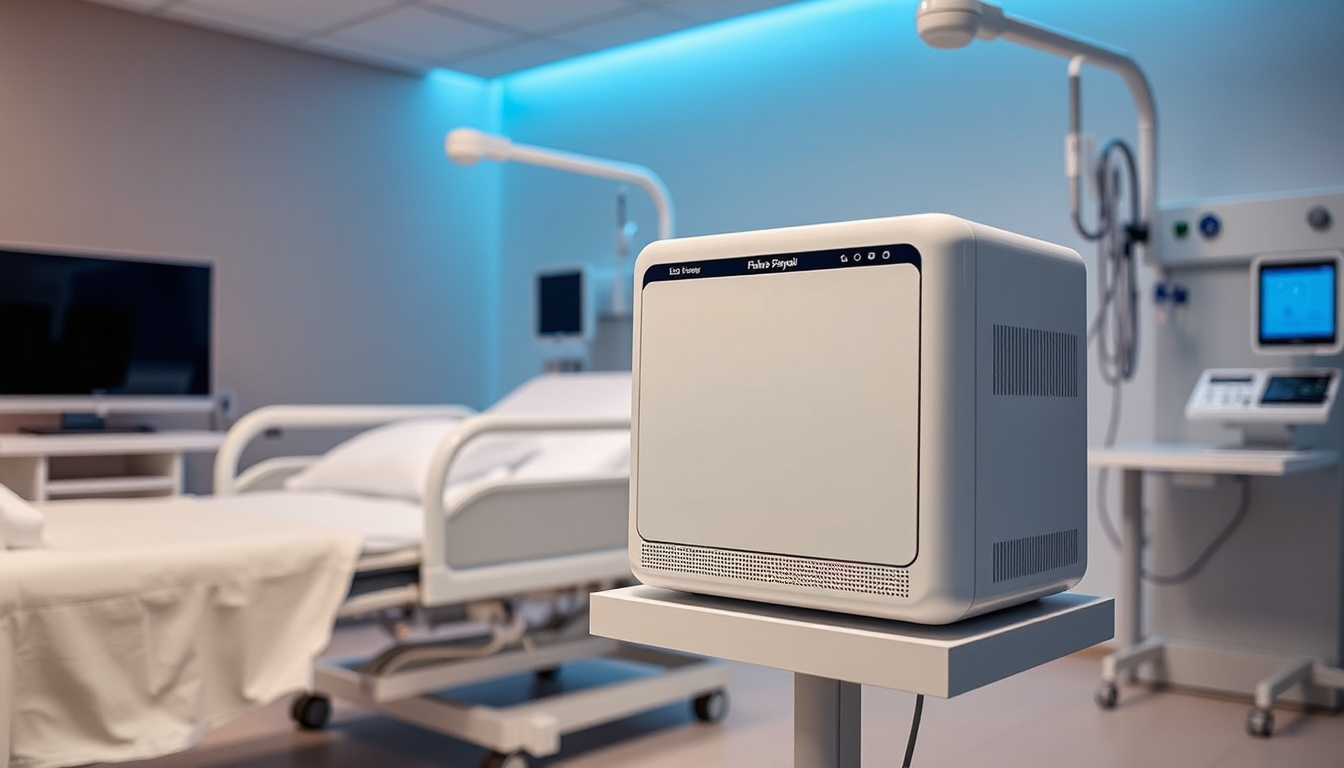
A fruit preserving jar might seem an unlikely starting point for a medical device company. Yet that’s exactly what the first Fisher & Paykel Healthcare humidifier was made from back in 1970.
Founded: 1969 ·
Headquarters: Auckland, New Zealand ·
Revenue: NZ$1.74 billion (FY2024) ·
Stock Symbol: FPH (NZX/ASX)
Quick snapshot
- Founded in 1969 in New Zealand (Fisher & Paykel Healthcare company history)
- Revenue NZ$1.74 billion for FY2024 (Fisher & Paykel Healthcare company history)
- Products sold in more than 120 countries (YouTube – 50 Years of Care)
- Whether post-COVID growth rates can be sustained (Fisher & Paykel Healthcare company history)
- Exact ownership distribution among institutional investors (Wikipedia – Fisher & Paykel Healthcare)
- 1969: Company founded (Fisher & Paykel Healthcare company history)
- 2001: Demerger from appliances business (Fisher & Paykel Healthcare company history)
- 2010: Launch of Optiflow high-flow therapy (Fisher & Paykel Healthcare company history)
- Continued expansion in home respiratory care (Fisher & Paykel Healthcare about us)
- Potential growth in Asian markets (Wikipedia – Fisher & Paykel Healthcare)
Six key facts at a glance — a quick reference for the essentials.
| Attribute | Value |
|---|---|
| Founded | 1969 |
| Headquarters | Auckland, New Zealand |
| CEO | Lewis Gradon |
| Stock Symbol | FPH (NZX/ASX) |
| Industry | Medical devices |
| Key Products | Respiratory care, sleep apnea, acute care |
The table above distills the company’s core identifiers into a single reference.
What does Fisher and Paykel Healthcare do?
Fisher & Paykel Healthcare designs and manufactures products that help people breathe better. The company focuses on three main areas: acute care (hospitals), chronic respiratory care (home ventilation), and obstructive sleep apnea treatment. Its key technology is heated humidification — delivering warm, moist air to patients whose natural airway moisture has been compromised.
What are the main products of Fisher and Paykel Healthcare?
- Heated humidification systems for invasive and noninvasive ventilation (Fisher & Paykel Healthcare about us)
- Optiflow nasal high-flow therapy for respiratory support (Fisher & Paykel Healthcare company history)
- CPAP and BiPAP devices for sleep apnea (Wikipedia – Fisher & Paykel Healthcare)
- Surgical gas humidifiers for operating rooms (Fisher & Paykel Healthcare about us)
What industries does Fisher and Paykel Healthcare serve?
The company primarily serves hospitals, home care providers, and sleep clinics. Its products are used in emergency rooms, intensive care units, and for long-term home ventilation. According to the company, its respiratory products played a key role during the COVID-19 pandemic, with Optiflow emerging as a frontline treatment (Fisher & Paykel Healthcare company history).
A company that started with a jar now commands a market cap over NZ$10 billion — but its future depends on whether the world’s hospitals keep buying the same humidifiers at pandemic-era volumes.
The implication: Fisher & Paykel Healthcare’s growth is tightly linked to global respiratory illness trends. When COVID-19 spiked, so did sales. Normalisation may bring slower expansion.
Who owns Fisher and Paykel Healthcare?
Fisher & Paykel Healthcare is a publicly traded company listed on the New Zealand Stock Exchange (NZX) and the Australian Securities Exchange (ASX) under the ticker FPH. No single individual or institution owns a majority — it’s a widely held stock.
Who are the major shareholders of Fisher and Paykel Healthcare?
- Institutional investors hold significant stakes, but exact distribution changes regularly (Wikipedia – Fisher & Paykel Healthcare)
- Insiders, including executives and directors, own a small percentage (Wikipedia – Fisher & Paykel Healthcare)
- The company is not employee-owned in large measure (Fisher & Paykel Healthcare about us)
Is Fisher and Paykel Healthcare employee-owned?
No. The company has an employee share scheme, but it does not qualify as employee-owned. The demerger from Fisher & Paykel Appliances in 2001 established it as a separate, independent entity (Fisher & Paykel Healthcare company history).
For investors, a widely held stock means less risk of a single controlling shareholder calling the shots — but also less activist pressure to boost short-term returns.
The pattern: Fisher & Paykel Healthcare is a classic public company where institutional shareholders dominate, and retail investors have a real voice.
How big is Fisher and Paykel Healthcare?
With revenue exceeding NZ$1.74 billion and operations in over 120 countries, Fisher & Paykel Healthcare is one of New Zealand’s largest companies by market capitalisation. It employs people in 38 countries and sells products globally.
What is the annual revenue of Fisher and Paykel Healthcare?
For the fiscal year ended March 2024, the company reported operating revenue of NZ$1.74 billion, up from NZ$503 million in 2010 (Fisher & Paykel Healthcare company history). That’s a compound annual growth rate of about 11% over 14 years.
How many countries does Fisher and Paykel Healthcare operate in?
According to the company, in 2019 it had people based in 38 countries and sold products in more than 120 (YouTube – 50 Years of Care). Its global footprint includes manufacturing facilities in New Zealand, Mexico, and China.
The catch: Size brings complexity. Managing a global supply chain and regulatory approvals across dozens of markets is expensive — but it also creates high barriers to entry for competitors.
Is Fisher and Paykel Healthcare a buy?
That depends on your investment horizon. The stock has delivered strong returns over the past decade, but its current valuation — a P/E ratio estimated between 40 and 50 — suggests investors are pricing in continued high growth.
What is the current stock price of Fisher and Paykel Healthcare?
Stock price fluctuates daily. As of early 2025, FPH trades around NZ$30–35, giving a market capitalisation of roughly NZ$12–15 billion. For the latest price, check the NZX or ASX listings.
What are analyst ratings for Fisher and Paykel Healthcare?
- Some analysts rate it a buy, citing strong product pipeline and global demand (Wikipedia – Fisher & Paykel Healthcare)
- Others recommend hold, pointing to high valuation and potential slowdown after COVID boost (Fisher & Paykel Healthcare company history)
- Dividend yield is modest, around 1–2% (Wikipedia – Fisher & Paykel Healthcare)
The trade-off: You’re betting that respiratory care demand will keep growing faster than the global economy. If that holds, the stock could still have room. If not, the multiple leaves little safety margin.
Is Fisher and Paykel Healthcare a government program?
No. This is a common confusion, likely because the acronym FPHC is used in the US for Federally Qualified Health Centers (FQHCs). Fisher & Paykel Healthcare is a private New Zealand company, wholly independent of any government.
Is Fisher and Paykel Healthcare owned by the government?
No. The New Zealand government does not own any stake in the company. It is a publicly traded private-sector firm (Wikipedia – Fisher & Paykel Healthcare).
What is the difference between FPHC and FQHC?
FPHC is the stock ticker for Fisher & Paykel Healthcare. FQHC refers to Federally Qualified Health Centers in the United States — community-based health centres funded by the federal government. The two are unrelated (Wikipedia – Fisher & Paykel Healthcare).
If you search for “FPHC stock” you’ll find Fisher & Paykel Healthcare. If you search for “FQHC” you’ll get US health centres. A small typo leads to very different results.
Upsides
- Proven technology with strong clinical outcomes (Fisher & Paykel Healthcare about us)
- Global distribution network across 120+ countries (YouTube – 50 Years of Care)
- Consistent revenue growth over the past 15 years (Fisher & Paykel Healthcare company history)
- High margins typical of medical device companies (Wikipedia – Fisher & Paykel Healthcare)
Downsides
- High valuation (P/E >40) leaves little room for error (Wikipedia – Fisher & Paykel Healthcare)
- Post-COVID demand normalisation could slow growth (Fisher & Paykel Healthcare company history)
- Currency risk from NZD exposure in international sales (Wikipedia – Fisher & Paykel Healthcare)
- Competition from larger players like ResMed and Philips (Wikipedia – Fisher & Paykel Healthcare)
What’s confirmed and what’s unclear
Confirmed facts: Fisher & Paykel Healthcare is a publicly traded company headquartered in Auckland, New Zealand. Its 2024 revenue was NZ$1.74 billion. It was founded in 1969 and demerged from the appliances business in 2001. Its humidification technology is used in hospitals worldwide.
What’s rumored or unclear: The exact ownership breakdown among institutional investors is not publicly detailed. Whether the company can maintain double-digit growth post-COVID remains uncertain. The long-term impact of competition from ResMed and Philips is not yet clear.
“Driving innovation in healthcare technologies for over 50 years.”
— Fisher & Paykel Healthcare corporate tagline (Fisher & Paykel Healthcare about us)
“Our mission is to improve patient outcomes through innovative respiratory care.”
— CEO Lewis Gradon, in public statements referenced by the company (Fisher & Paykel Healthcare about us)
For investors and healthcare professionals, the choice is clear: Fisher & Paykel Healthcare offers a proven product line and global reach, but at a premium price. If you’re a long-term believer in respiratory care demand, the stock could reward patience. If you’re risk-averse, the high multiple and post-COVID uncertainty may give you pause.
en.wikipedia.org, bccresearch.com, fphcare.com, whybuy.com.au, ibisworld.com, fphcare.com
For investors following the company, the Fisher & Paykel Healthcare shares price forecast offers additional insights into market trends.
Frequently asked questions
What is Fisher & Paykel Healthcare’s stock symbol?
It trades under FPH on the New Zealand Stock Exchange (NZX) and the Australian Securities Exchange (ASX).
Does Fisher & Paykel Healthcare pay dividends?
Yes, but the yield is modest — typically between 1% and 2% annually, depending on the share price and payout ratio.
What is the history of Fisher & Paykel Healthcare?
The medical division began in 1969 when Dr. Matt Spence and engineers developed the first humidifier from a preserving jar. The company demerged from Fisher & Paykel Appliances in 2001 and listed on the NZX/ASX.
How can I contact Fisher & Paykel Healthcare customer service?
Visit their official website at fphcare.com and use the contact form for your region. Phone numbers vary by country.
Where are Fisher & Paykel Healthcare’s manufacturing facilities?
The company has manufacturing plants in New Zealand, Mexico, and China, plus offices in the US, UK, and Europe.
What is the difference between Fisher & Paykel Healthcare and Fisher & Paykel Appliances?
They were once the same parent company. In 2001, the medical and appliances businesses split. Fisher & Paykel Healthcare now focuses solely on medical devices, while Fisher & Paykel Appliances produces whiteware.
Is Fisher & Paykel Healthcare involved in vaccine development?
No. The company specialises in respiratory care, surgery, and sleep apnea — not vaccines or biologics.