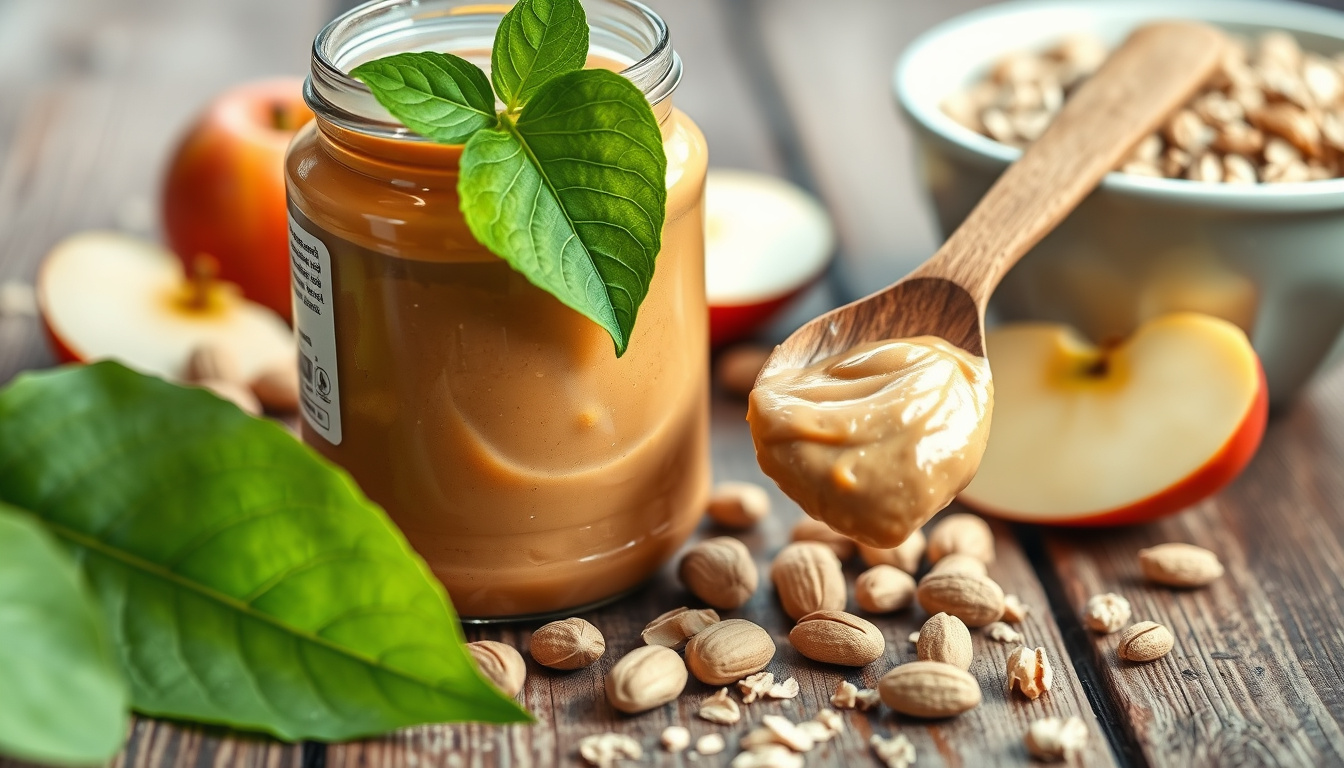
You’ve probably wondered if that jar of peanut butter in your pantry is a health food or a guilty pleasure. The answer isn’t simple, but the evidence offers clear guidance. With a 2026 study showing that daily peanut butter intake can improve lower-body power in older adults, it’s worth taking a closer look at what this spread actually does for your body. Here’s what the research says about eating it daily, choosing the healthiest jar, and who should be careful.
Daily consumption safety: Yes, for most adults at 1-2 tablespoons ·
Heart disease risk reduction: Up to 38% lower risk with daily peanut intake ·
Healthy fat content: Oleic acid, a monounsaturated fat, is primary ·
Fiber per 2 tbsp: About 2 grams (soluble and insoluble) ·
Protein per serving: 7 grams per 2 tablespoons
Quick snapshot
- Safe up to 2 tbsp/day (Nutrionex Foods (senior nutrition guide))
- Risk with added sugars (Healthline (nutrition research))
- Aflatoxin regulated (PubMed Central (clinical trial))
- Only peanuts as ingredient (Everyday Health (nutrition guide))
- No added oils or sugar (Eat This, Not That (dietitian review))
- Natural or homemade (Food Network (dietitian recommendations))
- Contains fiber (WebMD (health resource))
- May relieve constipation (EatingWell (nutrition news))
- Not a laxative (BBC Good Food (nutrition editor))
- Protein source (PubMed Central (older adult trial))
- Heart-healthy fats (BBC Good Food (nutrition editor))
- Choose low-sugar (Nutrionex Foods (senior guide))
Key nutritional facts about peanut butter, from a single 2-tablespoon serving, show why it’s a nutrient-dense food.
| Nutrient | Value per 2 tbsp |
|---|---|
| Calories | ~190 kcal |
| Protein | 7 g |
| Total fat | 16 g (mostly unsaturated) |
| Fiber | 2 g |
| Daily consumption limit | 2 tablespoons |
| Unsaturated fat percentage | Over 90% (PubMed Central (clinical trial)) |
Is it safe to eat peanut butter daily?
For most healthy adults, eating peanut butter every day is fine — as long as you stick to reasonable portions. A 2026 randomized controlled trial in adults aged 65 and older used 43 g/day (about 1.5 servings) of peanut butter for six months and found it feasible with high adherence (PubMed Central (clinical trial)). That dose supplied about 250 kcal, 20 g of fat, and 10 g of protein per day, with over 90% of the fat being unsaturated.
Daily peanut butter is safe for most adults at 1-2 tablespoons. The risk isn’t the peanut butter itself — it’s the portion size and what else is in the jar.
Daily serving guidelines
- The general recommendation is 1 to 2 tablespoons per day for maintenance (Nutrionex Foods (senior nutrition guide)).
- For weight gain, 3 to 4 tablespoons per day may be appropriate, but only under guidance.
- Portion control is key: a serving is about the size of a golf ball.
Risks of overconsumption
- Exceeding 2 tablespoons regularly can lead to unwanted weight gain because peanut butter is calorie-dense (~190 kcal per 2 tbsp).
- Processed brands often add sugar and hydrogenated oils, which turn a healthy food into a less healthy one (Healthline (nutrition research)).
- Aflatoxin, a naturally occurring mold toxin, is present in very small amounts in all peanuts, but regulatory limits keep it safe in commercial peanut butter.
Who should limit intake
- People with peanut allergies must avoid peanut butter entirely.
- Those with kidney disease or on a low-phosphorus diet may need to limit intake due to phosphorus content.
- Diabetics should choose unsweetened varieties and monitor portions (see section below).
Which peanut butter is the healthiest?
Not all peanut butters are created equal. The healthiest options contain only peanuts — or peanuts plus a small amount of salt. Several nutrition-oriented guides agree on this principle (Everyday Health (nutrition guide)). A comparison of the three main types reveals the trade-offs.
| Attribute | Natural (peanuts only) | Processed (with added sugar & oil) | Reduced-fat processed |
|---|---|---|---|
| Calories per 2 tbsp | ~190 | ~190 | ~150-170 |
| Added sugar | 0 g | 1-3 g | 2-4 g |
| Fat type | Mostly unsaturated | May include hydrogenated oils (Healthline (nutrition research)) | Often more sugar to compensate for less fat |
Criteria for healthiest option
- Ingredient list: should say “peanuts” — and possibly “salt” — nothing else.
- No added sugars (including honey, agave, or cane sugar).
- No hydrogenated or partially hydrogenated oils (trans fats).
Comparison: natural vs. processed
Natural peanut butter separates and needs stirring, but that’s the price of purity. Processed peanut butter stays creamy but often contains added sugar, salt, and palm oil. A dietitian-rated list from Eat This, Not That (dietitian review) named Whole Foods 365 Organic Creamy Peanut Butter as the top choice, while Healthline gave the top spot to Crazy Richard’s 100% Peanuts natural peanut butter.
Ingredient label checklist
- ✔ Only peanuts (and maybe salt).
- ✘ Added sugar, corn syrup, or honey.
- ✘ Hydrogenated oils or palm oil.
- ✘ Artificial flavors or preservatives.
The pattern: The healthiest peanut butter is the one that’s closest to its original form — ground peanuts, nothing else.
Is peanut butter considered junk food?
Plain peanut butter — ground peanuts with no additions — is not junk food. It’s a nutrient-dense whole food. But the moment manufacturers add sugar, hydrogenated oils, or emulsifiers, it crosses into ultra-processed territory.
Definition of junk food
- Junk food is typically high in calories, low in nutrients, and often contains added sugars, unhealthy fats, or refined grains.
- By this definition, natural peanut butter doesn’t qualify. It’s high in healthy fats, protein, fiber, and vitamins E and B6.
Nutrient density of peanut butter
- A 2-tablespoon serving provides 7 g of protein, 2 g of fiber, and over 90% unsaturated fat.
- It also contains resveratrol, an antioxidant linked to heart health.
Added ingredients determine classification
- If the jar includes sugar, hydrogenated oils, and artificial flavors, it’s closer to a spreadable dessert than a health food.
- BBC Good Food notes that oleic acid, a monounsaturated fat, is the primary fat in peanut butter, which supports heart health.
The trade-off: A “natural” label doesn’t guarantee health — always check the ingredient list. One study found that eating peanuts every day can lower the overall risk of death by up to 21% (WebMD (health resource)).
Is peanut butter good for the bowels?
Peanut butter contains both soluble and insoluble fiber, which can help with bowel regularity. However, it’s not a strong laxative on its own.
Fiber content and digestion
- Two tablespoons provide about 2 g of fiber, a mix of soluble and insoluble.
- Fiber adds bulk to stool and helps prevent constipation when combined with adequate water intake.
Role in bowel regularity
- For mild constipation, a serving of peanut butter can help move things along because of its fat and fiber content.
- But relying solely on peanut butter for severe constipation isn’t supported by evidence (EatingWell (nutrition news)).
Constipation relief potential
- Peanut butter is more of a supporting player than a star in digestive health. Pair it with high-fiber foods like apples or whole-grain bread for better results.
- For seniors, the 2026 trial found that peanut butter supplementation improved 5-chair-stand performance and muscle power, but digestive effects were not a primary endpoint.
Why this matters: If you’re looking for a gentle fiber boost, peanut butter can help — but it’s not a substitute for a high-fiber diet or medical laxatives.
Should people over 60 eat peanut butter?
Yes, and for good reason. A 2026 study in older adults aged 65+ showed that eating 43 g of peanut butter daily (about 1.5 servings) improved lower-body power, specifically 5-chair-stand performance and muscle power, without changing gait speed or muscle mass (PubMed Central (clinical trial)). The study also reported high adherence, meaning peanut butter is a feasible and acceptable supplement for seniors.
Nutritional benefits for seniors
- Protein for muscle maintenance: 10 g per day from the trial dose helps counteract sarcopenia.
- Healthy fats for heart and brain: oleic acid supports cardiovascular health.
- Calorie density: helpful for seniors who struggle to maintain weight.
Chewing and swallowing considerations
- Peanut butter can be a choking hazard for some older adults with dysphagia. Creamy versions are safer than crunchy.
- Thinning peanut butter with warm water or yogurt can make it easier to swallow.
Heart health and diabetes management
- A senior-oriented guide notes that the unsaturated fats in peanut butter may help lower cholesterol.
- For diabetics, unsweetened peanut butter has a low glycemic index and can help with blood sugar control when eaten in moderation.
- BBC Good Food recommends choosing low-sugar varieties and avoiding those with added hydrogenated fats.
The catch: Peanut butter is calorie-dense, so seniors should balance it with other nutrient needs. For those at risk of weight loss, the extra calories are a benefit. For those with diabetes or heart concerns, choose the simplest ingredient list.
Seniors who take blood thinners (like warfarin) may need to keep vitamin K intake consistent; peanut butter has low vitamin K, but large fluctuations could interfere. Always check with a doctor before making routine changes.
What’s confirmed and what’s unclear
Confirmed facts
- Daily intake up to 2 tbsp is safe for healthy adults (PubMed Central (clinical trial))
- Peanut butter contains healthy unsaturated fats (over 90% of fat)
- Natural peanut butter (peanuts only) is healthier than processed versions with added sugar and oils (Everyday Health)
- Daily peanut butter may improve lower-body power in older adults (PubMed Central)
What’s unclear
- Exact optimal daily dose for seniors beyond 1.5 servings
- Role in treating severe constipation
- Long-term effects of daily consumption in children
- Whether peanut butter alone can significantly lower cholesterol in humans (most evidence is from nut consumption broadly)
Expert perspectives
Peanut butter is a rich source of oleic acid, a healthy monounsaturated fat.
One study showed that eating peanuts every day can lower the overall risk of death by up to 21%.
Pros and cons of peanut butter in your diet
Upsides
- High in protein (7 g per 2 tbsp) and fiber (2 g)
- Rich in unsaturated fats, linked to lower heart disease risk (up to 38% reduction with daily peanut intake) (WebMD)
- Versatile, affordable, and shelf-stable
- Feasible for seniors to incorporate into daily diets (EatingWell)
Downsides
- Calorie-dense; overconsumption leads to weight gain
- Many processed brands contain added sugar, hydrogenated oils, and salt
- Potential allergen; can cause severe reactions
- May be a choking hazard for some older adults
For those managing weight, the trade-off is clear: natural peanut butter in controlled portions supports health, while processed versions with additives may undermine it. The same choice applies to seniors — pick the purest jar and measure the spoonful.
Frequently asked questions
Is peanut butter a good source of protein?
Yes, with 7 g of protein per 2-tablespoon serving, it’s a decent plant-based protein source, though not complete on its own. Pair it with whole grains for a complete amino acid profile.
Can peanut butter raise cholesterol levels?
Natural peanut butter is rich in unsaturated fats, which can help lower LDL (bad) cholesterol. However, processed versions with hydrogenated oils may contain trans fats that raise LDL. BBC Good Food notes the oleic acid content supports heart health.
Does peanut butter help with weight loss?
In moderation, yes — its protein and fiber increase satiety, helping you feel full longer. But because it’s calorie-dense, portion control is essential. Stick to 1-2 tablespoons per day.
Is organic peanut butter worth the extra cost?
Organic peanut butter ensures no synthetic pesticides were used on peanuts, but it doesn’t necessarily mean fewer added ingredients. If your main concern is purity, check the ingredient list regardless of organic label.
What is the best way to store peanut butter?
Natural peanut butter should be refrigerated after opening to prevent oil separation and rancidity. Processed peanut butter with stabilizers can be stored at room temperature, but refrigeration extends freshness.
Can peanut butter cause allergies in adults?
Yes, adult-onset peanut allergies are possible, though rare. Symptoms can range from mild itching to anaphylaxis. If you experience new symptoms after eating peanut butter, see an allergist.
How much peanut butter is too much?
For most adults, regularly exceeding 2 tablespoons (about 190 kcal) per day can contribute to unwanted weight gain. Seniors aiming for weight maintenance or gain may tolerate 3-4 tablespoons under guidance.
Related reading
Peanut butter is neither a health food nor a junk food — it’s a nutrient-dense spread that becomes healthy or unhealthy based on how it’s made and how much you eat. For the average consumer in the U.S., the choice is clear: buy a jar with only peanuts (and maybe salt), stick to one to two tablespoons a day, and enjoy the protein, fiber, and healthy fats your body needs. For seniors, the evidence now shows it can even improve lower-body power. The real risk is not the peanut butter — it’s the additives hiding in the processed jars.
Comments
One response to “Is Peanut Butter Healthy? Daily Use, Best Choices & Senior Guide”
[…] Is Peanut Butter Healthy? Daily Use, Best Choices & Senior Guide […]