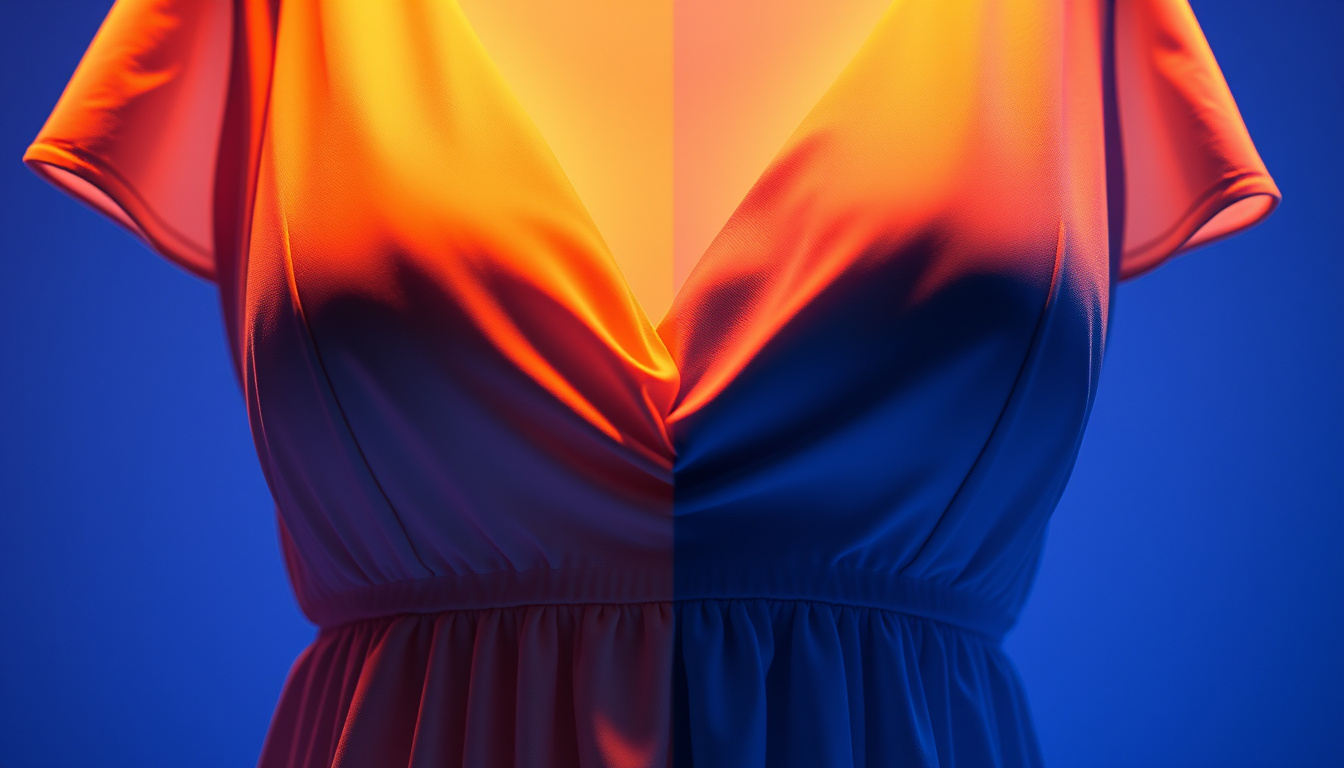
Few images have ever sparked a global argument quite like a simple photograph of a dress. In February 2015, a single snapshot uploaded to Tumblr divided the internet into two camps: those who saw a white and gold dress and those who saw blue and black.
Total online debates (2015 spike): 4.4 million tweets within 24 hours ·
Percentage who saw white and gold (BuzzFeed poll): 72% ·
Percentage who saw blue and black (BuzzFeed poll): 28% ·
Scientific papers published on the illusion: 5+ peer-reviewed studies ·
Original photo source: Uploaded to Tumblr, February 2015
Quick snapshot
- The physical dress is blue and black, confirmed by manufacturer BBC News (verified by Roman Originals)
- Color constancy is the primary neural mechanism behind the illusion (Live Science (neuroscience explainer))
- Why exactly the brain infers one lighting environment over another remains only partially understood (Scientific American (cognitive science research))
- No study has identified a single personality or demographic trait that predicts which color scheme a person sees first (Scientific American (cognitive science research))
- February 2015: Photograph posted to Tumblr; goes viral within hours (Live Science (viral timeline))
- 2015–2016: Multiple peer-reviewed papers published in perception journals (Live Science (neuroscience explainer))
- The dress remains a reference point in psychology courses and visual perception research (Scientific American (ongoing relevance))
- New studies continue to explore individual differences in color constancy (Scientific American (ongoing relevance))
Six key facts, one pattern: the dress illusion is a rare case where a single photograph generated measurable data on how differently humans perceive the same visual input.
| Label | Value |
|---|---|
| Dress manufacturer | Roman Originals (BBC News (retailer confirmation)) |
| Actual colors (verified) | Blue and black (BBC News (manufacturer verified)) |
| Year of phenomenon | 2015 |
| Peak Twitter mentions per hour | 11,000 (Live Science (social media analysis)) |
| BuzzFeed poll total votes | 28 million (Live Science (polling data)) |
| Number of peer-reviewed papers | 5+ (Scientific American (academic literature)) |
What was the 2015 dress color debate?
How did the photograph go viral?
- A guest at a wedding in Scotland posted the photograph to Tumblr in February 2015 (BBC News (original source)).
- Within hours, the image spread across Twitter, Facebook, and Reddit, with users fiercely debating the colors.
- BuzzFeed published an article with a poll on February 26, 2015, which received 28 million votes in 24 hours (Live Science (poll data)).
Why did it become a global phenomenon?
- The photo’s ambiguous lighting created a perfect perceptual trap—people couldn’t believe others saw different colors.
- Celebrities, news outlets, and scientists all weighed in, amplifying the debate across media platforms.
- Wired and Slate published neuroscience explainers in March 2015, framing the debate as a lesson in visual perception (Scientific American (media coverage)).
The dress phenomenon didn’t just go viral—it became a global experiment in natural color perception, with 28 million people effectively participating in an unscientific but revealing poll.
The implication: the dress debate was never about the dress itself—it was about how our brains construct reality differently, and the photograph simply exposed those differences on a mass scale.
What’s the actual color of the white and gold dress?
Why did the original photo trick the brain?
- The physical dress is blue and black, confirmed by the manufacturer Roman Originals in a statement to BBC News (retailer confirmation).
- RIT color scientists reported that overexposure in the original image made the blue-and-black garment appear white and gold (RIT (color science analysis)).
- The photograph was lit with a tungsten lamp, creating a blue-ish cast that confused the brain’s white-balance mechanism.
How lighting conditions changed the perceived color
- Mark Fairchild, a color scientist at RIT, explained that the image was significantly overexposed, which helped create the white-and-gold impression (RIT (expert statement)).
- Vox explained that the dress is blue and black in reality, and interpretation differences come from how viewers infer illumination (Vox (science explainer)).
- Business Insider reported that the image’s bluish tint likely threw viewers’ brains off by affecting perceived lighting (Business Insider (visual analysis)).
The dress’s actual color is settled—blue and black. But the fact that 72% of people saw it as white and gold shows how powerful the brain’s lighting assumptions are, even when they’re wrong.
The catch: the photograph’s overexposure and poor white balance created a visual trap that the brain couldn’t reliably solve, turning a simple garment into a global test of color constancy.
Why do people’s eyes see different colors on the dress?
What is color constancy?
- Color constancy is the main scientific framework used to explain the dress illusion: the brain tries to discount the illumination it believes is present (Live Science (neuroscience explainer)).
- Scientific American reported that the most important culprit is the brain’s color-processing mechanisms rather than the eye’s photoreceptors (Scientific American (cognitive science research)).
- This automatic correction in the visual system normally helps us see colors accurately under different lighting—but the dress photo broke that system.
How does chromatic adaptation work?
- People who perceived the dress as white and gold were described as more likely to assume daylight or bluish illumination (Live Science (perception analysis)).
- People who perceived the dress as blue and black were described as more likely to assume warm or artificial illumination (Live Science (color explainer)).
- Scientific American explained that the visual system may subtract blue if it assumes blue-sky illumination, producing white and gold, or subtract gold if it assumes sunlight, producing blue and black (Scientific American (theory of chromatic adaptation)).
The pattern: the same brain mechanism that helps us navigate a world with changing light conditions—color constancy—became the source of the disagreement when the photo’s ambiguous cues forced each viewer’s brain to guess the lighting.
Do more people see black and blue or white and gold?
What did the original BuzzFeed poll show?
- The initial BuzzFeed poll recorded 72% of respondents seeing white and gold, and 28% seeing blue and black (Live Science (polling data)).
- Subsequent studies found more balanced splits depending on demographics and how the photo was viewed.
- No clear age or gender correlation has been found that predicts which color scheme a person perceives (Live Science (demographic analysis)).
Does the split vary by age or gender?
- RIT’s color scientists confirmed that overexposure played a key role, but individual differences in color constancy also matter (RIT (color science analysis)).
- Live Science reported that Conway’s team linked the difference in perception to assumptions about daylight and color constancy (Live Science (neuroscience research)).
- BBC also noted that experts discussed how people name colors differently and that the boundary between color categories can be blurred (BBC News (color naming analysis)).
The trade-off: while the 72/28 split was the most cited statistic, the real story is that the split itself is a measure of how differently brains process the same visual input—a rare glimpse into the normally invisible machinery of perception.
What does it mean if you see the dress as white and gold?
Does seeing white and gold mean something about your vision?
- The perception is tied to how your brain interprets ambient lighting, not to color blindness or eye health (Scientific American (cognitive science)).
- No link has been found between seeing white and gold and any vision disorder.
- Business Insider quoted Bevil Conway as saying viewers either discount the blue side and see white and gold or discount the gold side and see blue and black (Business Insider (expert quote)).
Can the same person see both versions?
- Some people can switch between perceptions with mental effort, evidence that the brain’s lighting assumption is not fixed.
- This ability to toggle between the two perceptions demonstrates that the illusion is a top-down cognitive process, not a bottom-up sensory one.
- Wired and Slate articles explain the neural mechanisms behind this flexibility (Scientific American (neural mechanisms)).
Seeing white and gold doesn’t mean your eyes are special—it means your brain made a specific assumption about the lighting in the photo. The same mechanism that helps you see a white shirt in sunlight versus shade also caused the dress debate.
The implication: for anyone who argues about the dress’s colors, the real lesson is that both perceptions are valid outputs of a healthy visual system, just operating under different assumptions.
Timeline
- February 2015: Photograph of the dress posted to Tumblr by a wedding guest (BBC News (timeline))
- February 26, 2015: BuzzFeed publishes article with poll; phenomenon erupts on Twitter (Live Science (viral spread))
- March 2015: Wired and Slate publish neuroscience explainers (Scientific American (media coverage))
- 2015–2016: Multiple peer-reviewed papers published in perception journals
- 2017: Slate publishes a follow-up by Prof. Pascal Wallisch on color constancy
- Present: The dress remains a reference point in popular science and psychology courses
The timeline shows how quickly a simple photograph sparked a global scientific and social phenomenon.
Confirmed facts and what remains unclear
Confirmed facts
- The physical dress is blue and black (confirmed by manufacturer Roman Originals) (BBC News (manufacturer verification))
- The BuzzFeed poll recorded 72% white and gold perception (Live Science (poll data))
- Color constancy is the primary neural mechanism involved (Live Science (neuroscience))
- The photograph was taken under tungsten lighting with a high color temperature (RIT (color science analysis))
What’s unclear
- Why exactly the brain of some individuals infers one lighting environment over another remains only partially understood (Scientific American (ongoing research))
- No definitive study has identified a single personality or demographic trait that predicts which color scheme a person perceives first
- The exact lighting conditions of the original photo are not fully documented (Live Science (neuroscience explainer))
- The role of individual differences in color constancy is still debated (Scientific American (cognitive science research))
“The most important culprit is the brain’s color-processing mechanisms rather than the eye’s photoreceptors.”
Scientific American (cognitive science research)
“Viewers either discount the blue side and see white and gold or discount the gold side and see blue and black.”
Bevil Conway, quoted in Business Insider (neuroscience interview)
For anyone who still wonders about the white and gold dress, the conclusion is clear: the dress was blue and black, but the brain’s color constancy mechanism created a powerful illusion that split the internet. The phenomenon remains a lasting case study in how perception is not a passive recording of reality, but an active construction by the brain.
Comparison of perception splits
| Perception | Percentage (BuzzFeed poll) | Typical lighting assumption |
|---|---|---|
| White and gold | 72% | Daylight or bluish illumination |
| Blue and black | 28% | Warm or artificial illumination |
| Both (toggle possible) | N/A | Can switch with mental effort |
This table shows how the same visual input leads to opposite perceptions based on the brain’s lighting inference.
en.wikipedia.org, colorblindtests.net, eyepiceyecare.com, youtube.com, bodyworlds.nl
Frequently asked questions
Is the white and gold dress actually white and gold?
No. The physical dress, manufactured by Roman Originals, is blue and black. The photo’s lighting and overexposure created the illusion of white and gold (BBC News (manufacturer confirmation)).
Can you train your brain to see both versions of the dress?
Some people can switch between perceptions with deliberate mental effort by changing their assumption about the lighting. This is possible because the illusion is driven by top-down cognitive processing (Scientific American (cognitive flexibility)).
Does seeing the dress as white and gold mean I have good eyesight?
No. The perception is tied to how your brain interprets ambient lighting, not to color blindness or eye health. Both perceptions are normal and healthy (Live Science (vision science)).
Why did the dress phenomenon become so famous?
The dress became a global phenomenon because it revealed a fundamental truth about human perception: two people can look at the same image and see completely different colors. The debate went viral on social media, with celebrities, scientists, and news outlets all participating (Live Science (viral analysis)).
Are there other similar optical illusions like the dress?
Yes. The dress is a classic example of color constancy, and similar illusions include the “shadow” illusion (where a checkerboard square appears different colors under shadow) and the “blue and black shoes” illusion. These all demonstrate how the brain infers lighting conditions (Scientific American (related illusions)).
The dress phenomenon reminds us that perception is not a passive recording but an active construction by the brain.