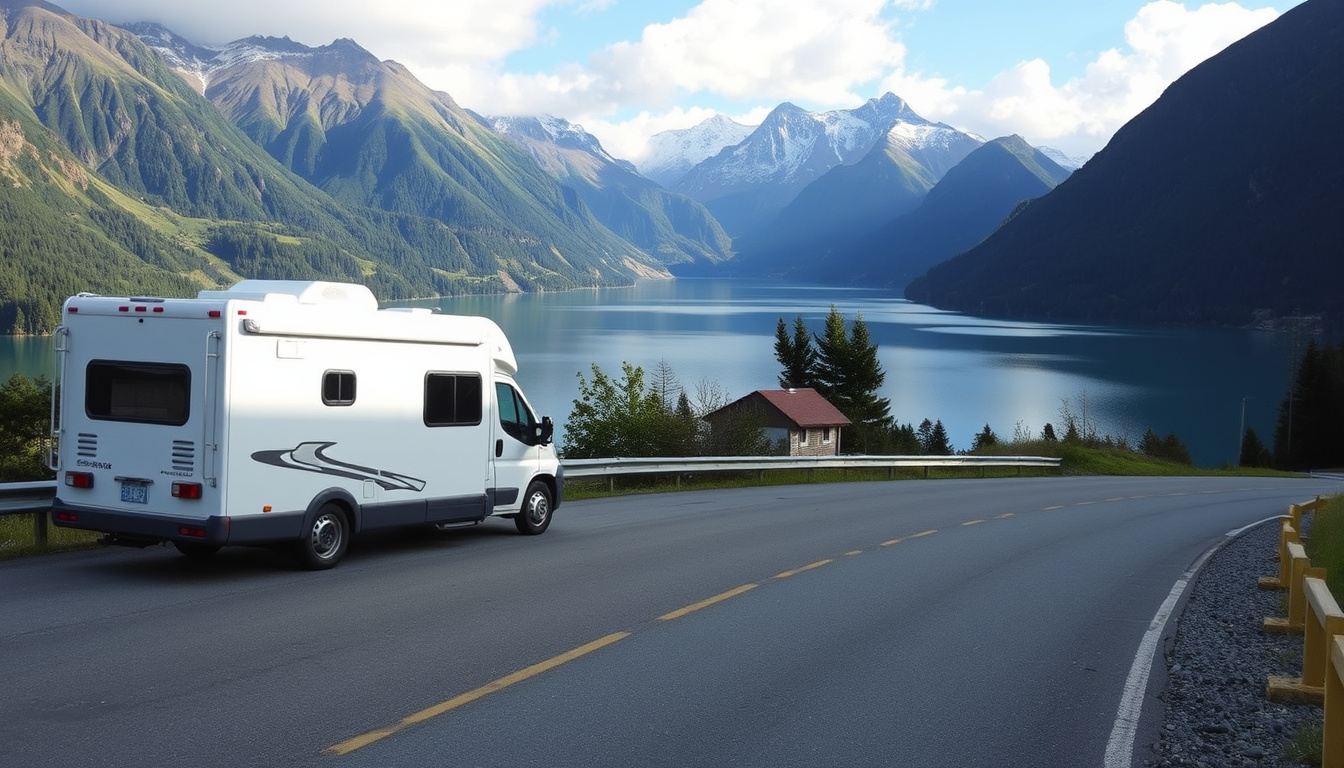
Anyone who has priced a one-way campervan rental in New Zealand knows the sting: drop-off fees can rival the daily rate. Free relocation deals flip that math, letting you drive a rental company’s vehicle between depots for as little as $0 a day, according to Transfercar (NZ relocation aggregator).
Typical cost: Free or $1 per day ·
Most popular route: Christchurch to Auckland ·
Average relocation duration: 1–5 days ·
Active providers: 10+
Quick snapshot
- Free one-way campervan moves exist through multiple NZ operators (Transfercar)
- Listings can include up to 5 free days, then extra days from NZ$50/day (Transfercar listings)
- Minimum age is 18 with a full NZ-valid licence (Transfercar)
- Peak-season availability (Dec–Feb) depends on fleet needs (Transfercar)
- Insurance and cancellation terms differ by operator (The Nomad Almanac)
- Relocation windows commonly run 1–5 days (Just Good Campers)
- Deals appear when operators need fleet balancing, not on a fixed calendar (Transfercar)
A dozen key numbers, one pattern: the advertised rate is near zero, and the real budget lives in fuel, ferry, and extras.
| Metric | What the research shows |
|---|---|
| Typical free window | 1–5 days (Just Good Campers) |
| Advertised daily rate | $0, sometimes $1 per day (Transfercar) |
| Example free days + extras | 5 free days, then NZ$50 per extra day (Transfercar) |
| Example paid relocation | NZ$440 for 4 days, Christchurch to Auckland (Bookme) |
| Documented vehicle cost | NZ$252.75 incl. platform fee (The Nomad Almanac) |
| Documented fuel and extras | NZ$498 fuel, NZ$15 LPG, NZ$71 passenger ferry, NZ$55 camp (The Nomad Almanac) |
| Popular providers | Mad Campers, Travellers Autobarn, Kea |
| Minimum driver age | 18 (Transfercar) |
| Licence | Full licence valid in New Zealand (Transfercar) |
| Most cited corridor | Christchurch–Auckland (The Nomad Almanac) |
| Inter-island ferry | Sometimes included for vehicle and driver (Bookme) |
The trade-off: a $0 nightly rate is real, but the costs that arrive with the keys — fuel, ferry, insurance, platform fees — decide what the trip actually costs.
What Is Free Campervan Relocation in New Zealand?
Definition and how the process works
- A relocation puts you behind the wheel of a campervan that a rental company needs moved from one depot to another (Transfercar, NZ relocation aggregator)
- The traveler gets the vehicle for a low or zero daily rate and follows a set route with a fixed deadline
- Listings cover cars, campervans, and motorhomes, not just large RVs (Transfercar)
The model is simple. A company has a campervan sitting in Queenstown on a Sunday and needs it in Auckland by Thursday. Instead of paying a driver to fetch it, the company hands the keys to a traveler who wants to cover that distance anyway. The traveler gets cheap wheels; the company gets its vehicle moved. According to Just Good Campers (NZ campervan company), relocation deals usually come with a fixed route and a completion window of about 1 to 5 days.
Why rental companies offer relocations
- Seasonal demand shifts leave vehicles in the wrong city at the wrong time
- One-way bookings finish at a depot different from where the next hire starts
- Maintenance schedules and fleet transfers require vehicles to move between branches
Transfercar describes the trigger plainly: availability is driven by each operator’s fleet-balancing needs, so there is no published schedule and no guarantee a route will still be listed tomorrow (Transfercar).
The implication: every “free” campervan is a logistics problem someone chose to pay you to solve. The cheaper the van, the more you are the solution.
How Do I Find Free Campervan Relocation Deals?
Using dedicated relocation aggregators like Transfercar
- Transfercar lists one-way relocation deals for cars, campervans, and motorhomes across New Zealand (Transfercar)
- Filters sort results by pickup city, drop-off city, dates, and vehicle type
- Some results show several free days with extra days billed separately (Transfercar listings)
Start on the search page, filter by where you can realistically pick up, and read the detailed terms before booking. One recent transfercar.co.nz listing showed 5 free days and charged NZ$50 for each additional day (Transfercar listings). The platform also states that drivers must be at least 18 and hold a full driving licence valid in New Zealand (Transfercar).
Checking individual company websites
- Operators such as Mad Campers, Travellers Autobarn, and Kea run their own one-way relocation programs
- Company-direct deals sometimes include perks such as discounted extra days
- A direct booking avoids third-party platform fees when the operator lists the same vehicle cheaper
Aggregators do not hold every deal. New Zealand’s campervan operators publish their own relocation pages, and the conditions can be more generous than what appears on third-party boards. A Mad Campers customer testimonial highlights the flexibility of the Mad Relocations program, specifically the freedom to extend the hire at a discount rather than stick to a rigid return date.
Monitoring social media groups and forums
- Facebook groups for campervan travelers in New Zealand share fresh relocation listings daily
- Travelers post routes, current prices, and warnings about specific operators
- Forum threads sometimes surface deals before aggregators index them
One traveler in a New Zealand relocation Facebook group reported paying $1 a day for a Christchurch-to-Auckland relocation arranged through Transfercar, with the real costs being fuel and a second passenger’s ferry ticket.
Step by step: booking a relocation
- Search Transfercar and company sites for your pickup city and travel window (Transfercar)
- Read the route, free days, extra-day rate, and mileage cap in the listing
- Price the real trip: fuel, ferry, campsites, LPG, and any platform fee
- Confirm you meet the licence and age rules — on Transfercar that means 18+ with a full NZ-valid licence (Transfercar)
- Book and keep written confirmation of the drop-off deadline
- Plan the itinerary backward from the deadline, leaving buffer for weather and ferry delays
- Return the campervan on time to avoid penalty charges
Travelers who win on relocation deals treat the search like a daily habit, because listings follow fleet needs rather than a calendar. A low-cost Christchurch–Auckland slot at $1 a day gets booked by someone else while you deliberate.
What Are the Most Common Campervan Relocation Routes?
The most frequently cited corridors run south to north, following the main tourist flow. Two routes dominate the listings: Christchurch to Auckland and Queenstown to Auckland (The Nomad Almanac, NZ travel journal).
Christchurch to Auckland
- Crosses Cook Strait between Picton and Wellington to move between islands (Bookme, NZ booking platform)
- Some deals include the ferry for the vehicle and the driver (Bookme)
- A documented itinerary took the long way through Wānaka, Haast Pass, and the West Coast before reaching Picton (The Nomad Almanac)
A four-day Christchurch-to-Auckland relocation appeared on Bookme at NZ$440, with the ferry and airport transfer included for the driver (Bookme). The price signals the effort: this is a two-island journey on a deadline, not a relaxed loop.
Queenstown to Auckland
- A second regularly cited south-to-north corridor (The Nomad Almanac)
- Heads north through the South Island’s main tourist spine before the Cook Strait crossing
- Useful for travelers who want the alpine scenery without doubling back to Christchurch
Queenstown sits at the end of many one-way rentals, so operators frequently need vehicles shifted north again. If you time it right, you cover the same ground a standard rental would charge a premium for.
Wellington to Auckland
- A North Island-only route that skips the ferry crossing
- Works well if your trip starts after you have already crossed Cook Strait
- The same corridors also run north to south when bookings flow the other way
North Island departures appeal to travelers who prefer to keep the whole journey on one island. The direction, frequency, and timing of these deals depend entirely on where the operator’s vehicles need to be next (Transfercar).
Other regional routes
- Regional routes appear when a branch needs vehicles for an upcoming booking wave
- Pickup cities vary, so setting alerts for multiple locations widens your options
- Distance and scenery differ; the route in the listing is the one you must follow
The pattern is consistent: whatever direction the next bookings point to, that is the direction a relocation will go. Check the deal first, then shape the trip around it.
What this means: your route is decided by someone else’s bookings. The smart move is picking a route you like from what is available, not waiting for a dream itinerary that never appears.
What Are the Pros and Cons of Campervan Relocations?
A relocation is a trade, not a gift. For every budget win, there is a constraint you need to plan around.
Upsides
- Savings can reach around 70% compared with standard one-way hire, based on documented vehicle costs (The Nomad Almanac)
- The daily rate is often $0, with some reported deals at $1 per day (Transfercar)
- You see regions you might miss on a point-to-point itinerary — the West Coast leg of a Christchurch–Auckland relocation being a documented example (The Nomad Almanac)
- No need to return the vehicle to the original depot; the drop-off is the end of the trip
- Commitment is short, with most free windows running 1–5 days (Just Good Campers)
Downsides
- Strict deadlines — a late return can trigger penalty fees that erase the saving
- Fixed routes and mileage caps (some operators cite around 200 km/day) limit spontaneity
- Insurance excess and exclusions vary; the standard rental cover does not always transfer to relocation deals (The Nomad Almanac)
- Availability is unpredictable; peak-season listings are not guaranteed because fleet needs dictate the schedule (Transfercar)
- If plans change, the booking may not be refundable — check the listing’s cancellation terms
The worst-case relocation cost is an extra day at the full daily rate plus penalties — one mistake against a deadline can swallow months of saved budget. Read the late-return clause before you sign.
The trade-off: the cheaper the vehicle, the tighter the leash. Travelers who treat the deadline as fixed and the route as non-negotiable get the best of the deal.
What Should I Know Before Booking a Relocation?
Insurance coverage and excess
- Insurance is not always included in the advertised rate; when it is, excess amounts vary by operator
- The real cost of a relocation includes insurance excess or cover, not just the nightly rate (The Nomad Almanac)
- Ask what happens to the excess for stone chips or windscreen damage before you drive away
The Nomad Almanac’s documented trip includes insurance in its cost calculation, alongside fuel, LPG, ferry, campsites, bedding, and cleaning (The Nomad Almanac). The free nightly rate is the hook; the protection package is the part you should never skip.
Mileage and fuel policy
- Fuel is generally the driver’s cost — the documented Christchurch–Auckland trip spent NZ$498 at the pump (The Nomad Almanac)
- Mileage caps exist; some operators cite around 200 km/day before per-kilometre charges apply
- Small costs add up: NZ$15 for LPG and NZ$71 for a second passenger’s ferry ticket appeared on the same trip (The Nomad Almanac)
The pattern in the receipts: the vehicle can be free, and the journey still costs real money. A trip priced at NZ$252.75 for the van came to NZ$891.75 once fuel, LPG, ferry, and a campsite were added (The Nomad Almanac).
Age and licence requirements
- Transfercar sets the minimum at 18 with a full driving licence valid in New Zealand (Transfercar)
- Some individual operators require a higher minimum, commonly 21, for larger vehicles
- International licences and converted permits should be confirmed with the operator before booking
The rules differ from standard rental desks, so confirm age and licence details for the specific vehicle class, not for the company as a whole.
Cancellation and late-return policies
- Terms vary significantly between providers, so the listing’s own policy is the only reliable guide (Transfercar)
- Late returns risk penalty fees that can exceed the daily rate you saved
- Cancellations and date changes are not always free — treat the booking as a commitment
The catch: a relocation is a promise with a deadline attached. If your plans wobble, the cheap rate becomes an expensive lesson.
How Reliable Are These Deals?
The mechanics of relocation deals are well documented; the daily specifics are not.
Confirmed facts
- Free or near-free one-way campervan relocations exist in New Zealand through multiple operators (Transfercar)
- Transfercar requires drivers to be at least 18 with a full NZ-valid licence (Transfercar)
- Christchurch–Auckland is one of the most frequently cited corridors, and ferry-inclusive deals exist (Bookme)
What’s unclear
- Peak-season availability (December–February) is not predictable; operators do not publish a schedule in advance (Transfercar)
- Insurance coverage, mileage caps, and cancellation terms differ sharply between providers (The Nomad Almanac)
- Whether a ferry deal covers additional passengers is decided per listing, not by a uniform rule (Bookme)
The signal: cheap vans appear most often in shoulder seasons, when fleet imbalances are at their widest. If your travel dates are fixed, book a standard rental as the safe plan and treat a relocation as the bonus.
What Travelers Say
“We paid $1 a day for a Christchurch-to-Auckland relocation booked through Transfercar. After fuel, LPG, and the second passenger’s ferry ticket, the trip still cost a fraction of what a normal one-way hire would have charged.”
— New Zealand campervan relocation Facebook group member
“The Mad Relocations program worked because it was flexible — fixed dates for the move, but we could keep the campervan longer at a discounted daily rate instead of rushing back.”
— Mad Campers customer testimonial
Both reports point the same way: the advertised rate is real, and the budget shock arrives in fuel and ferry charges rather than in the daily fee. A documented Christchurch–Auckland relocation came to NZ$891.75 all-in after the NZ$252.75 vehicle booking, fuel, LPG, a passenger ferry ticket, and a paid campsite (The Nomad Almanac).
The Takeaway
Free campervan relocation in New Zealand is a genuine money-saver with a genuine condition: you are the logistics department. For travelers with flexible dates and a tolerance for deadlines, the formula is straightforward — check Transfercar and operator listings daily, price in fuel and ferry before you book, and commit the moment a route fits. For budget travelers in New Zealand with fixed dates, the choice is just as clear: treat relocation as a bonus when it appears, or watch the $1-a-day vans vanish while you wait for a better one.
campervanplanet.com, govt.nz, camplify.co.nz, transfercar.co.nz
Frequently asked questions
Can I use a campervan relocation for a one-way trip?
Yes — that is the entire model. A relocation moves a vehicle from one depot to another for the operator, so the route runs one-way by definition (Transfercar).
Do I need to be 21 or older to rent a relocation campervan?
Not always. Transfercar sets the minimum at 18 with a full driving licence valid in New Zealand; individual operators can require a higher minimum, so check the listing’s terms (Transfercar).
Are pets allowed in relocation campervans?
There is no uniform rule; pet policies are set by each operator and vehicle. Ask the company directly before booking, and get the answer in writing.
What mileage allowance is typical for a relocation?
It varies by listing. Some operators cap usage around 200 km per day, with the route and deadline set so the cap fits the distance. Confirm the allowed kilometres in the listing before booking.
Is fuel included in free relocation deals?
Generally not. Drivers cover fuel for the whole journey; one documented Christchurch–Auckland relocation cost NZ$498 in fuel alone (The Nomad Almanac).
What happens if I return the campervan early?
Completing the move before the deadline is rarely a problem, but the drop-off location and date are fixed by the operator. If you plan to arrive early, confirm the hand-over arrangements with the company in advance.
Can I extend the relocation period?
Some listings allow paid extra days after the free period — one Transfercar result showed 5 free days followed by NZ$50-per-day extras (Transfercar listings). The extension rate is set by the operator.
Are there any age restrictions on vehicles?
Restrictions apply to drivers rather than vehicle age. Larger motorhomes sometimes carry a higher minimum driver age, and the listing’s terms state what applies. If a listing does not say, ask before booking.