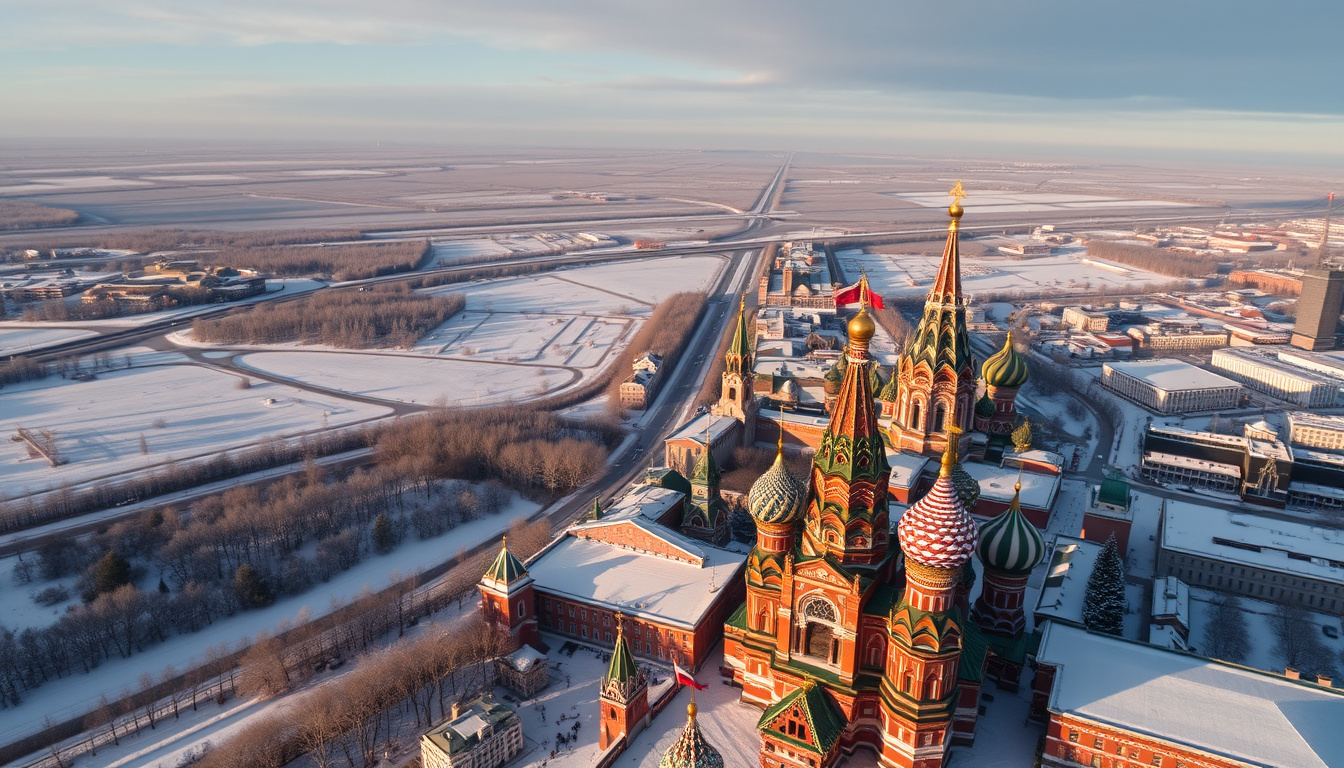
Ask ten people to name the biggest country in the world, and most will say Russia — right answer. But the third biggest flips between China and the United States depending on how you count water, and ‘biggest’ means different things for population, economy, and superpower projections.
Largest country by area: Russia — 17,098,242 km² · Second-largest country by area: Canada — 9,984,670 km² · Third-largest by land area: China — about 9.6 million km² · Third-largest by total area: United States — about 9.8 million km² · Most populous country: India — about 1.44 billion people · Largest economy by nominal GDP: United States — about $27 trillion
Quick snapshot
- Russia is the largest country by total area at 17,098,242 km², with Canada second at 9,984,670 km² (Worldometer (live world statistics tracker)).
- India is the most populous country, at about 1.44 billion people, per UN World Population Prospects. (Worldometer (live world statistics tracker))
- The United States has the largest nominal GDP, around $27 trillion in recent data, per World Bank open data. (Worldometer (live world statistics tracker))
- Third place by total area shifts depending on whether a source counts inland water only or adds coastal water (Yahoo News).
- Population rankings shift over time: India now ranks as the world’s most populous country, ahead of China (UN World Population Prospects).
- GDP leaderboards also move; the United States leads today, while long-run projections for later decades are uncertain (World Bank open data, projections uncertain).
- Watch the measurement definition before trusting any “biggest country” list: land area, total area, and total-plus-coastal-water produce different winners after Russia (Worldometer).
Six numbers, one pattern: the top two slots are stable, while third place depends on which definition a source uses.
| Measure | Value |
|---|---|
| Largest country by area | Russia — 17,098,242 km² |
| Second-largest country by area | Canada — 9,984,670 km² |
| Third-largest by land area | China — about 9.6 million km² |
| Third-largest by total area | United States — about 9.8 million km² |
| Most populous country | India — about 1.44 billion people |
| Largest economy by nominal GDP | United States — about $27 trillion |
What is the biggest country in the world?
Every major dataset agrees on the first two lines of the ranking, so start there. Russia is the largest country in the world by total area, at 17,098,242 km² (Worldometer (live world statistics tracker)).
Russia’s No. 1 position
- Russia’s total area, 17,098,242 km², is about 11% of the world’s landmass.
- Its land area alone is 16,376,870 km².
- Russia stretches across Europe and Asia — the only country in the top 10 that spans two continents.
- It holds first place under both the total-area and land-area definitions.
One way to feel the scale: Russia’s land area alone is bigger than Canada’s total area. The No. 1 slot is not close.
How Russia compares with Canada
- Canada’s total area: 9,984,670 km² — second place.
- Canada’s land area: 9,093,510 km².
- Russia’s lead over Canada is roughly 7.1 million km².
Russia’s No. 1 slot is immune to the water-counting debate; Canada’s is not. Use the total-area definition and Canada holds a comfortable second. Isolate land area and it slips behind both China and the United States, which is where the “third biggest” confusion begins.
What “biggest” can mean in other rankings
- Population: India is the most populous country, at about 1.44 billion people, per UN World Population Prospects.
- Economy: the United States has the largest nominal GDP, at about $27 trillion, per World Bank open data.
- Military and superpower status: contested, with no official list.
So “biggest country” is really three or four different questions sharing one phrase. The area answer is Russia; the population answer is India; the economy answer is the United States.
The implication: whenever someone quotes a “biggest country” figure, the useful follow-up is “biggest by what?” The answer changes — and not by a rounding error.
What is the third biggest country?
Here is the part of the list that keeps changing. In the Worldometer dataset, China is third; in references that add coastal water to the total, the United States is third. Both answers are defensible because the two measurements are not the same.
China’s land area
- China’s land area in the Worldometer dataset: 9,388,211 km².
- Many sources put China’s land area at about 9.6 million km², while the Worldometer dataset gives 9,388,211 km² — a split that shows up in everything that follows.
- Under either figure, China ranks ahead of Canada on land area alone; Canada’s land area is 9,093,510 km².
The United States total-area figure
The United States is the country that cannot hold still: total-area lists that count coastal water put it third, while Worldometer-style totals keep it fourth. Same country, two different slots, one definition apart.
- Worldometer total for the United States: 9,372,610 km² — fourth place.
- Totals that include coastal water: about 9.8 million km² — third place.
- By land area, the United States (9,147,420 km²) edges past Canada (9,093,510 km²), because Canada holds substantially more inland water (Yahoo News (news wire analysis)).
Why sources disagree
- “Total area” usually means land plus inland water: lakes, reservoirs, and rivers.
- “Land area” excludes that water; some sources also add coastal water back into the United States total.
- The World Bank (global development data agency) uses a strict land-area definition that excludes inland water bodies, continental-shelf claims, and exclusive economic zones (World Bank DataBank glossary).
Three ranking methods, one messy middle: Russia and Canada hold the first two lines, then China and the United States swap positions.
| Ranking method | No. 1 | No. 2 | No. 3 | No. 4 |
|---|---|---|---|---|
| Total area — land plus inland water (Worldometer style) | Russia | Canada | China — 9,706,961 km² | United States — 9,372,610 km² |
| Total area — including coastal water | Russia | Canada | United States — about 9.8 million km² | China — about 9.6 million km² |
| Land area only | Russia | China — 9,388,211 km² | United States — 9,147,420 km² | Canada — 9,093,510 km² |
That is the whole dispute in one table: the first two cells never change, and everything below them depends on the definition in column one.
What are the top 10 biggest countries in the world?
For most practical purposes, “biggest country” means the by-area ranking. Worldometer (live world statistics tracker) lists the top 10 by total area — land plus inland water — as follows (largest countries in the world by area):
The top 10 by area
- Russia — 17,098,242 km²
- Canada — 9,984,670 km²
- China — 9,706,961 km² (or the United States, if the source counts coastal water)
- United States — 9,372,610 km² (or China, under the same convention)
- Brazil — 8,515,767 km²
- Australia — 7,692,024 km²
- India — 3,287,590 km²
- Argentina — 2,780,400 km²
- Kazakhstan — 2,724,900 km²
- Algeria — 2,381,741 km²
Which continents dominate
- Asia has the most entries: China, India, and Kazakhstan, with Russia also stretching into Asia.
- North America sends Canada and the United States.
- South America sends Brazil, the largest country on the continent, plus Argentina.
- Oceania sends Australia.
- Africa sends Algeria, with the Democratic Republic of the Congo, Sudan, and Libya in the next tier.
Two of the six populated continents — South America and Oceania — contribute exactly one top-10 entry each. Europe’s only footprint on the list runs through Russia, which spans both Europe and Asia.
From top 10 to top 20
- The next tier of the ranking continues with the Democratic Republic of the Congo, Saudi Arabia, Mexico, Indonesia, Sudan, and Libya.
- None of them reaches the dispute zone: the top four all exceed 9.3 million km², while the closest challenger, Brazil, sits at 8,515,767 km².
So the top 10 is stable at both ends; almost all the movement happens in the third and fourth slots, where the water-counting debate lives.
What this means: when a list says “China is third” or “the United States is third,” the method should be in the same paragraph. If it is missing, the list is repeating a choice, not a measurement.
The implication: the top 10 is stable except for the third and fourth slots, which depend on the water-counting definition.
Which country has the largest economy?
Change the yardstick from area to output, and the ranking looks completely different. The United States has the largest nominal GDP in the world, around $27 trillion in recent data, according to World Bank open data; China is second.
United States nominal GDP
- U.S. nominal GDP: about $27 trillion — the largest of any country.
- China’s nominal GDP: second-largest.
- The economy’s top two are the United States and China — not the area top two, Russia and Canada.
In other words, the physical leaderboard and the money leaderboard share almost no names at the top. Russia holds about 11% of the world’s landmass yet does not sit in the top two of the GDP list.
GDP per capita and “richest country”
- “Richest country” questions are usually answered with GDP per capita rather than total GDP.
- On that measure, small economies lead — Luxembourg is the standard example.
- A country can top the per-capita ranking without being one of the world’s largest economies.
Fastest-growing economy vs largest economy
- Fastest-growing is a separate contest, measured by yearly percentage growth rather than total size.
- That leaderboard changes by year and by data source.
- Fast growth does not equal large size: a small economy can grow quickly and still rank far down the total-GDP list.
Area size does not buy economic size: Russia wins the land contest, the United States wins the nominal-GDP contest, and India — the population leader — does not reach the top two in either area or GDP.
Why this matters: “biggest country” is a family of rankings, and each family has a different winner. The question worth asking is which leaderboard the speaker means.
Who are the top 5 superpowers?
People search for which country will be most powerful in 2030, 2050, 2075, and even 2100. These are legitimate questions with a frustrating answer: they are projections, not standings, and they vary widely by source.
What makes a country a superpower
- “Superpower” has no official definition and no certifying body.
- Military strength, economic weight, diplomatic reach, and technology are the usual ingredients.
- Because the criteria are open-ended, different analysts reach different top fives.
The usual contenders today
- The United States and China are the two countries most often named as current superpowers or near-superpowers.
- Russia is often cited for military strength, though economic and diplomatic power affect superpower status too.
- After those three, the list varies by author, dataset, and definition.
2030, 2050, 2075 and 2100 projections
- 2030: near-term projections — within the range of current trends, but not a confirmed outcome.
- 2050: economic projections diverge sharply depending on the data source.
- 2075 and 2100: long-range projections that are speculative and vary widely by source.
No confirmed data can predict the most powerful or richest country in those years. A headline that names the 2075 winner is citing a scenario, not a fact.
When comparing superpower lists, the tell is the metric: a military index, a GDP projection, and a diplomatic-influence survey produce three different top fives — and none of them is “the” truth.
The trade-off: superpower rankings trade precision for drama. They work as scenario planning, not as scoreboards for a contest that has not been played.
The pattern: superpower rankings are scenarios, so readers should examine the metric behind each list before treating any as fact.
What’s confirmed — and what’s not
Confirmed facts
- Russia is the largest country by area, at 17,098,242 km² (Worldometer).
- Canada is the second-largest country by total area, at 9,984,670 km² (Worldometer).
- India is the most populous country, at about 1.44 billion people (UN World Population Prospects).
- The United States has the largest nominal GDP, at about $27 trillion (World Bank open data).
What’s unclear
- Third place by area depends on land-area vs total-area definitions.
- The most powerful country in 2030 — projection-based, no consensus.
- The richest country in 2050 — projection-based, no consensus.
- The strongest military in 2050 and superpower status in 2075/2100 — no agreed answer.
- “Most loved nationality” — subjective, not an official ranking.
That balance matters: the settled list is short, and the unsettled list is longer. It is the unsettled part that usually drives the headline.
What the sources say
Two source definitions explain most of the disagreement about the top 10.
Land area is defined as total area excluding inland water bodies, continental-shelf claims, and exclusive economic zones.
World Bank DataBank (global development data agency), World Development Indicators glossary
The United States can rank ahead of Canada when countries are compared by land area because Canada contains substantially more inland water.
Yahoo News (news wire analysis), ranking breakdown
The pattern: put those two definitions together and the third-place dispute stops looking like a fight and starts looking like a footnote. Different definitions, different order — same countries.
The answer to “what is the biggest country” is actually simple: Russia wins by total area, and no mainstream dataset disputes it. The complications start at third place, then spread to population, GDP, and superpower projections. For anyone copying a “biggest country” figure into a report, a quiz, or a world map, the check is quick — find the phrase “total area” or “land area” before quoting the ranking, or state the definition you used. Readers should check that one word — ‘total’ or ‘land’ — before quoting any ranking.
worldometers.info, worldometers.info, user.iiasa.ac.at, start.csail.mit.edu, start.csail.mit.edu, user.iiasa.ac.at
Frequently asked questions
Why does Russia look so large on world maps?
Flat maps stretch high-latitude land, which exaggerates Russia’s size next to countries near the equator. Russia is genuinely the largest country by area at 17,098,242 km² in the Worldometer dataset, but the projection is doing some of the visual work.
Is Canada bigger than the United States?
By total area, yes: Canada is 9,984,670 km² and the United States is 9,372,610 km² in the Worldometer dataset. By land area the order flips — the United States has about 9,147,420 km² of land versus Canada’s 9,093,510 km², because Canada holds more inland water (Yahoo News (news wire analysis)).
Is Brazil bigger than Australia?
Yes. Brazil ranks fifth by area at 8,515,767 km², and Australia sixth at 7,692,024 km² in the Worldometer ranking.
What is the smallest country in the world?
Vatican City is the smallest sovereign state, covering less than one square kilometre. Russia, the largest, covers more than 17 million km² — the two sit at opposite ends of the same list.
Which country is the largest in South America?
Brazil. It is fifth globally at 8,515,767 km², ahead of Argentina, which is eighth at about 2,780,400 km² in the Worldometer dataset.
These answers cover the most common geography questions about size and measurement. Readers should compare definitions before drawing conclusions.
Related reading
- Best Scenic Road Trips USA: Routes, Tips & California — geography and travel context for the United States, the country that changes position in the top 10 depending on how you count water.
- Time in Perth Now – Current Local Time (AWST) Australia — a practical reference for Australia, the sixth-largest country by area and the largest in Oceania.
These related articles provide further context for two of the largest countries in the world.