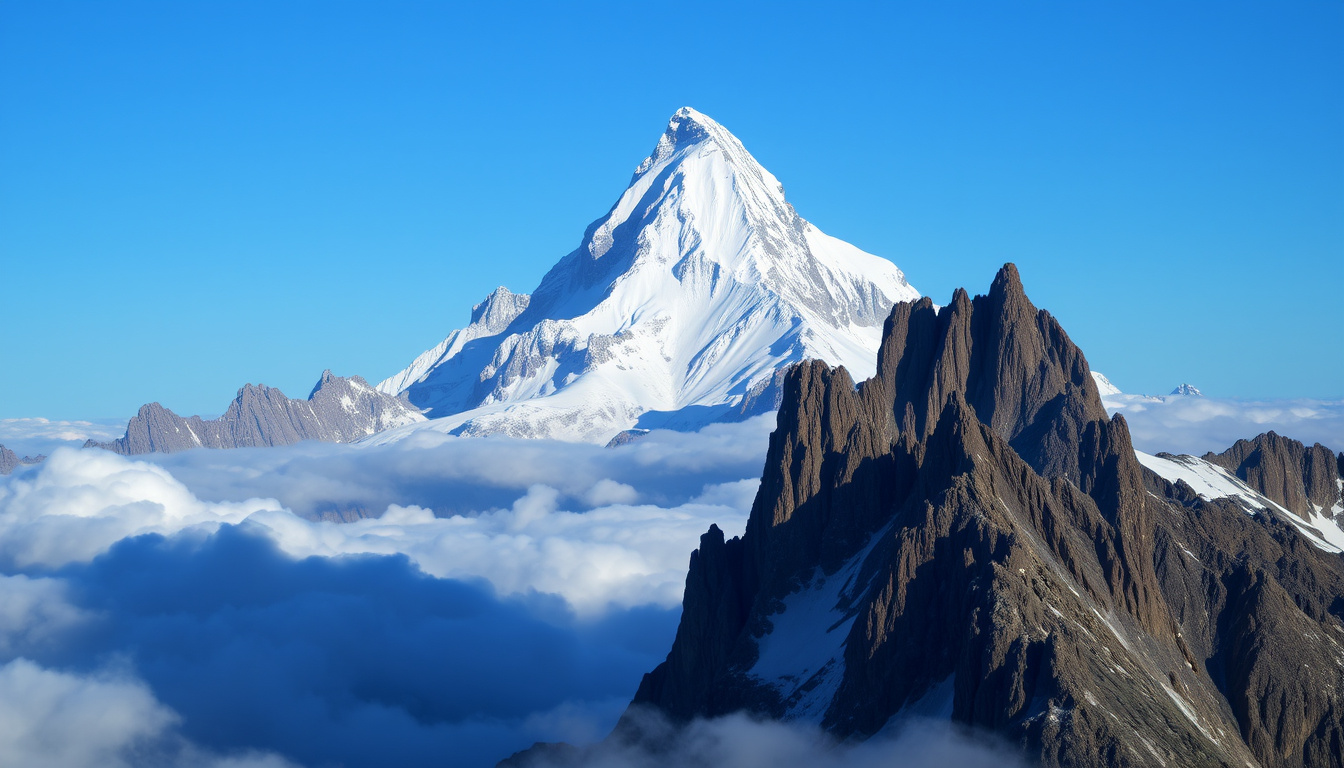
You’ve probably seen the postcard shots of Aoraki / Mount Cook reflected in Lake Pukaki, but do you know exactly how tall it really is? The highest point in New Zealand reaches 3,724 metres (12,218 ft), a figure that changed after a massive landslide in 1991. This guide ranks the country’s top five peaks with verified heights, breaks down the climbing challenge on each, and gives you the data you need to plan a trip—whether you’re just curious or gearing up for an expedition. For a detailed look at the Aoraki / Mount Cook height revision and climbing difficulty, check our dedicated guide.
Highest peak: Aoraki / Mount Cook (3,724 m) · Location: Southern Alps, South Island · Number of named peaks over 3,000 m: More than 20 · Tallest North Island peak: Mount Ruapehu (2,797 m) · Climbing season: November to February
Quick snapshot
- Aoraki / Mount Cook is New Zealand’s highest peak at 3,724 m (Encyclopaedia Britannica)
- Mount Tasman is the second highest at 3,497 m (Mountain Field Guide)
- Mount Ruapehu is the highest peak on the North Island at 2,797 m (Department of Conservation)
- All ten highest separate named mountains lie in the Aoraki/Mount Cook region of the Southern Alps (Mountain Field Guide)
- Exact heights for some minor unnamed peaks remain subject to ongoing surveys (GeoNames)
- Route difficulty grades can shift with snow and ice conditions, making standard ratings only a guide (Pacific Voice)
- A major landslide in 1991 reduced Aoraki / Mount Cook’s height by about 10 m (30 ft) (Encyclopaedia Britannica)
- The New Zealand Alpine Club continues to monitor and update height data as LiDAR surveys refine local topography (New Zealand Alpine Club)
Here are the key facts about New Zealand’s highest peaks, summarised for quick reference.
| Label | Value |
|---|---|
| Country | New Zealand |
| Highest Peak | Aoraki / Mount Cook (3,724 m / 12,218 ft) |
| Mountain Range | Southern Alps |
| Number of Peaks over 3,000 m | More than 20 |
| Tallest North Island Peak | Mount Ruapehu (2,797 m / 9,177 ft) |
What are the five tallest mountains in New Zealand?
The five highest named mountains in New Zealand are all part of the Southern Alps and are concentrated around the Aoraki/Mount Cook region. Here’s the verified ranking based on official topographic data. Explore our full list of highest mountains in New Zealand.
Aoraki / Mount Cook (3,724 m)
- The undisputed highest peak, located in west-central South Island (Encyclopaedia Britannica)
- First ascended in 1894 by a New Zealand party including Tom Fyfe, George Graham and Jack Clarke (Wikipedia)
- Its height was reduced by about 10 m after the 1991 landslide (Encyclopaedia Britannica)
Mount Tasman (3,497 m)
- Second highest, 2 km north of Aoraki/Mount Cook (Mountain Field Guide)
- First climbed in 1895 (same party as Cook) (GeoNames)
Mount Dampier (3,440 m)
- Third highest separate named mountain (GeoNames)
- Often climbed in conjunction with Aoraki/Mount Cook via the ridge linking them (Mountain Field Guide)
Mount Vancouver (3,309 m)
- Fourth highest, located in the Mount Cook massif (GeoNames)
- Named after the British Royal Navy officer George Vancouver (Wikipedia)
Silberhorn (3,303 m)
- Fifth highest, often called the “Matterhorn of the Southern Alps” due to its pyramid shape (GeoNames)
- First ascent in 1903 by a Swiss party (Mountain Field Guide)
Five peaks, one pattern: height decreases steadily from Aoraki through the massif, but climbing difficulty does not follow a smooth gradient—exposure and technical demands vary significantly.
| Mountain | Height (m) | Location | First Ascent | Notable difficulty |
|---|---|---|---|---|
| Aoraki / Mount Cook | 3,724 | Southern Alps, Canterbury | 1894 | High (AD+) |
| Mount Tasman | 3,497 | Southern Alps, Canterbury | 1895 | High (AD+) |
| Mount Dampier | 3,440 | Southern Alps, Canterbury | 1911 | Very high (mixed terrain) |
| Mount Vancouver | 3,309 | Southern Alps, Canterbury | 1903 | Extreme (exposed rock) |
| Silberhorn | 3,303 | Southern Alps, Canterbury | 1903 | Extreme (steep ice) |
The implication: while Aoraki is the tallest, its standard route is not the hardest—Mount Vancouver and Silberhorn demand even greater technical skill and route-finding experience.
Is Mount Cook difficult to climb?
Technical difficulty and required skills
- Climbing Aoraki / Mount Cook is a serious alpine undertaking requiring ice, rock and mixed climbing proficiency (Adventure Consultants (NZ guiding company))
- The standard Linda Glacier route is graded NZ Alpine Grade 3 (AD/AD+) (Pacific Voice)
- Climbers must be competent in crevasse rescue and glacier travel (Department of Conservation (NZ national parks authority))
Climbing seasons and weather risks
- The typical climbing season runs from November to February (austral summer) (Department of Conservation)
- Sudden storms and high winds can make the upper mountain dangerous even in summer (Adventure Consultants)
Guided vs. independent ascents
- Most climbers go with a licensed guide; independent ascents require a high degree of experience (Department of Conservation)
- Adventure Consultants recommends guided expeditions for anyone without prior NZ alpine experience (Adventure Consultants)
How long does it take to climb Aoraki Mount Cook?
Typical itinerary for the standard route
- The Linda Glacier route typically takes 3 to 5 days (Adventure Consultants)
- Nights are spent at Plateau Hut or Hooker Hut (Department of Conservation)
- Summit day often starts before midnight and lasts 10–14 hours (Pacific Voice)
Factors affecting ascent time
- Weather windows can shorten or extend the trip by days (Department of Conservation)
- Fitness matters: climbers should be able to gain 1,000 m of altitude with an 8 kg pack in 3.5 hours or less (Adventure Consultants)
Even a fit team can be stuck in a hut for two extra days if a storm rolls in. Plan a flexible itinerary and leave buffer days.
What is the most challenging mountain in New Zealand?
Mount Cook’s most difficult routes
- The Caroline Face on Aoraki/Mount Cook is considered one of the hardest climbs in the country (Wikipedia)
- This face includes extreme mixed terrain and heavy objective hazards (seracs, rockfall) (Adventure Consultants)
Other notably challenging peaks
- Mount Tasman has several highly exposed and technically demanding routes (Mountain Field Guide)
- Mount Dampier and Mount Vancouver require very precise route-finding and solid rock-climbing skills (GeoNames)
Why these mountains are considered extreme
- Remote location, severe weather and objective dangers make rescue efforts difficult (Department of Conservation)
- Many untrodden routes in the Southern Alps have never been climbed—the current success rate for first ascents remains low (New Zealand Alpine Club)
If you’re after New Zealand’s hardest day out, the Caroline Face is the benchmark. For most fit mountaineers, the standard route on Aoraki is challenging enough; it’s the weather and altitude that separate a successful summit from a turn-around.
Clarity check
Confirmed facts
- Aoraki / Mount Cook is the tallest mountain in New Zealand at 3,724 m. (Encyclopaedia Britannica)
- Mount Tasman is second tallest at 3,497 m. (Mountain Field Guide)
- Mount Ruapehu is the highest peak on the North Island (2,797 m). (Department of Conservation)
- All top-five separate named mountains are in the Aoraki/Mount Cook region. (Mountain Field Guide)
What remains unclear
- Exact heights for some unnamed peaks are still being refined.
- Route difficulty grades can change dramatically with snow and ice conditions.
- The precise difficulty rating of certain routes can vary with guide opinion and experience.
- Heights are based on the 2014 official survey, though exact data for some peaks is still being refined.
“Aoraki / Mount Cook is a long, physically demanding challenge that requires a very high level of aerobic fitness and proven alpine climbing experience.”
— Adventure Consultants (NZ guiding company)
“Climbers must be completely self-sufficient in crevasse rescue, navigation and decision-making. Guided trips are strongly recommended for anyone not familiar with the area.”
— Department of Conservation (NZ national parks authority)
For anyone considering a New Zealand alpine adventure, the choice is clear: the top five peaks of the Southern Alps offer a progression from serious to extreme. If you’re not yet at Grade 3 alpine level, Aoraki/Mount Cook should be a goal to build toward—not a first climb. First-timers in New Zealand should start with Mount Ruapehu or a guided trip on a lower-altitude peak, or risk a steep learning curve that could end the season early.
en.wikipedia.org, eu.wikipedia.org, global-geography.org, discoveryuk.com, worldatlas.com, coastmonitor.org
Frequently asked questions
What is the easiest 3000-meter peak to climb in New Zealand?
Mount Ruapehu (2,797 m) is the most accessible high peak, with standard routes that are straightforward glacier walks in good conditions. Among the true 3,000 m+ peaks, Mount Aspiring / Tititea (3,033 m) is often considered the easiest, but still requires glacier skills.
Do I need a permit to climb Mount Cook?
You do not need a permit, but you must register your trip with the Department of Conservation and carry a personal locator beacon. All guided climbers are covered by their guiding company’s permits.
How many people have died on Mount Cook?
Since records began, over 80 climbers have died on Aoraki/Mount Cook, making it the deadliest peak in New Zealand. Most fatalities involve falls, rockfall, avalanche or exposure.
What is the best time of year to climb in the Southern Alps?
The austral summer (November to February) offers the most stable weather and longest daylight hours. March and October can be possible but conditions are less predictable.
Is Mount Cook a volcano?
No. Aoraki / Mount Cook is not a volcano. It is a glacially carved peak made of sedimentary and metamorphic rock. New Zealand’s active volcanoes are on the North Island (Tongariro, Ruapehu, Ngauruhoe).
What gear do I need for climbing Aoraki / Mount Cook?
At minimum: ice axe, crampons, mountaineering boots, harness, helmet, prussiks, carabiners, sleeping bag, stove, and a personal locator beacon. Seasonally, you may need snow shoes and additional layers.
Can you see Mount Cook from Queenstown?
Yes, on clear days you can see Aoraki / Mount Cook from Queenstown, about 150 km to the south. The best views are from Queenstown Hill, Ben Lomond Track or the Skyline Gondola.